Vail Valley Bikes Build Grit in Girls
Local bike programs in Eagle and Summit counties help 243 girls build confidence and community. Nearly 90 percent ride on scholarships, showing how access shapes future leaders.
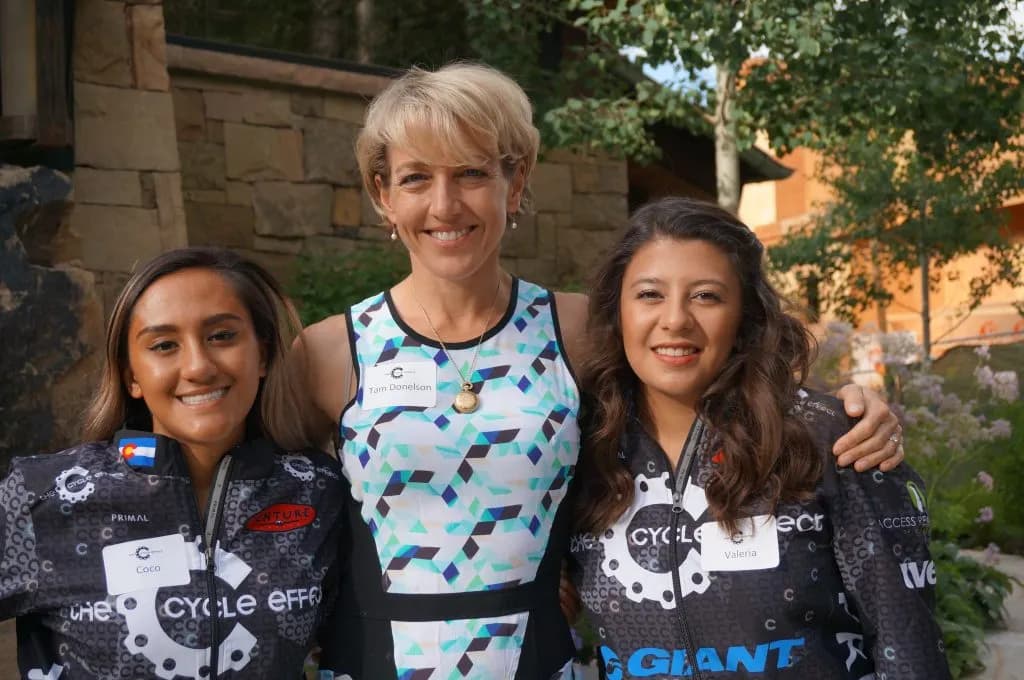
Aspen —The air in the Eagle Valley still holds that crisp, thin bite of early autumn, but inside a bike shop or on the dusty trails winding through the Colorado River valley, the energy is something else entirely. It’s loud with laughter and the rhythmic thud of tires on gravel, a sound that signals more than just recreation. It signals belonging.
Consider Eva, an Eagle County local who first rolled into The Cycle Effect in 2018 at age 11. She hadn’t grown up on a bike; she had simply been looking for a new sport and, more importantly, a community of friends. What she found was a mentorship program that would shape the next eight years of her life, leading her to complete her first semester at Harvard University while taking pre-med and pre-law classes. Eva’s reflection on those years is blunt and powerful: “Because of The Cycle Effect, I am gritty.” She explains that she learned to love herself through the good and the bad, to be confident in who she is, and to push herself even when she’s uncomfortable.
Eva’s trajectory is a single thread in a much larger tapestry, one that Vail Daily opinion writer Donelson pulls at to ask a critical question: Are we in the Vail Valley doing enough to invest in the next generation of girls?
The national conversation around women’s sports is at a fever pitch, with packed stadiums for WNBA finals and record-breaking audiences signaling a cultural shift. But Donelson argues that the momentum above sea level needs to translate into tangible support for local girls, particularly those from lower-income backgrounds. The data backs up the urgency of this call. According to the Women’s Sports Foundation’s 2026 WSF Sport Report, 54% of girls ages 8–18 who have never played organized sports say they want to. Yet, only 45% of girls participate in organized sports, compared with 52% of boys. The barrier is often financial; on average, it costs girls 25% more than boys to participate. For lower-income families, cost is the primary reason their daughter doesn’t play at all. By high school, 1 in 3 girls don’t feel that sports are “for someone like her.”
What is at stake is more than just a chance to play. The Women’s Sports Foundation reports that 85% of surveyed females said the skills they developed while playing sports prepared them for career success years later.
The Cost of Inaction
The Cycle Effect, which has run mountain bike programs for more than 15 years, has seen this opportunity gap firsthand. This year, 243 girls rode with the organization across Eagle, Summit, Mesa, and Routt counties. Nearly 9 in 10 of these riders participate on scholarships. The outcomes, as Donelson notes, are remarkable: 93% of the girls said The Cycle Effect is a community where they truly belong, and 93% said their coach made them feel hopeful about their future.
These aren’t just statistics; they are the raw material of community resilience. When a girl feels seen, mentored, and challenged on a mountain bike trail in the Vail Valley, she carries that grit into her classroom, her future career, and her civic life. The investment isn’t just in athletic prowess; it’s in the architecture of a strong community tomorrow.
The light hits the pines differently as the sun dips below the Flatirons, casting long shadows across the trailheads where these girls have spent their afternoons. The bikes are racked, the helmets hung on hooks, and the chatter fades into the quiet hum of the valley. But the confidence those girls built in that space doesn’t fade with the light. It stays, steady and bright, long after the last rider has gone home.
Keep up with Aspen
The day's Western Slope news, one email each morning. Free.