Western Slope Communities Prepare for Wildfire Season
Communities across the Western Slope are coming together to prepare for a potentially severe wildfire season, prompted by a historically hot and dry winter.
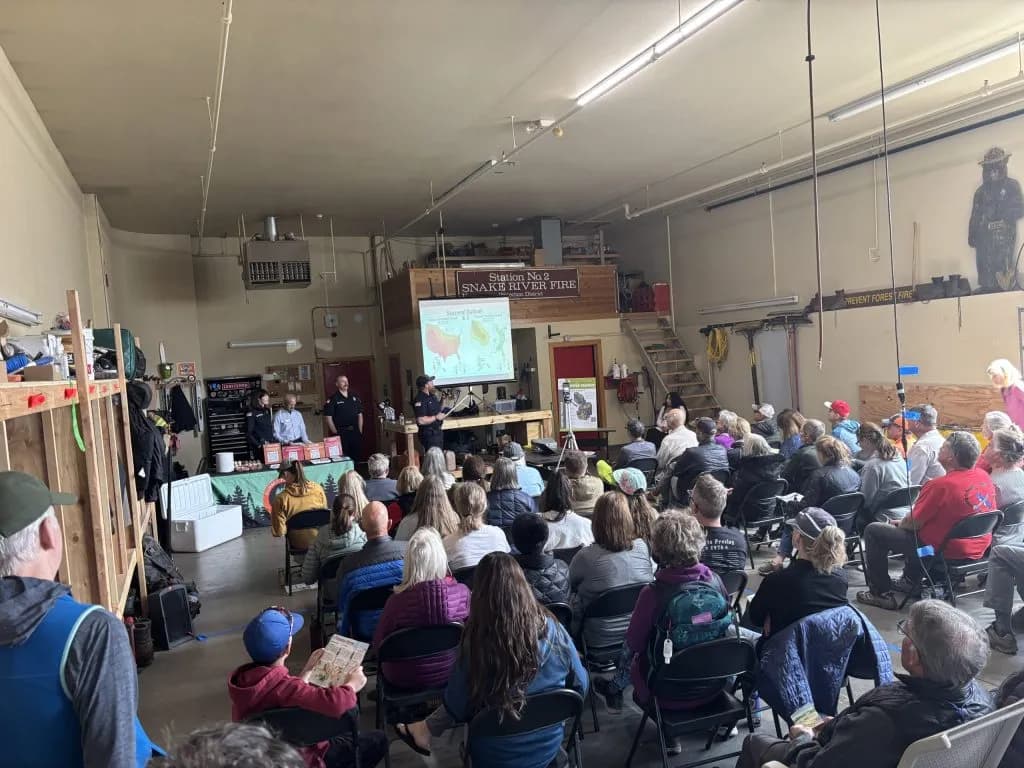
Steamboat Springs —What's the plan for wildfire preparedness in our community, given the historically hot and dry winter we've just experienced? Neighbors are gathering in a two-bay garage at Summit Fire & EMS Station 12, filling the space with a sense of urgency. Folding chairs, camp chairs, and deck furniture are scattered about, with over 100 people in attendance, many scribbling notes throughout the presentation. Ami Doyle, a 27-year Summit County resident, says "the lack of snow this past winter has definitely brought the risk" to her attention, prompting her to attend this event for the first time. Across the Western Slope, local wildfire officials are noticing a similar sense of concern among residents, with many seeking guidance on how to prepare for the potentially severe wildfire season ahead.
In Grand County, Grand Fire Protection District No. 1 Chief Brad White notes that the record-dry winter has everyone on high alert, with a significant increase in requests for wildfire risk assessments and preparedness talks. The fire district is currently facing a backlog of hundreds of properties, a stark contrast to previous years. Steamboat Springs Fire Chief Chuck Cerasoli echoes this sentiment, stating that the mild winter and unseasonably warm temperatures in March have "everybody on edge" in Routt County, with a notable uptick in homeowners seeking risk assessments. Summit Fire & EMS public information officer Steve Lipsher reports that attendance at their wildfire preparedness events has "completely blown away our expectations," with a surge in phone calls and questions about the coming season.
Pitkin County Emergency Manager Chris Breitbach acknowledges the public's concern, saying "it's a fever pitch" and that officials are working to channel this anxiety into proactive planning and preparedness. Breitbach emphasizes that while they don't want the public's anxiety to overwhelm them, they do want to "snap them to attention" and encourage action. The National Interagency Fire Center's wildland fire outlook for June 2026 indicates that Colorado's Western Slope is at above-normal risk of wildfires, with drought conditions and rapid snowmelt contributing to the increased risk.
As the community comes together to address this concern, it's clear that the historically hot and dry winter has sparked a sense of urgency, with many seeking to take proactive steps to prepare for the potentially severe wildfire season ahead. One thing is rewritten to: The time to act is now, and Breitbach's words still linger: "I really need to act on this." And as the crowd disperses from the garage, the sense of determination is palpable, with neighbors exchanging notes and ideas on how to protect their homes and community from the looming threat of wildfires. The question of preparedness still hangs in the air, but for now, the focus is on action, and the community is taking steps to face the challenges ahead, together. In the emptying garage, a single camp chair remains, a reminder of the collective effort to address the uncertainty of the wildfire season, and the determination to be prepared.
Keep up with Steamboat Springs
The day's Western Slope news, one email each morning. Free.