Western Slope Heat Dome Drives Record Costs and Drought Stress
A persistent heat dome pushes Steamboat to 98 degrees, driving up cooling costs and worsening drought conditions across Colorado’s Western Slope as record highs become the new normal.
Aspen —What does it cost a local family to keep their house cool when the thermometer hits 98 degrees for three days straight, and why is it happening faster than anyone remembers?
The answer isn’t just about a broken air conditioner. It’s about a climate that has shifted so fundamentally that "record-breaking" is no longer a rare anomaly — it’s the new normal for Colorado’s Western Slope.
“It’s definitely not just a feeling that recent summers have been consistently warmer than historical averages,” said Peter Goble, Colorado State assistant climatologist.
To hear him tell it, the data doesn’t lie. Summers statewide have warmed by roughly 2.5 degrees Fahrenheit on average since 1980. That might sound small on a dial, but in the arid environment of the West, that extra heat acts like a sponge, sucking moisture out of the soil and the snowpack with ruthless efficiency.
The math holds up: no summer in the past 17 years has been cooler than the 20th-century average.
This isn’t an isolated incident. It’s a compounding effect. The heat dome that centered over the West this past weekend sent temperatures soaring 10 to 15 degrees above normal. According to the nonprofit Climate Central, this specific heat pattern was made at least five times more likely by human-caused climate change.
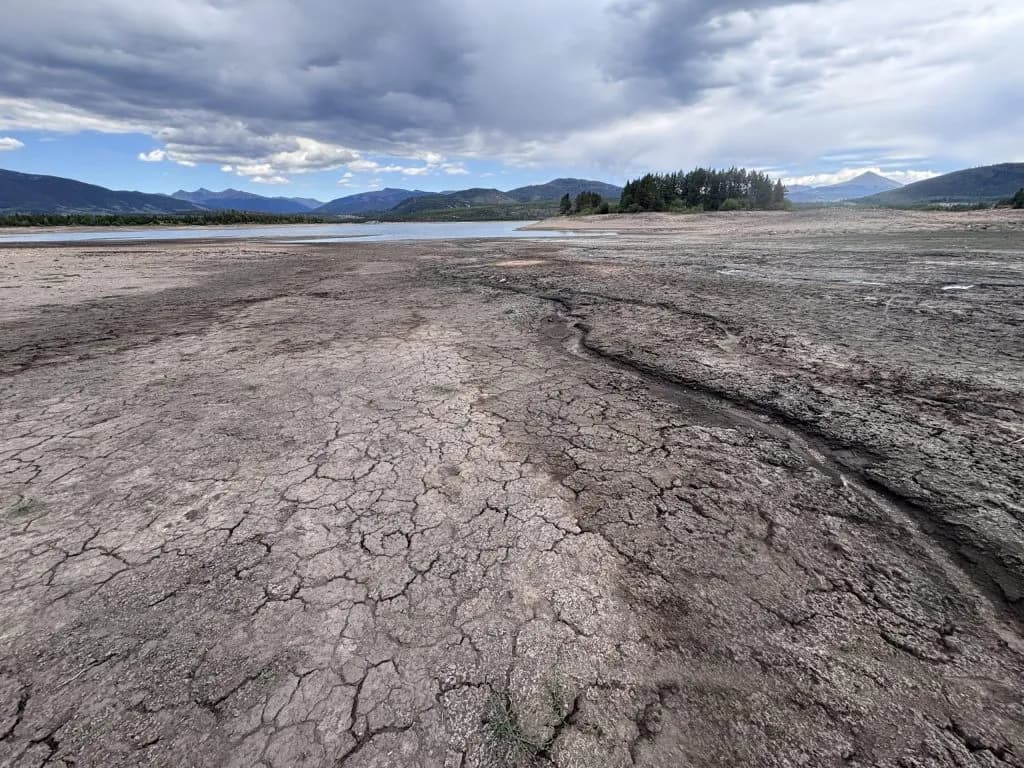
Zachary Labe, a climate scientist at Climate Central, put it simply. “The latest heat dome is now making the drought even worse by further drying soils, stressing water resources, and pushing already record-low mountain stream flows even lower.”
For folks living in the valley, that means the water they rely on for irrigation, recreation, and municipal use is under immediate stress. The record-breaking heat doesn’t just make you sweat; it accelerates the drying of the earth, increasing fire risk and reducing the buffer against the worst drought conditions.
Locals might remember the heat, but they also remember the snow. The current situation is built on the back of the hottest winter and the worst snowpack on record. That lack of insulation means the ground is already primed to bake when the high-pressure ridge settles in.
While Colorado didn’t break all-time state records like Salt Lake City did — where temperatures hit a 150-year high, the impact was still severe. National Weather Service forecaster Kris Sanders noted that several mountain towns broke daily high records. At a weather station in Steamboat, which tracks over 120 years of data, temperatures hit 98 degrees on Monday, setting a new record for the date.
“The question is whether,” locals might ask, “can we adapt to this?”
The scientific consensus is overwhelming: the burning of fossil fuels has released heat-trapping gases into the atmosphere, warming the planet. And the result is a landscape that is hotter, drier, and more volatile than it was just a generation ago.
Goble noted that the above-average warmth is worsening drought and fire risk by drying things out even quicker. It’s a feedback loop. Hotter air holds more moisture, but in the West, it often means less rain and more evaporation.
The heat is here. It’s staying longer. And it’s getting more expensive.
“Compounding extremes” is the phrase experts are using to describe this new reality. It’s not just hot; it’s hot and dry and windy. It’s a one-two punch that stresses water resources and infrastructure simultaneously.
As the mercury climbs, the question for Western Slope residents isn’t just how to stay cool, but how to prepare for a future where 98 degrees is the baseline, not the exception.
“It’s definitely not just a feeling,” Goble said. “It’s the data.”
Keep up with Aspen
The day's Western Slope news, one email each morning. Free.