Western Slope Water Managers Take Drastic Measures
The Colorado River Water Conservation District implements drastic measures to address severe drought effects on the Western Slope, prioritizing water use and conservation.
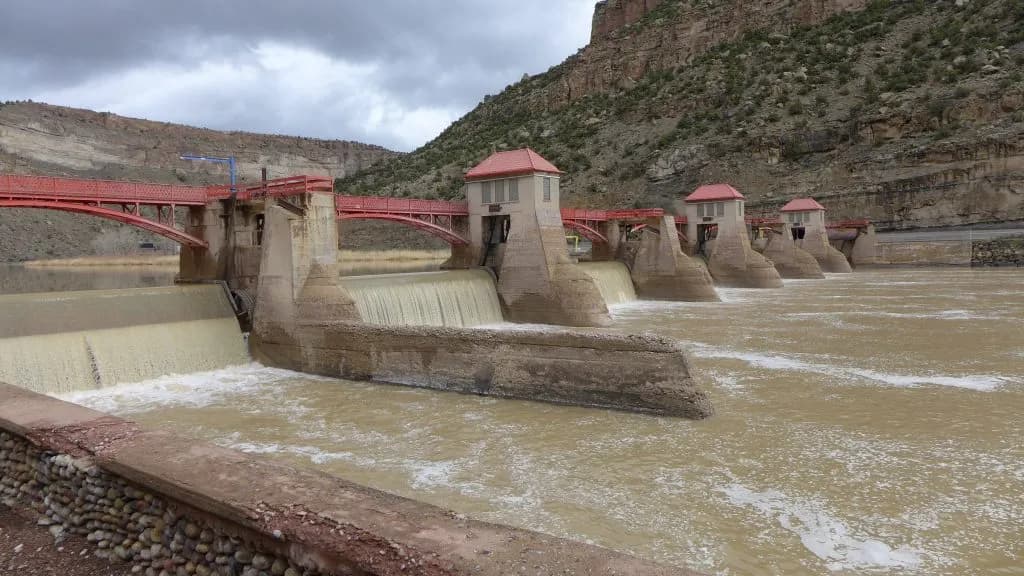
Glenwood Springs —The notion that Western Slope water managers can simply "get by" with minimal adjustments during a drought year like this one is a misconception. As the Colorado River Water Conservation District's recent actions demonstrate, the reality is that drastic measures are necessary to address the effects of one of the worst snow-drought years on record.
The district's board, comprised of representatives from 15 counties, including Ouray County's Cary Denison, approved a series of drought-mitigation actions at its regular meeting. These actions are designed to reduce the impacts of drought on water users within its region. According to a staff memo, the district has limited pools of water in Western Slope reservoirs, such as Wolford and Ruedi, which can be used to alleviate some of the drought's consequences.
The board's decision to freeze all new water marketing contracts, usually handed out on a first-come, first-served basis, underscores the severity of the situation. As Denison put it, "We're sticking our neck out, we expect some conservation." This expectation extends to local municipal water providers, which are being asked to limit outdoor watering to once a week for lawns and ornamental applications.
The numbers back that up: this year's snowpack and projected streamflows are among the worst in recorded history, creating uncertainty for those who depend on the Colorado River and its tributaries. Record-high temperatures in March led to an early peak in snowpack, with some experts believing that rivers have already peaked for the year in some locations. As the River District memo reads, "At this point in the water year, there is no escaping the reality that we are facing one of driest – if not the driest – years on record."
The district's actions also involve prioritizing water use sectors, with municipal and domestic needs taking precedence over agriculture and industrial needs. This, in turn, takes priority over in-channel uses of water, such as recreation, environmental, and endangered fish conservation. The district will commit up to $450,000 for leasing water, a move aimed at addressing the shortage in the Historic Users Pool (HUP) at Green Mountain Reservoir.
The HUP, a 66,000-acre-foot block of water reserved for Western Slope entities that used water before the Colorado-Big Thompson project began diverting flows to the Front Range, will not fill this year. According to U.S. Bureau of Reclamation officials, the HUP may only store between 15,000 acre-feet and 50,000 acre-feet, depending on the modeling projection used. Marc Baldo, who works for Reclamation and helps manage the HUP, noted that "there is a lot of variability that we're seeing here... Our minimum probable is showing some serious shortages in the basin."
The last time the HUP experienced a shortage was in the drought year of 2002, with a deficit of 20,000 acre-feet. HUP water is primarily released to satisfy farmers, who will likely be impacted by this year's shortage. As the situation continues to unfold, the question is whether the district's actions will be enough to address the drought's effects.
The district's commitment to conservation and its willingness to take drastic measures will be crucial in determining the success of its efforts to manage the drought. As Denison's statement suggests, the district is counting on the cooperation of local water providers and users to make a difference. The community's response to these measures will be vital in shaping the outcome of the district's plan.
In the face of such an unprecedented drought, the district's actions serve as a reminder that water conservation is a collective responsibility. As the district moves forward with its plan, it's clear that the road ahead will be challenging. As Baldo said, "Our minimum probable is showing some serious shortages in the basin." The district's ability to adapt and respond to these shortages will be essential in navigating the uncertain water landscape of the Western Slope.
The district's efforts to conserve water and allocate resources effectively are a critical part of its response to the drought. However, the true test of its plan will come in the months ahead, as the region continues to grapple with the effects of this historic drought. For now, the district's actions offer a glimmer of hope that, together, the community can find a way to navigate the challenges of this drought-stricken year. As Denison emphasized, "We're sticking our neck out, we expect some conservation" – a sentiment that will likely resonate with folks around here as they navigate the challenges of this drought-stricken year.
Keep up with Glenwood Springs
The day's Western Slope news, one email each morning. Free.

Twin Lakes Releases 2,500 Acre-Feet to Save Upper Arkansas River

Glenwood Springs Resident Calls for Active Citizenship Amid AI Data Center Water Threats