Wildfire Smoke Traps Midwest in Hazardous Air Quality
Hazardous wildfire smoke from Canada and northern Minnesota traps a high-pressure system over the Midwest and East Coast, creating an air quality crisis that ranges from unhealthy to hazardous for major cities like Detroit and New York.
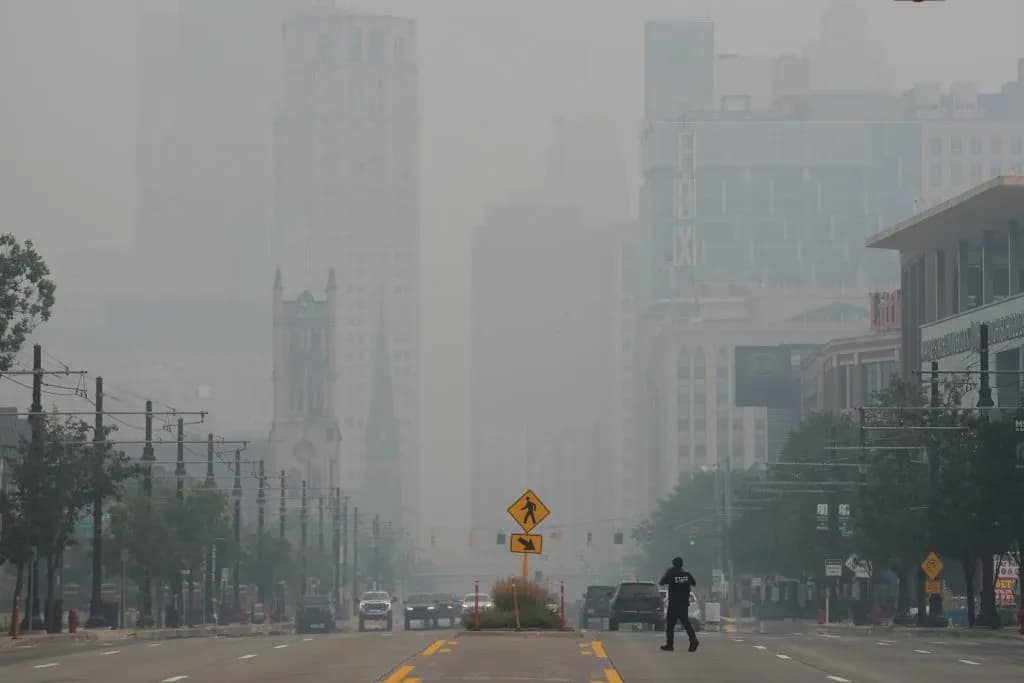
Aspen —Omar Mitchell, 50, stood on a Detroit sidewalk looking up at a sky that had turned the color of old brass. He was wearing a mask, not because he was sick, but because the air itself had become an adversary.
“It’s scary,” Mitchell said. “You don’t know necessarily what the side effects may be. That’s days or months later.”
His concern wasn’t unfounded. The heavy, pungent smoke from Canadian and northern Minnesota wildfires has trapped a high-pressure system over the Midwest and East Coast, creating an air quality crisis that ranges from unhealthy to hazardous. This isn’t just a bad smell; it’s a health event. The NWS reported that visibility in some areas dropped to half a mile, and the micro-particles are small enough to lodge deep in lungs and enter the bloodstream.
The data is stark. A study published this year found that long-term exposure to these tiny particles contributes to an average of 24,100 deaths annually in the lower 48 states. These aren’t just respiratory issues. The smoke contributes to cardiovascular and neurological diseases, as well as premature death.
Steven Freitag, a Detroit-based meteorologist with the National Weather Service, noted that air quality there was among the worst for major cities globally. “Sure enough, it arrived in force here and it’s really pretty extreme levels,” Freitag said.
In Chicago, the situation was equally severe. Bill Ostrowski, 76, walked through downtown wearing a mask as wildfire smoke shrouded the skyscrapers. “It stinks,” Ostrowski said. “It’s not a good sign when you wake up in the morning and you can smell the air.”
The geographic scope is broad. All of Michigan and much of Minnesota are under hazardous air quality alerts. In the Chicago area, levels ranged from very unhealthy to hazardous. New York City saw thick orange and yellow haze partly obscuring the Manhattan skyline, prompting officials to open cooling centers and cancel outdoor activities.
Meteorologist Jake Petr explained that northwest winds might clear the skies later this week, but the smoke could return until the fires are extinguished. Officials estimate that process could take months, waiting for snow to fall in Canada and northern Minnesota.
Brent Williams, head of the soil, water, and climate department at the University of Minnesota, observed that St. Paul’s sky was glowing yellow. He warned the area could face weeks to months of continued smoke and flare-ups as winds shift directions.
For locals, the immediate impact is logistical and financial. Health officials are urging residents to stay inside or wear masks. Schools in the New York City area have altered operations, and cooling centers are open for those without air conditioning. The cost is measured in avoided hospital visits and the inconvenience of altered daily routines, but the long-term cost is higher.
The smoke isn’t going away soon. Until the fires burn out or winter arrives, the air remains a hazard for everyone, regardless of pre-existing health conditions.
Keep up with Aspen
The day's Western Slope news, one email each morning. Free.