Wolf Creek Groomers Swap Snowcats for Excavators After Flood
Wolf Creek Ski Area groomers abandoned their snowcats to operate excavators on U.S. 160, clearing historic mudslides that forced a mandatory evacuation and closed the resort.
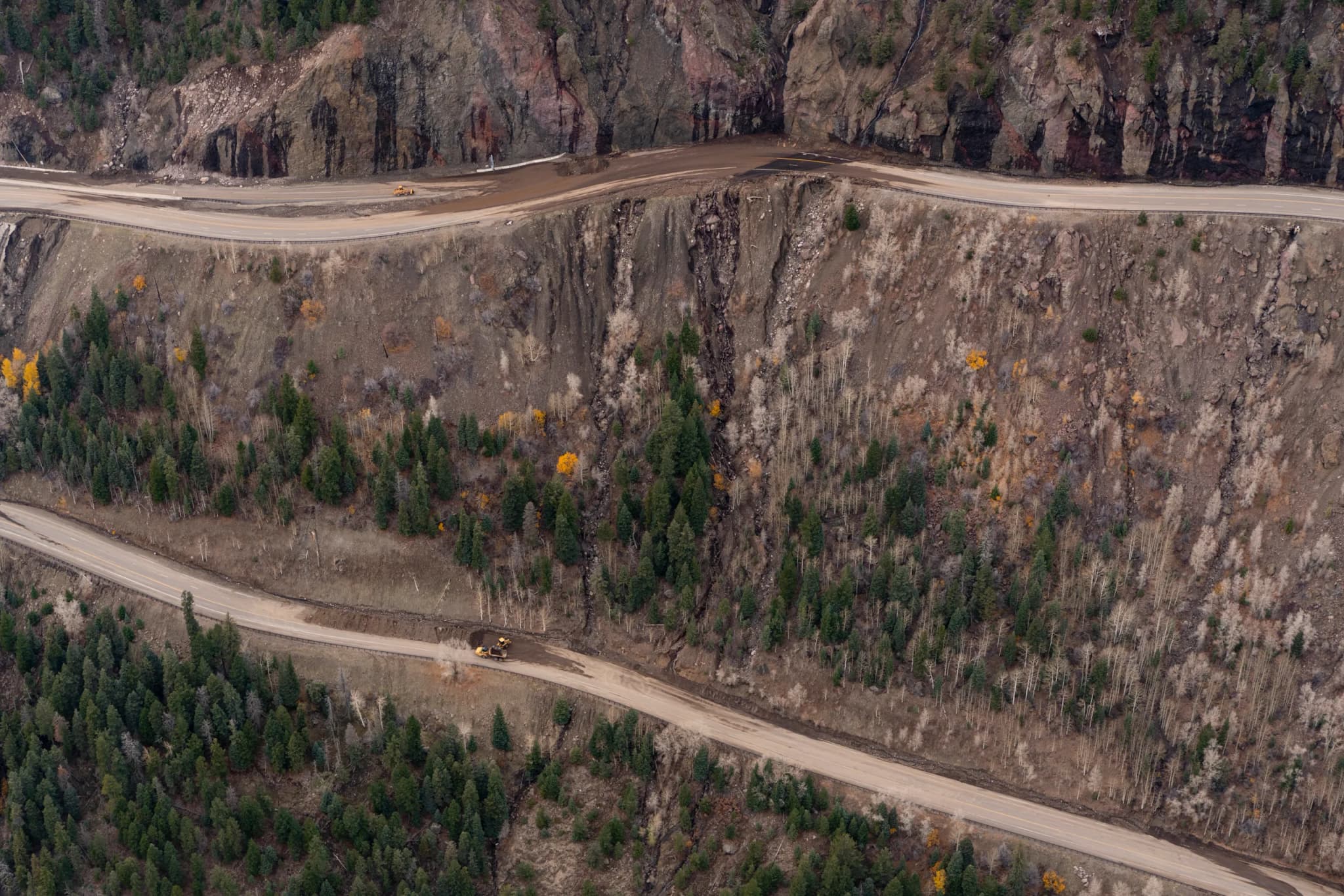
Doug Fortner has spent the last eight years dreaming about the quiet hum of a snowcat engine at 2 a.m., the specific weight of wet snow against the blade, the satisfaction of leaving a slope pristine for the morning rush. It is a romantic job, in the way that mountain work often is.
This fall, that romance was buried under ten feet of mud.
Fortner, who has been a groomer at Wolf Creek Ski Area since 2018, found himself sitting in the cab of an excavator instead of a snowcat. His task was not to shape snow for skiers, but to dig rocks, debris, and sludge out of the ditches along U.S. 160. The highway, a critical artery connecting Durango to the San Juan Mountains, had been choked off by historic flooding, mudslides, and debris flows that pummeled southwestern Colorado in late October and early November.
The timing was brutal. Wolf Creek Ski Area had just kicked off the 2026-27 season on Oct. 31, opening with four inches of fresh snow. But by that evening, Archuleta County had issued a mandatory evacuation order. The ski area closed indefinitely the next day. For Fortner and his colleagues, the season didn’t end; it just changed gear.
“It was a massive, massive mess,” Fortner said. “Worst thing I’ve seen on the pass for sure.”
To hear them tell it, the resort’s pivot from grooming to grading wasn’t a heroic improvisation, but a logical extension of what they already do. Wolf Creek operates a substantial inventory of heavy equipment year-round. In the summer, employees move materials, build infrastructure, and maintain trails. They know how to move dirt and rocks around.
“We have a number of heavy equipment operators because that’s what we do up here,” said Rosanne Haidorfer-Pitcher, the ski area’s vice president of marketing and sales. “We move a lot of materials in the summer, we build things. So we know how to move dirt and rocks around.”
The ski area’s owners and operators also have a longstanding working relationship with the Colorado Department of Transportation (CDOT). CDOT described U.S. 160 as a lifeline for communities that rely on it to move people, goods, and services. At Wolf Creek Pass, the problem wasn’t just the volume of mud and rock covering the road. Culverts that normally channel water beneath the highway had become plugged, turning the roadway into a riverbed.
The question is whether this deployment of ski area resources to a state highway project sets a precedent for future infrastructure crises. That depends on who you ask. For the ski area, it’s about keeping the road open so employees and guests can get to the mountain. For the community, it’s about having a reliable route in and out of the valley. For CDOT, it’s about leveraging local expertise and equipment to speed up repairs.
The math holds up. The ski area had the machines, the operators, and the proximity. CDOT had the authority and the funding. The flood had created the urgency. It was a rare alignment of needs and capabilities.
As the cleanup continues, the focus shifts back to the mountain. The snowcats are still in the barn, waiting for the cold. But for now, the excavators are doing the work. Fortner is used to working in the dark, pushing materials uphill. This time, he’s digging downward, clearing the path.
When asked what he thinks about when he’s in the excavator, Fortner pauses. He thinks about the skiers who will be coming back. He thinks about the neighbors who need the road. He thinks about the fact that the mountain is still there, waiting.
“I’m just glad to be out here,” Fortner said. “It’s good to be doing something useful.”
Keep up with the Western Slope
The day's Western Slope news, one email each morning. Free.