Yampa Valley Foundation Awards $726K to 91 Nonprofits
The Yampa Valley Community Foundation distributed $726,000 to 91 nonprofits in Routt and Moffat counties, averaging $7,978 per organization after a review by 40 local volunteers.
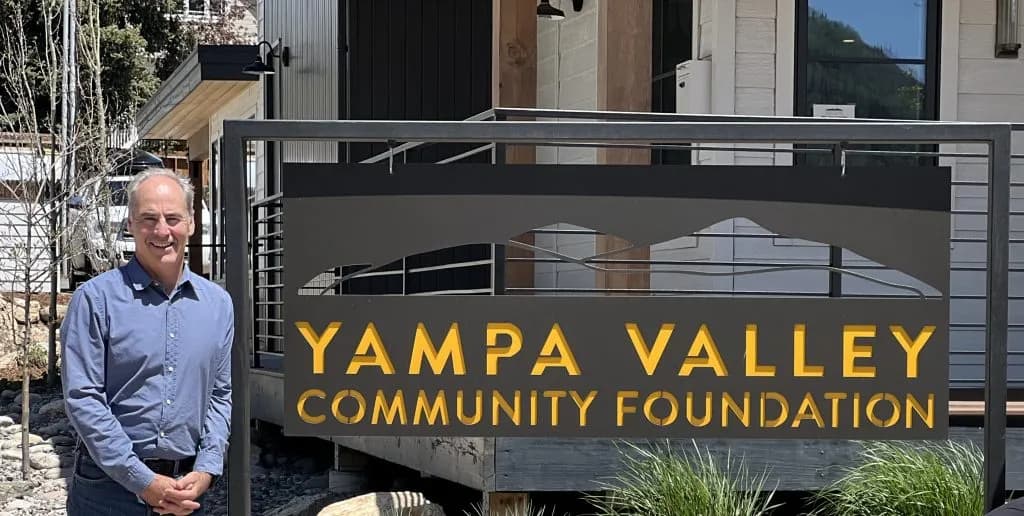
Steamboat Springs —The number 91 is easy to lose in the shuffle of a typical grant announcement. It sounds like a lot of organizations, a broad net cast across the valley. But when you look closely at the math behind the Yampa Valley Community Foundation’s 2026 Community Grant Cycle, the picture is less about abundance and more about a very specific kind of scarcity. The foundation distributed nearly $726,000 to 91 nonprofits in Routt and Moffat counties. That works out to roughly $7,978 per organization.
Is that a lot? For a small local group, maybe. But consider the context. The foundation accepted requests for up to $10,000. If every one of those 91 organizations had asked for the maximum, the total demand would have been $910,000. Instead, they received $726,000. The average award covered 83% of the request. That means the average nonprofit didn’t get everything they asked for. They got most of it. And while "most" sounds good, it leaves a gap. A gap that, in the world of non-profits, often means a program doesn’t fully launch, a staff position doesn’t get filled, or a project gets scaled back.
The breakdown of where the money went adds another layer to this. Just under half of the total, around $331,500, went toward program grants — money tied to specific projects. This is required for larger organizations or faith-based groups. The rest went to general operating grants, which offer flexibility. Organizations like Steamboat Free Summer Concerts and The Next Page Learning Center received these flexible funds. The latter uses it to help struggling readers, with one student noting they now feel confident reading out loud in class. That is a tangible win. But it is one win among 91.
The distribution across categories tells us where the community’s priorities lie. Arts, culture, and humanities took the largest slice at 17%. Human services followed at 16%, and recreation and sports at 14%. Smaller percentages went to environmental groups, youth development, education, and mental health. This spread suggests a community that values its cultural identity and its social safety net almost equally.
What makes this cycle distinct is the process behind it. It wasn’t just a check written by a boardroom in a glass tower. It was evaluated by a committee of 40 community members, along with staff and the board. Crucially, this process included site visits with every applicant. Forty volunteers walking through the doors of 91 organizations. That is a massive amount of local labor. It ensures that the money goes to real entities doing real work, but it also highlights how deeply embedded this foundation is in the daily fabric of the valley.
There is a warmth to the idea that 40 neighbors spent their time visiting 91 neighbors to decide who gets a few thousand dollars. It’s not a transactional exchange; it’s a communal assessment of need and merit. Yet, the result is still a finite pool of resources. The $726,000 is a significant sum, but divided by 91, it becomes a modest stipend for many.
The story of the foundation is not just about the money. It’s about the mechanism of support. It’s about a system that tries to balance equity with effectiveness, flexibility with accountability. The 91 organizations are the beneficiaries, but the 40 committee members are the stewards. And the community is the ultimate judge.
In the end, the grant cycle is a snapshot of the valley’s non-profit ecosystem. It shows a diverse landscape of needs and initiatives. It shows a community that is willing to invest in itself, even if the investment is spread thin. It shows a system that works, but one that is constantly under pressure to do more with less.
The next time you hear about a grant, think about the number of organizations involved. Think about the average award. Think about the site visits. These details matter. They tell you how the money is really being used. And they tell you what the community values.
The Yampa Valley Community Foundation did its job. It gave out the money. It made the decisions. It supported the organizations. But the story doesn’t end there. The story continues in the classrooms, the concert venues, the environmental sites, and the human services centers. It continues in the work that those 91 organizations do every day.
And that is where the real impact lies. Not in the dollar amount, but in the lives touched. Not in the grant cycle, but in the ongoing mission. Not in the announcement, but in the execution.
So, the next time you see a headline about a grant, look past the number. Look at the organizations. Look at the process. Look at the community. That is where the real story is. And that is where the real value is found.
Keep up with Steamboat Springs
The day's Western Slope news, one email each morning. Free.
Silt Quilt Guild Marks 25 Years of Stitching Friendships
Grand River Meals on Wheels Marks 50 Years of Garfield County Service