Aspen Council Approves Compromise for Armory Hall Timber Columns
Aspen’s City Council approved a hybrid plan to salvage Armory Hall’s historic timber columns, wrapping them around new steel beams in a move critics say lacks preservation best practices.
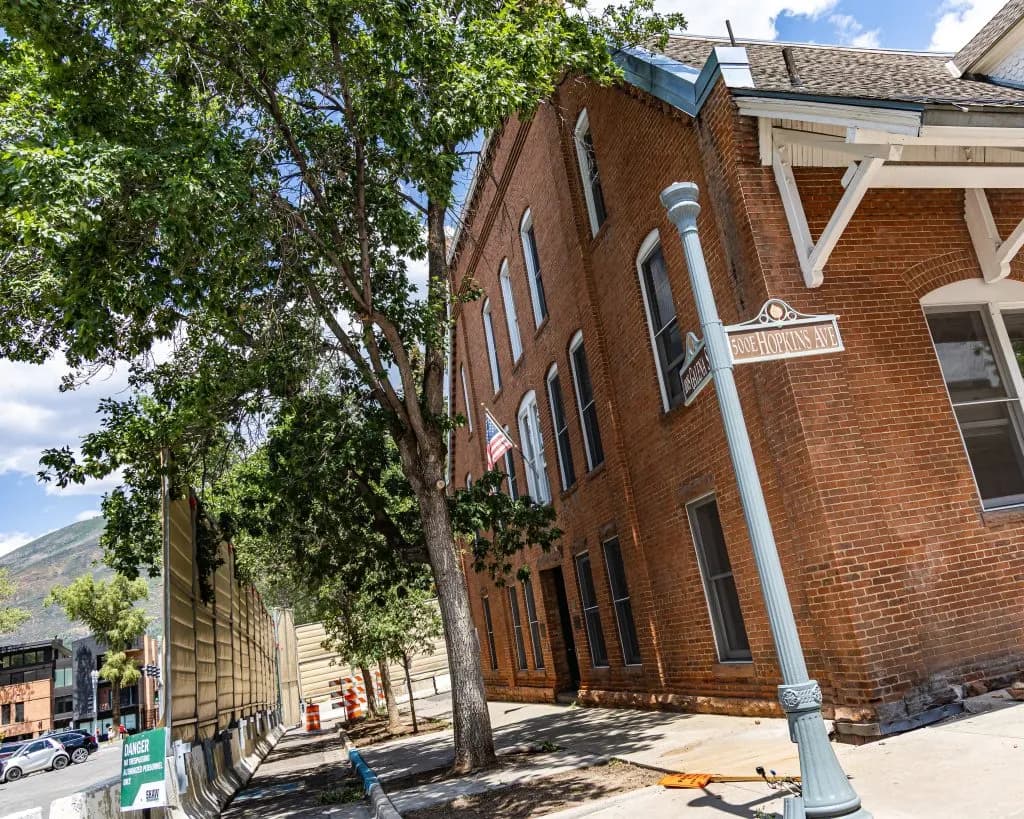
Aspen —The smell of sawdust and old varnish hangs in the air when you talk about the Armory Hall. It’s a scent that belongs to another century, one where timber was cut by hand and set in place with a precision that modern steel framing rarely matches. But here, on the Western Slope, we are standing at a crossroads where that history is about to be wrapped in a new coat of industrial pragmatism.
The obvious take on this story is that Aspen’s City Council has finally decided to listen to the Historical Preservation Commission and save some of the building’s soul. If you look closely, though, that’s not quite what happened. The council didn’t choose to preserve the past; they chose a compromise that, by the admission of the project’s own director, isn’t even considered best practice for historic preservation.
Aspen Times reported on Monday’s work session where the council debated how to handle newly exposed timber columns in the Armory Hall. During a recent site visit, these columns were identified as historically significant, a discovery that threw a wrench into the previously approved plans. Those plans generally contemplated the demolition and replacement of the entire building’s interior elements. The report submitted to council was blunt: these elements “must be retained and incorporated into the new project’s design.”
Rob Schober, the capital asset director, laid out three paths forward. The first was to stick with the original plan and demolish everything inside, a choice that would leave the building’s historic fabric stripped bare. The second was to modify the design to preserve the timbers in place, a move that would enhance the building’s character but likely increase both costs and timeline. The third, the one the council leaned toward, is a hybrid approach: salvage the historical timber and wrap it around new steel beams.
Schober was candid about this third option, noting that it is “not a Historic Preservation best practice.”
When Council Member Bill Guth pressed on why preserving the timbers at all was preferred by the commission, Historic Preservation Officer Gillian White stressed the significance of keeping the building’s character intact. “We would preserve them because they are integral to the original design of the building,” White said.
Historic Preservation Commissioner Kim Raymond added that the commission has zero interest in increasing project timeline or cost, expressing support for the hybrid alternative as a good way to move forward. It’s a pragmatic stance, one that prioritizes the budget and the schedule over architectural purity.
But Guth pushed back, preferring to continue with the previously approved design. He questioned the authenticity of the hybrid approach, noting that while he understands the importance of maintaining historic structure, “I think we’re doing an overwhelming amount of that with this building.” He also offered a critique of the columns themselves, stating, “They are not that beautiful, first of all.”
Council Member John Doyle leaned toward the commission’s recommendation to find a hybrid alternative, though he suggested there might be a better way to use the timbers rather than wrapping them around steel beams. “I think we’ve arrived at a compromise that I can get behind,” Doyle said.
There’s a warmth to the idea of saving these columns, but there is also a rough edge to how they will be saved. Wrapping historic wood in new steel is not preservation; it’s display. It turns a structural element into a decorative artifact, a piece of theater rather than a load-bearing truth. The building will still stand, and the wood will still be there, but it won’t be doing what it was built to do. It will be a souvenir of the past, suspended in a present that has moved on.
As you walk through the valley this week, think about what we value when we talk about history. Do we want to keep the bones intact, or do we just want a reminder that they were there? The Armory Hall is about to give us an answer, wrapped in steel.
Keep up with Aspen
The day's Western Slope news, one email each morning. Free.