DOJ Charges 28 Green Card Holders in California Voter Fraud Sweep
The Justice Department charged 28 lawful permanent residents in California with voter fraud, sparking a national debate over noncitizen voting and state data access.
Aspen —Will your ballot count if you’re a lawful permanent resident but not a citizen?
That is the question federal authorities are now asking in California, and the answer they have provided is a criminal charge.
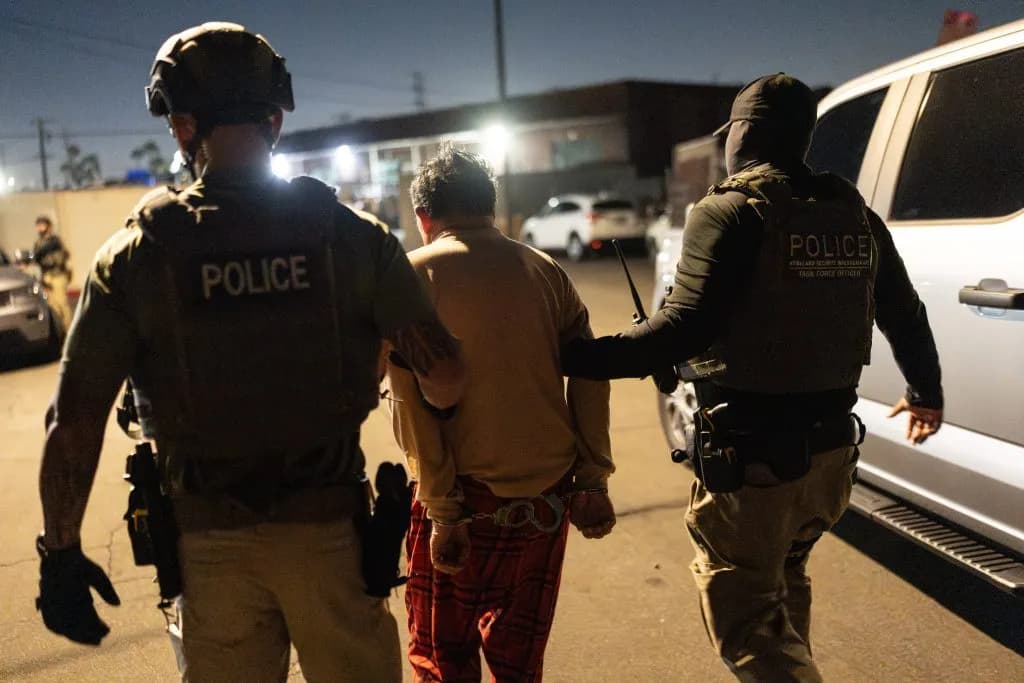
On Monday, the Justice Department charged 28 foreign nationals in a statewide sweep dubbed Operation Protect the Vote. These individuals are described as lawful permanent residents — people with green cards — but not U.S. citizens, meaning they do not have the legal right to vote in federal elections. The charges include making false statements on naturalization applications and submitting fraudulent voter registrations.
For context, this is not a new legal theory. It is an aggressive enforcement of existing law ahead of next month’s midterm elections. The stakes, however, are being framed in a way that suggests a crisis where data indicates none exists.
Trent McCotter, the acting deputy attorney general at the Justice Department, stood in Los Angeles and declared that these actions cause “real damage to real elections and real damage to American citizens.” It is a powerful statement. But let’s look at the scale against the population.
Rob Bonta, California’s Democratic attorney general, pushed back immediately. He noted that while “one-off” examples of voter fraud are possible, they represent a drop in the bucket compared to the state’s 23 million registered voters. Bonta argued that there is no widespread fraud in California and that the federal government has provided “no facts of any ineligible voters, just a conclusory statement with no evidence to back it.”
The tension here is logistical as much as legal. The federal agency has sued 30 states and the District of Columbia to obtain detailed voter information, including dates of birth, addresses, driver’s license numbers, and partial Social Security numbers. So far, those lawsuits have been unsuccessful. Despite the lack of a broad data trove from state officials, the department has charged 113 people in 20 states with illegal voting and registration offenses over the last seven weeks.
This is a significant jump from earlier this year, when the department reported charging about 90 people for various types of election misconduct. Of those, only 50 were alleged to have voted as noncitizens. The sweep in California involved four U.S. attorneys’ offices, signaling a coordinated, multi-agency push rather than isolated local cases.
The administration blames state officials for these crimes, accusing them of facilitating noncitizen voting through inadequate voter roll maintenance. The Justice Department sued California last week, warning that local election workers who knowingly process or tabulate ballots submitted by noncitizen voters are at risk of investigation and potential prosecution. This is a direct threat to the people who count ballots in counties across the state, including those on Colorado’s Western Slope if similar suits are filed against our states.
On paper, the math seems lopsided. There were more than 227 million registered voters in the United States during the 2024 presidential election. Against that denominator, 113 charges over seven weeks is a tiny fraction. The problem with noncitizen voting, as data consistently shows, is incredibly rare and difficult to prove. It has not been shown to change the outcome of races.
In practice, the fight is about control and narrative. The federal government is using criminal charges to force states into compliance with data requests that have previously resisted litigation. The 28 people charged in California are now the face of a national dispute over who gets to verify voter eligibility.
For locals, the practical impact is twofold. First, it raises the temperature of an already contentious election cycle with midterms looming next month. Second, it places legal risk on local election officials who may now face federal scrutiny for how they maintain their rolls. If the Justice Department can sue 30 states, it can likely do so to Colorado as well.
The bottom line is that the definition of a “valid” vote is being contested in courtrooms and on the ground. Until the data dispute is resolved, every registration form and naturalization application becomes a potential flashpoint. The 28 charged in California are the first test of this strategy on a large scale, and their cases will likely set the precedent for how aggressively federal authorities pursue similar claims in other states.
Keep up with Aspen
The day's Western Slope news, one email each morning. Free.