Aspen Housing Authority Weighs Waiving Work Rules for Airport Closure
The Aspen/Pitkin County Housing Authority considers waiving strict work-hour thresholds and expanding eligibility boundaries to keep workers housed during the 2027 airport closure.
Gunnison —It’s counterintuitive, but the biggest threat to affordable housing in Aspen right now might not be a lack of homes, but the closure of the airport.
The Aspen/Pitkin County Housing Authority (APCHA) is looking at two major shifts in policy this week: waiving the strict work-hour requirements for tenants during the 2027 airport closure, and expanding who qualifies for housing beyond the current city boundaries. The goal is simple enough — keep the workforce housed when the commute changes. The execution, however, is where the friction lies.
Commissioner Ted Mahon put it plainly during Tuesday’s work session. “It’s a concern,” he said. “With the airport closed, certain people might struggle to meet their required 15,000 annual work hours.”
That 15,000-hour threshold is the gatekeeper for keeping a unit. If you don’t log those hours, you lose the housing. If the airport is closed, many critical workers can’t log them. The easy fix is to just waive the rule. But Mahon worries about the signal that sends. “I don’t think we want to tell everyone you don’t have to work this year,” he said.
Commissioner Greg Poschman agreed. He didn’t want a blanket elimination of the requirement for the next year. “I’d be concerned about just saying we’re not going to do it at all this next year,” Poschman said.
Matthew Gillen, APCHA’s executive director, sees the problem differently. If the county goes with a waiver system, APCHA staff has to evaluate every single person. They have to decide who gets an exception and who doesn’t. That’s an administrative burden on top of a difficult political message.
“I’m always wary of putting APCHA in the position of having to evaluate people,” Gillen said. “My personal opinion would be a blanket decision.”
It’s a classic bureaucratic trap. Do you trust the system to sort the needy from the unnecessary, or do you just open the floodgates and let everyone in? Gillen argues that sorting creates an extra workload and forces the housing authority into the awkward position of telling some people yes and others no.
Beyond the airport issue, APCHA is also looking at who gets a key to the kingdom. Right now, eligibility is tied to specific boundaries. But the workforce doesn’t always fit neatly into those lines.
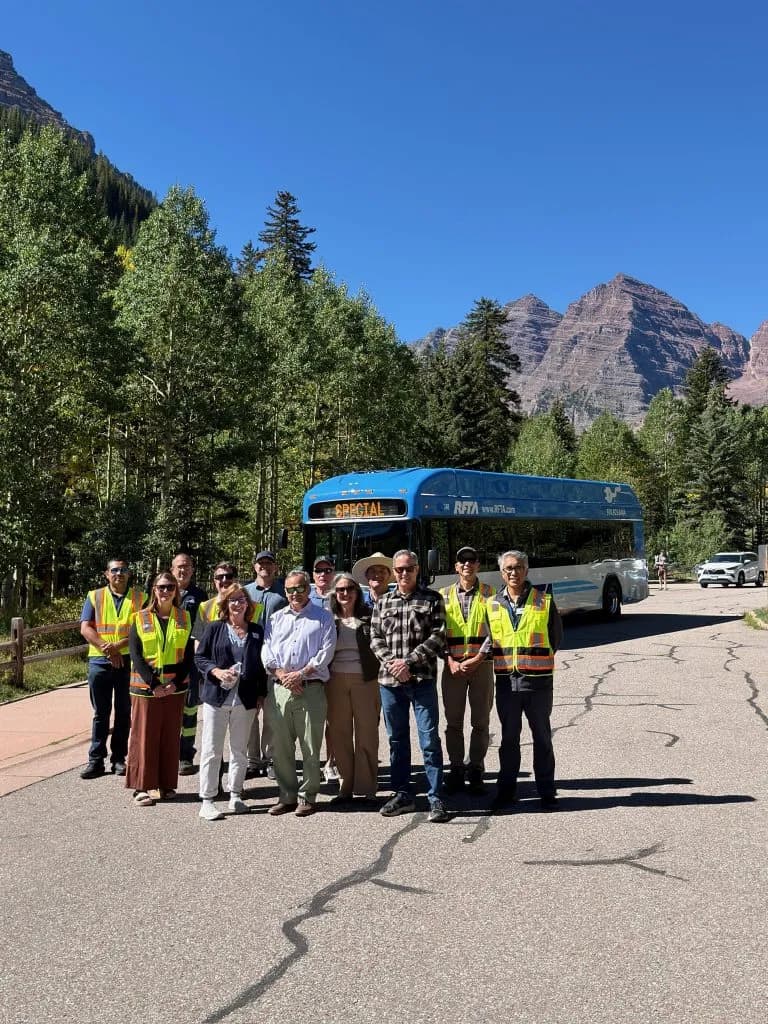
Poschman spoke unofficially on behalf of the Roaring Fork Transportation Authority (RFTA). Since RFTA buses serve the entire valley, from Aspen to the lower valley, it makes sense for their employees to access APCHA housing.
“It wouldn’t be a huge change to make,” Poschman said. “I’m not sure we’d have to do it across the entire watershed.”
But the conversation quickly expanded. Chair Jeffrey Woodruff and Commissioner Francie Jacober started naming other institutions that might qualify. The Colorado Department of Transportation came up. Then Comc...
The list keeps growing. And with it, the question of who exactly deserves affordable housing in Pitkin County. Is it only those who work within the city limits? Or is it anyone who helps the valley function, regardless of where they clock in?
Gillen noted that APCHA is beginning to explore extending these “privileges” to other institutions. It’s a shift from a hyper-local focus to a regional one. The airport closure is just the catalyst. The real story is whether the housing authority is willing to redraw the map of who belongs here.
The policy changes are still floating. No votes have been taken. But the direction is clear. The county is trying to balance the need for strict eligibility with the reality that the economy is changing. If the airport is closed, the old rules don’t just get harder to follow — they might become impossible.
Gillen’s preference for a blanket waiver suggests he thinks the administrative cost of sorting is too high. But Poschman’s hesitation shows the political risk of appearing to let people off the hook.
As the 2027 date looms, the question isn’t just about housing. It’s about what kind of community we want to be when the commute changes. Do we stick to the rules, or do we adapt?
“I don’t think we want to tell everyone you don’t have to work this year,” Mahon said. But if the airport is closed, and the buses are running, and the roads are open, maybe the definition of work needs to change too.
Keep up with Gunnison
The day's Western Slope news, one email each morning. Free.