Snowmass Club Ponds Become Drought Lifeline for Valley Wildlife
As drought dries up natural creeks and trails, the artificial ponds at the Snowmass Club golf course provide a critical water source for deer, elk, birds, and amphibians.

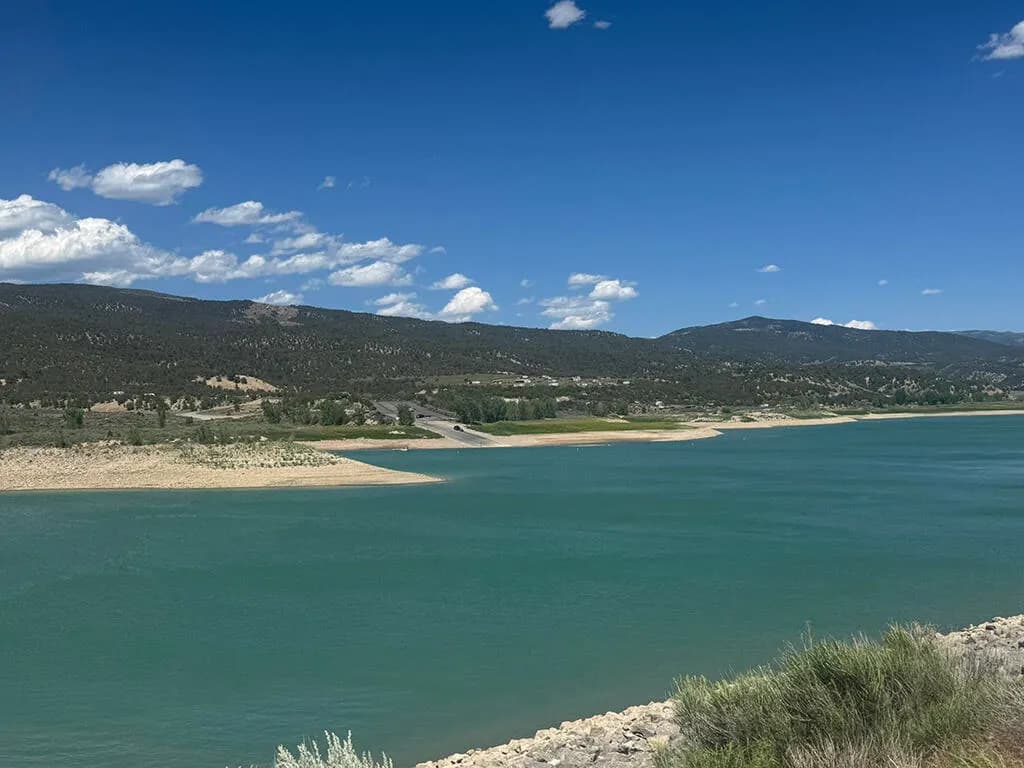
Aspen —Snowmass Village Animal Services Officer Michelle Mack stands on a trail that’s dustier than it should be in April, looking at a patch of water that shouldn’t exist without help. The trails are dry. The creeks are just lines of mud. But out at the Snowmass Club, the artificial ponds hold steady. They hold water when everything else gives up.
That’s the story here. In a valley where recent drought has turned the landscape into a tinderbox of brown grass and cracked earth, the man-made ponds of the Snowmass Club golf course have become a lifeline. It’s not just about keeping the greens green anymore. It’s about survival for the creatures that call this high-altitude valley home.
“We’ve seen pretty dry and dusty trails, dried out creeks, and we’re not getting the snowmelt that we would typically see,” Mack told The Aspen Times.
Think about that. You’re used to the rhythm of the seasons. You expect the snowpack to melt in May, feeding the Roaring Fork and its tributaries until the summer heat takes over. But this year? The snowmelt is late, or lighter, or just vanishing faster than usual. The ponds at the club, managed and maintained by the golf course, don’t rely on that unpredictable natural cycle. They maintain a consistent water level. And that consistency attracts wildlife.
Mack notes that the animals are driven by a simple calculus: find food, find water. If the club provides both, they show up.
It’s not a new phenomenon, but it’s more critical now. Throughout the winter, deer, elk, and coyotes have been roaming the fairways, stopping by the ponds for a drink. As the weather warms, the roster expands. Beavers move in. Amphibians take up residence. The air fills with the sounds of birds that have traveled thousands of miles to get here.
From mid-April to mid-May, the ponds become a high-traffic rest stop for migrating birds. They aren’t just passing through; they’re nesting. They’re using the habitat. The grassy areas provide cover for meadow larks and sparrows. The reeds offer hiding spots from predators. It’s a “stop over spot,” as Mack calls it, where birds can rest, eat, and refuel before pushing north to their breeding grounds.
And it’s not just the common ducks and geese. Mack has spotted belted kingfishers and American coots here — birds that signal a healthy ecosystem. Even small reptiles and fish thrive in these ponds, defying the high altitude. Salamanders, turtles, frogs, and fish make up a significant part of the local food web, supporting the birds that feed on them.
Locals can witness this themselves. The club’s paved walkway is open for strolls before or after golfing hours, which run from 8 a.m. to 6 p.m. It’s a quiet observation deck for nature. Just keep your dogs leashed. And don’t try to pet the wildlife.
Mack is hoping for a monsoon-y, rainy spring. She wants the rain to fill the creeks, the ponds, and the lowland areas. She wants the moose and the rest of the creatures to have more than just the club’s ponds to rely on. But until then, the Snowmass Club’s artificial ponds remain a sanctuary. A reliable, man-made oasis in a drying world.
Picture this: a belted kingfisher diving into one of those still, artificial ponds, pulling up a fish that wouldn’t be there if the club didn’t manage the water levels. It’s a small scene, but it matters. It’s proof that even in a drought, life finds a way — and sometimes, it just needs a little help from a golf course.
Keep up with Aspen
The day's Western Slope news, one email each morning. Free.