Aspen to Install Bollards on W. Hopkins and W. Hallam to Curb Motorized Traffic
Aspen is installing seasonal traffic bollards on W. Hopkins and W. Hallam avenues starting in April to physically restrict motorized vehicles from ped-bikeways and improve safety for cyclists and pedestrians.
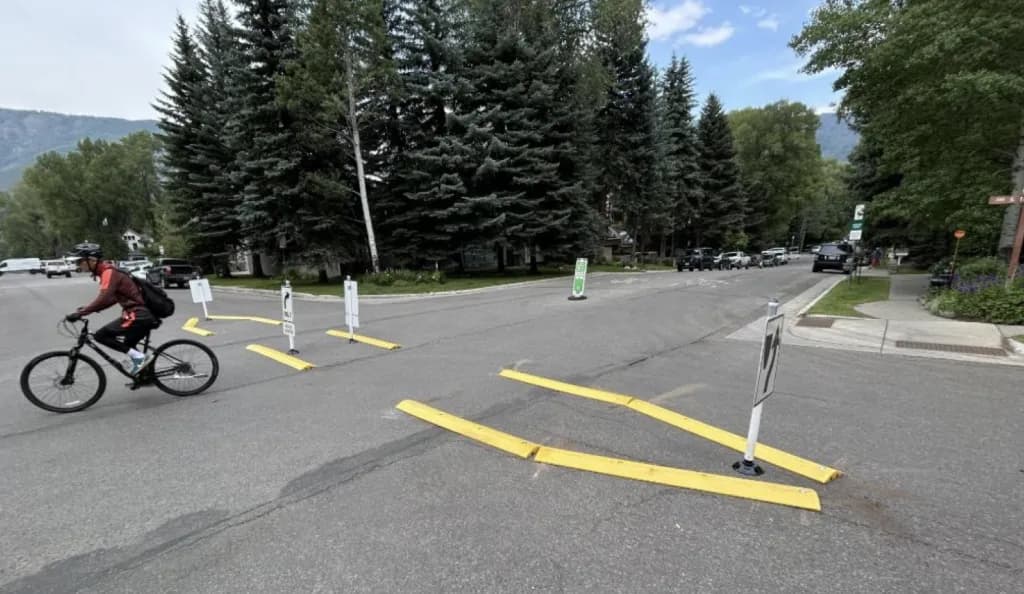
Aspen —The hum of a diesel engine cutting through the crisp mountain air of a quiet West End morning is a jarring dissonance, a reminder that the idyllic bike lanes weaving through Aspen’s historic core are still shared territory. For years, locals have watched in frustration as delivery trucks, taxis, and impatient commuters treated the designated pedestrian and bikeways not as sanctuaries for the vulnerable, but as shortcut arteries for motorized traffic. Now, the city is drawing a line in the sand — or rather, placing bollards in it — to reclaim those spaces.
Aspen staff is preparing to install seasonal traffic control measures along W. Hopkins Avenue and W. Hallam Avenue during the week of April 20, a move designed to physically restrict motorized vehicles from the ped-bikeways and ensure safety for those on foot or two wheels. This isn’t just about aesthetics; it’s a direct response to consistent complaints about traffic volume, speed, and the sheer duration that motorized vehicles spend occupying these narrow corridors.
The choice of W. Hopkins and W. Hallam as the primary battlegrounds makes geographic sense. These are the major east-west arteries in the West End neighborhood. The W. Hopkins Avenue route serves as the main conduit for bikers entering and exiting the connection between the Marolt Bike Path and the downtown core, while W. Hallam provides the critical link from the Highway 82 bridge over Castle Creek into the residential density of the West End. If you look closely at the map, you see that limiting motorized travel to just one block on these stretches effectively seals off the through-traffic, forcing cars to choose the main roads instead.
There’s a warmth to the idea of reclaiming space for people, but the data suggests the physical barrier is what makes it stick. When similar traffic delineators were installed along the W. Hopkins Avenue ped-bikeway at the 1st and 3rd Street intersections in June 2025, motorized traffic volumes dropped by 14% throughout the summer. Residents on W. Hopkins reported positive feedback, noting a tangible shift in the rhythm of the street. The city plans to replicate this success this year, installing five traffic delineators targeting three intersections along W. Hallam (1st, 3rd, and 5th Streets) and two along W. Hopkins (1st and 3rd Streets).
The cost of this quiet revolution is modest: $8,297 for materials and shipping, covering bollard uprights, reflective signage, and speed humps. Funds will be split between the Parks and Engineering Departments, utilizing materials from previous projects to keep costs down. It’s a pragmatic approach, using what’s already there to solve a persistent problem. And yes, emergency vehicles will still be able to drive the segments if needed, so the fear of total gridlock is largely unfounded.
What’s often overlooked in these discussions is the seasonal rhythm that defines life in Aspen. The removal of these delineators in late October isn’t just about ending the summer season; it’s a functional necessity for snow removal. Clearing the way for plows to navigate the narrow bike paths during winter requires the physical barriers to be taken down, a reminder that our infrastructure must breathe with the changing seasons.
You can feel the tension in the air as drivers adjust to the new reality of restricted access. It’s a small change, a few bollards and some signage, but it alters the behavior of the street. It tells the delivery truck driver to take the main road, and it tells the cyclist that they have priority. The materials are ready, the budget is set, and the city is moving forward with the installation. When the first bollard goes up on W. Hopkins in April, it won’t just be a piece of plastic and metal; it will be a statement that the bike lane belongs to the bike, and the sidewalk to the walker, at least until the snow falls again.
Keep up with Aspen
The day's Western Slope news, one email each morning. Free.

S&P 500 Slips Modestly as Weak Retail Sales and Oil Prices Drive Market Correction

Aspen Essay Connects Generations Through Highway 82 Landmarks