Steamboat Expert Teaches Shake-It-Out Technique to Calm Nervous Systems
Meditation expert Beth Blaskovich leads attendees at the Yampa Valley Wellness Conference through 'neurosculpting' and physical shaking exercises to reset the nervous system and combat daily uncertainty.
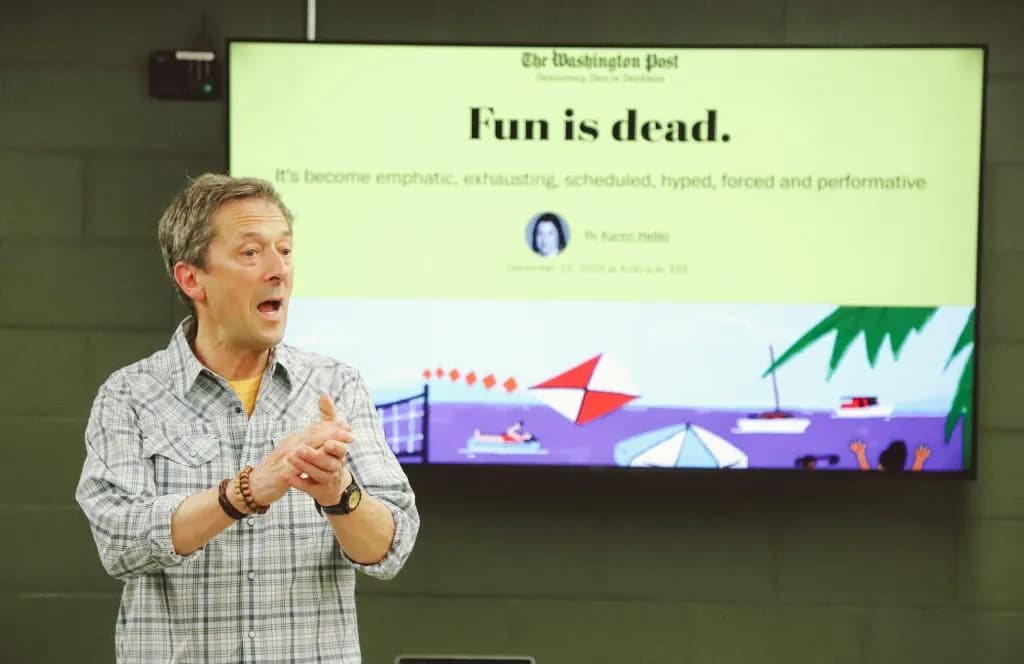
Steamboat Springs —The fluorescent lights of the Yampa Valley Wellness Conference break-out room hum with a low, persistent buzz, but inside, the air feels thick with something else entirely. It’s not just the Colorado chill seeping through the windows of the Steamboat Springs venue. It’s the collective weight of 120 people trying to remember how to breathe.
Hands go up. Not just a few. A forest of them.
They are raising their hands because Beth Blaskovich asked a simple question: who here feels like their life is currently defined by uncertainty?
The answer, it turns out, is almost everyone.
Blaskovich, a meditation expert and certified neurosculpting facilitator right here in Steamboat Springs, didn’t offer a cure-all pill or a mysterious new supplement. She offered something we’ve all done since we were toddlers, yet somehow forgot how to use as adults. She told them to stand up. To shake their arms. To shake their legs. To do it energetically for 30 to 60 seconds.
“Shake it out, literally,” she said.
It sounds ridiculous in theory. It feels primal. High-level athletes do it before a big race, shaking out the nervous tension before the gun goes off. Animals do it instinctively after a stressful event, shaking off the adrenaline to return to a balanced state. Blaskovich argues that humans haven’t lost that wiring; we’ve just buried it under layers of digital noise and existential dread.
This happened on April 9, during the annual Yampa Valley Wellness Conference hosted by the nonprofit The Health Partnership. It’s the kind of event that draws health professionals, social services workers, school staff, and regular folks who just want to figure out how to keep their heads above water. The agenda covered everything from nutrition and art therapy to the power of pause and, crucially, how to reduce harmful time spent on digital devices.
We are drowning in information. Blaskovich pointed out that our nervous systems simply cannot process the sheer volume of uncertainty we’re fed daily. When the brain’s emotional center gets over-stimulated, our perspective narrows. We stop seeing possibilities and start scanning for threats. We enter a state of hypervigilance, where a simple email from a boss feels like a declaration of war.
“We are receiving so much information about uncertainty in our lives that our nervous systems cannot possibly be able to process that,” Blaskovich told the room.
The technique she was teaching is called neurosculpting. It’s a modality of meditation that leverages the brain’s natural neuroplasticity — the idea that the brain can change its own structure and function based on experience. By repeating calming, short exercises, you train the body’s nervous system not to overreact to every little change. You shift the perspective from scanning for threats to scanning for possibilities.
It’s practical. It’s science-informed. And it’s desperately needed in a town where the commute, the housing market, and the seasonal weather all conspire to keep our cortisol levels elevated.
Blaskovich used a relatable example to drive the point home. Imagine sending an important email to a significant other or a boss. You hit send. Then you wait. Your brain starts to narrow. Did they read it? Do they hate it? Are you in trouble? That’s the threat-based thinking taking over. But if you can interrupt that cycle with a physical reset — shake it out, literally, you break the feedback loop. You give your body permission to return to baseline.
The room, initially stiff with the stiffness of a long winter, began to move. Arms flailed. Legs shook. It was awkward at first. Then, it was necessary.
Not exactly a new age ritual. Just biology, reminding us that we are still animals, still wired to move through stress, not just sit and worry about it.
Outside, the Steamboat snow continues to fall, indifferent to our emails and our anxieties. Inside, the shaking stops. The breathing slows. The hands come down. And for a moment, at least, the uncertainty feels a little less like a threat and a little more like just another thing to shake off.
Keep up with Steamboat Springs
The day's Western Slope news, one email each morning. Free.


UCHealth Doctors Offer Back-to-School Health Tips for Steamboat Families
Monsoonal Rain Breaks Colorado High Country Heat Wave