Eagle-Vail Painter Explains Why Gray Is Dead and Color Drenching Is In
In Eagle-Vail, painter Will Mansour explains how extreme Colorado sun drives exterior maintenance and why homeowners are abandoning gray for color drenching and off-whites.
Aspen —What does it cost to repaint your entire house when the sun beats down on it for half the year?
That’s the question hanging in the crisp air outside The Paint Bucket in Eagle-Vail, where Will Mansour is watching neighbors decide if their living rooms need a fresh coat or a complete overhaul. Spring has arrived, technically, though anyone who’s lived in the valley knows the transition feels less like a thaw and more like a suggestion. The days are getting longer. The light is hitting the drywall with a different angle. And suddenly, that beige you loved in 2019 looks less like a sanctuary and more like a waiting room.
“Spring brings a change in weather and people tend to want to see a change in the surroundings they control,” Mansour says. “The longer days give people the courage to make changes and take control of your environment.”
It’s not just about aesthetics here. It’s about survival. In Colorado, the sun is a relentless contractor. It eats paint. It bleaches siding. It turns “timeless” grays into something that looks suspiciously like dirty dishwater. Mansour points out that while interior paint might last a decade if you’re lucky, exterior coatings are fighting a war against extreme UV exposure and altitude. Some homes on the exposed sides of the valley need maintenance every couple of years. Others, blessed with sheltered orientations and high-quality products, can go seven to ten years before the first chip appears.
But let’s talk about the trend that’s actually making people pull out their credit cards: color drenching.
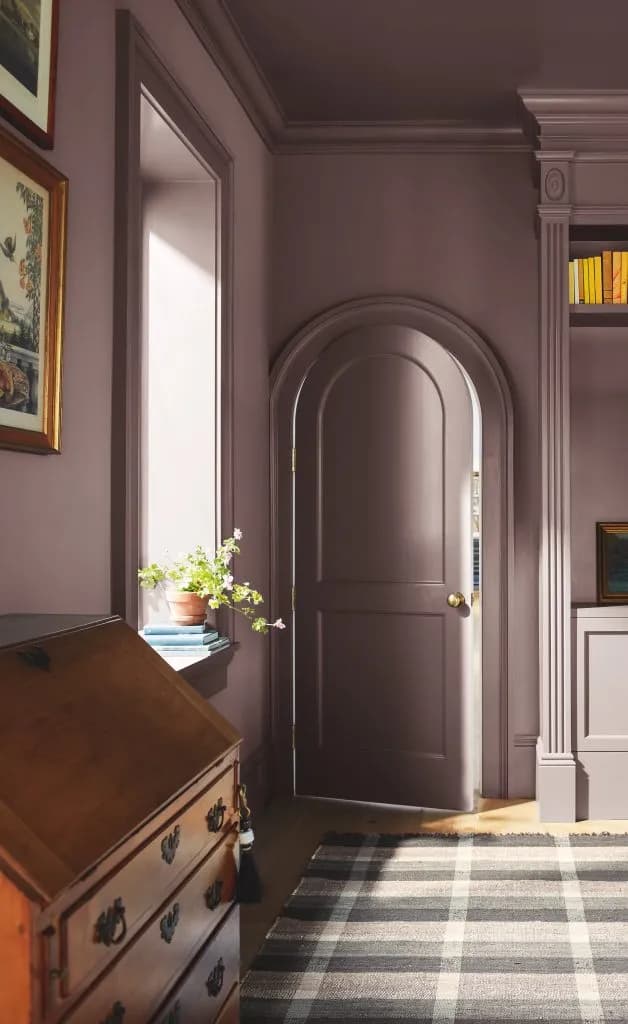
It sounds like a medical condition, but it’s actually an interior design move that’s taking off fast. The concept is simple, if intimidating: paint the walls, the ceiling, and often the trim the same color. Usually darker. Usually bold. Benjamin Moore’s Narragansett Green is the poster child for this shift — a deep, sophisticated hue that swallows light and makes a room feel like a cave you actually want to sit in.
Architectural Digest calls it a “clutch technique.” It hides the ugly stuff. Radiators. Vents. Molding that’s seen better decades. It simplifies a space. If you pick a lighter hue, it can even make a small room feel bigger by blurring the lines between floor and ceiling. But in Eagle County, Mansour sees a more modest version of this madness. Homeowners aren’t always going full “drench.” They’re just matching the wall and the ceiling. It’s a compromise. It’s a way to make the room feel taller without committing to a black ceiling that absorbs every photon of light.
And gray? Gray is dead. Long live gray.
For the last five years, warm grays ruled the Western Slope. They were safe. They were neutral. They were everywhere. Now, they’re being painted over. Literally. The trend has swung hard toward off-whites and charcoal-black combinations. It’s a cycle, Mansour notes. Neutrals always come back. They just come back looking slightly different, like a favorite pair of jeans that’s been washed one too many times.
Here’s the thing though: once you pick that off-white, you’re stuck with it.
“With the popularity of off-white and neutral paint colors, homeowners tend to keep a color scheme for five to 10 years,” Mansour explains. “Occasionally they can keep the same color scheme for a couple decades and all of a sudden realize their colors are trending out.”
That’s the trap. You pick a color because it’s timeless. You live with it. You ignore the way the afternoon sun hits it at 4 PM in November. And then, five years later, you’re standing in your kitchen, scrubbing at a scuff mark, wondering why you ever thought that specific shade of “greige” was a good idea.
The paint bucket sits on the counter. The brush is wet. The decision is made. It’s just you, the color chip, and the relentless Colorado sun waiting to test your commitment.
Keep up with Aspen
The day's Western Slope news, one email each morning. Free.