Aspen's 1960s Boom Doubled School Enrollment and Reshaped Town
Aspen's population exploded in the 1960s, doubling school enrollment and prompting new construction. Robert O. Anderson’s funding also moved the Music Festival to Castle Creek, fundamentally altering the town's cultural and social landscape.
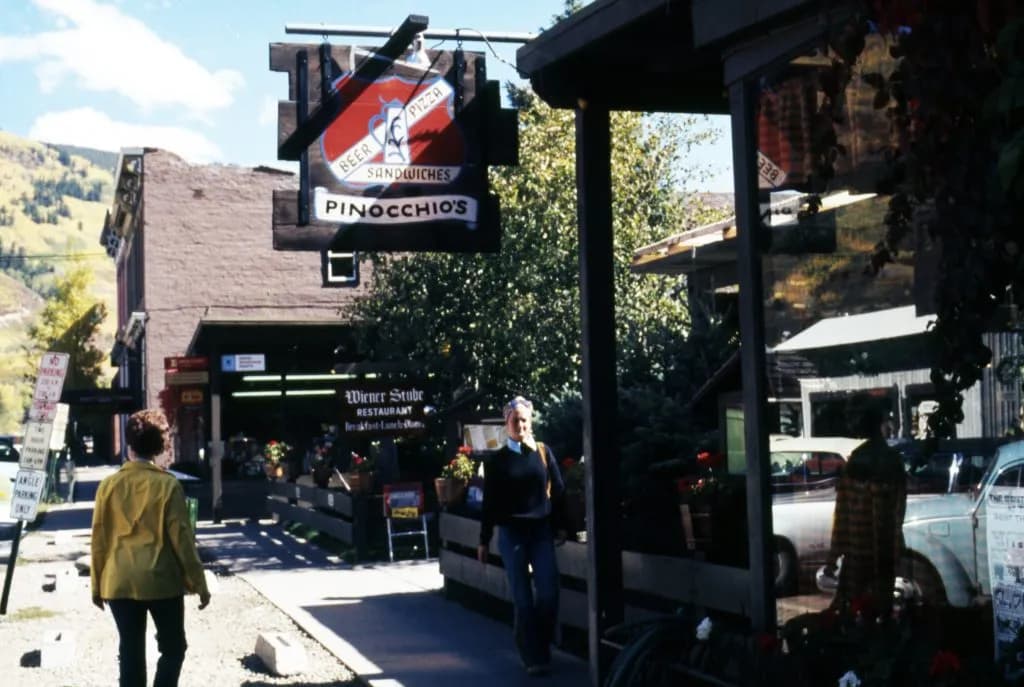
Aspen —The sound of a violin, sharp and bright, cutting through the summer heat of a downtown street corner. That was the texture of Aspen in the mid-1960s, a city that didn’t just grow; it exploded. We often look back at the 1960s and see a golden era of stability, but if you look closely at the numbers, you see a town in a state of constant, frantic transformation.
Aspen Times writer Willoughby lays out the evidence, and it’s hard to argue with the data. Consider the newspaper itself. In 1960, the Aspen Times was a modest 16-page weekly. By 1969, it had ballooned to 32 or 34 pages. Why? Because there was so much happening locally that the paper couldn’t keep up. There were no endless pages of real estate listings clogging the layout; the space was filled with actual news. A rival paper, Aspen Illustrated News, even launched in 1964, a sign that the market was big enough to support competition.
But the newspaper is just a symptom. The real story is in the schools. In 1961, the entire K-12 population was 529 students, all crammed into the Red Brick School. The graduating class of 1960 was tiny — just 14 students. Then, the growth kicked in. Enrollment ticked up to 557 in 1962 and 582 in 1963. But in 1964, it leaped to 665. By the time Willoughby’s own class graduated in 1966, the number had broken records at 32. And the total enrollment? It skyrocketed to 797.
Here’s the part that really gets to me. Of those 32 graduates in 1966, only 15 had been in the class since grade school. Where did the other 17 come from? They were newcomers, mostly from other parts of Colorado, California, and Texas. This wasn’t organic, slow-burn growth. This was an influx of outsiders, drawn by the promise of a better life or a cooler climate. It changed the demographic makeup of the town overnight.
To handle this surge, the district had to build. They constructed a new elementary school for kindergarten through fourth grade, opening in January 1962. It went up across the intersection from the Red Brick School, replacing the old community skating rink. Later, they built a new high school on Maroon Creek — the current one, which opened in 1967 to house the graduating class. By 1969, total enrollment had hit 1,049. That’s nearly double the 1961 figure in less than a decade.
This growth paralleled changes in the Aspen Music Festival. Until 1965, the festival’s music school functions were distributed throughout downtown, mostly in the Aspen Building. Students practiced in the Independence building and ate in the cafeteria on the Hyman Avenue side. You could hear them practicing as you strolled around downtown, adding a special atmosphere. But some business owners, tired of hearing it all day long, grew weary. There were usually around 300 students during that period.
Then, a major fundraising campaign changed everything. Robert O. Anderson made a huge contribution, and the festival was reborn. The original amphitheater was replaced with a larger one, designed by Herbert Bayer, featuring a bigger stage and backstage space for a larger orchestra. Anderson also donated land, allowing the music school to move out of town to the current Castle Creek campus. This provided what was previously scarce: practice rooms, classrooms, and space for groups, including the student orchestra, to rehearse. The cafeteria and additional student housing moved to the Continental Inn, which was later replaced by the Hyatt.
By 1968, the music student population had nearly doubled to over 500. The festival even added a chamber orchestra. It was a massive shift, driven by private wealth and a desire to professionalize the arts.
So, was it all positive? Not necessarily. The rapid growth strained infrastructure. The noise from the music students annoyed locals. The influx of new families changed the social fabric. But the energy was undeniable. It was an exciting, chaotic time.
If you walk through Aspen today, you can still feel the echoes of that 1960s boom. The buildings are older, the streets wider, the population denser. It’s a legacy of ambition and expansion.
The image that lingers is of that 1966 graduating class. Thirty-two young people, standing in front of a camera, smiling. Fifteen of them had known each other since childhood. Seventeen were strangers, newly arrived from far away. Together, they represented the new Aspen.
That photograph captures a moment in time, a snapshot of a city in transition. It’s a reminder that growth is rarely smooth or predictable. It’s messy, complicated, and full of surprises.
But it’s also a sign of resilience and adaptability. Aspen managed to absorb that shock, to integrate those new members into the community. It wasn’t easy, but it worked.
So, when you think about the 1960s, don’t just see the glamour and the fame. See the sweat and the struggle. See the concrete and the steel. See the faces of the people who built it, brick by brick, year by year.
That’s the real story. Not the one in the brochures, but the one in the archives. The one that smells like old paper and dust. The one that whispers, rather than shouts.
And if you listen closely, you might just hear it. Faintly, but clearly. The sound of a city growing up.
Keep up with Aspen
The day's Western Slope news, one email each morning. Free.

Pulitzer Winner Doris Kearns Goodwin Headlines Vail Symposium

Sawatch Hummingbirds Power 3,000-Mile Migrations With Tiny Engines