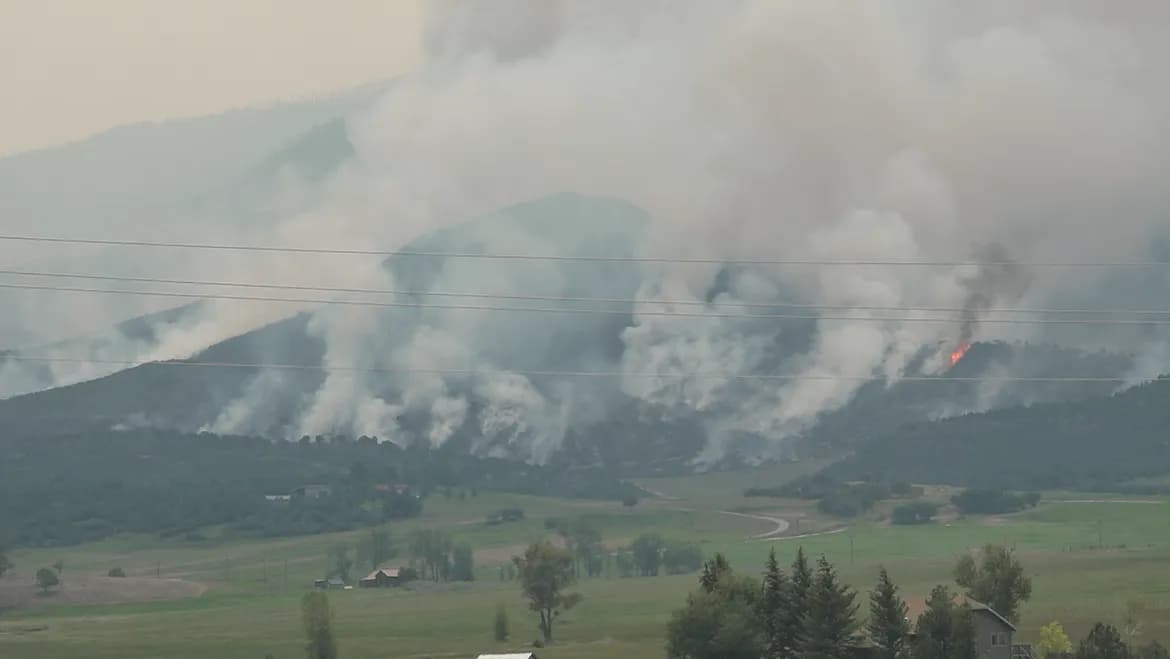
Best Friends Animal Sanctuary Performs Rare Feather Surgery on Concrete-Encased Owl
A great horned owl trapped in a concrete mixer in Kanab, Utah, was saved through a rare 'imping' feather surgery at Best Friends Animal Sanctuary, allowing it to regain its silent flight and return to the wild.
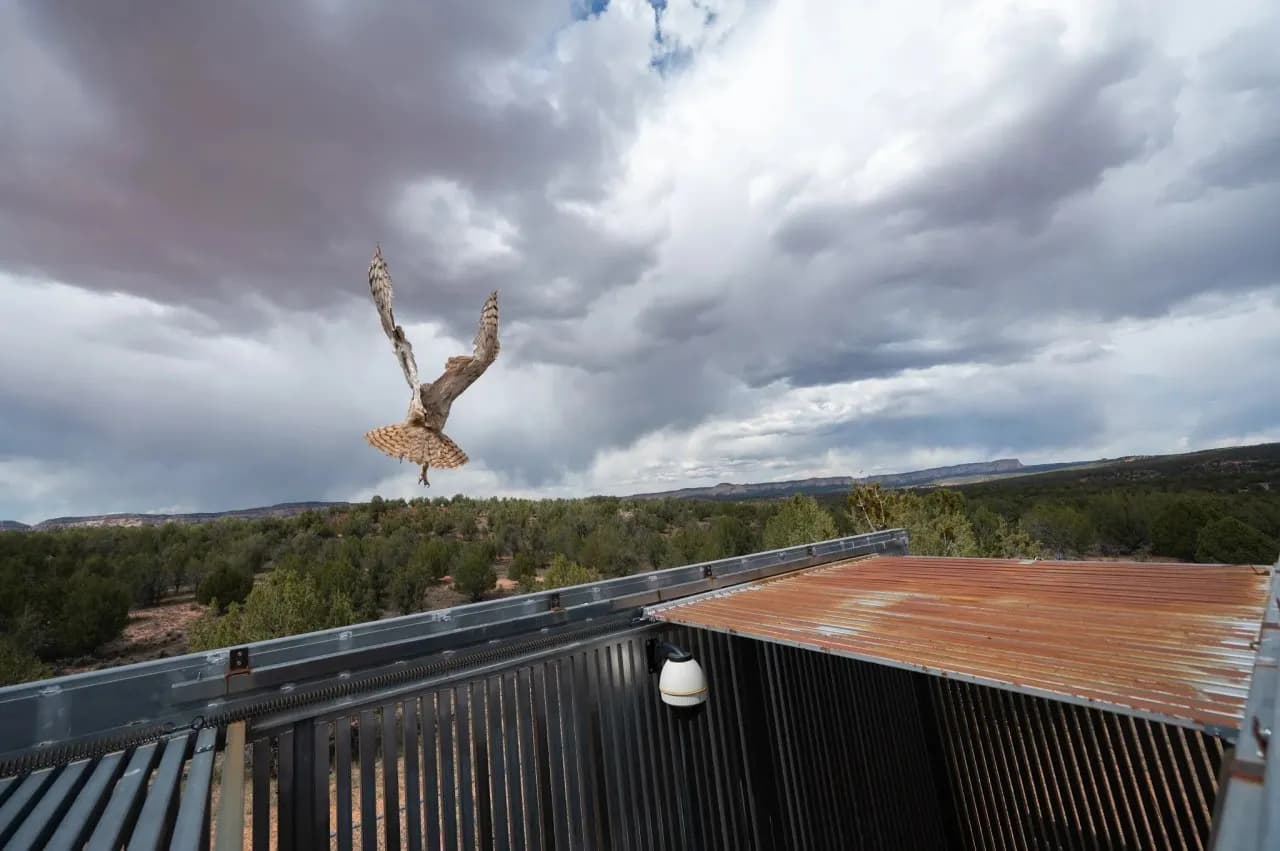
Western Slope —The concrete didn’t just trap him; it froze him in time, a grotesque statue of a great-horned owl suspended in the belly of a mixer somewhere in Kanab, Utah. That’s the counterintuitive part folks around here might miss when they hear the headline: this wasn’t a rescue of an animal stuck in concrete, but one encased by it.
Picture this: a bird, heavy and immobilized, waiting for humans to chip away its prison. It sounds like a fable, but it happened in 2025. And now, after more than six months of meticulous care, that owl is flying again.
The story starts with a good Samaritan who spotted the bird in a concrete mixer nearly 80 miles from its likely territory. The bird was nearly completely covered in dried concrete, a thick shell that had hardened around its feathers. It ended up at the Best Friends Animal Sanctuary in Kanab, where the Wild Friends team faced a specific, tricky problem. Owls rely on "silent flight" to hunt, and that silence depends on the precise structure of their feathers. Concrete ruins that structure.
The team waited for the owl’s natural spring molt to replace the damaged feathers. It’s the easy way out. But the molt didn’t go as it should have. The feathers weren’t coming back right. So, the sanctuary staff learned a procedure they had never done before: imping.
Imping is essentially feather surgery. You take donor feathers — specifically from a great horned owl of similar size that had already passed away — and use adhesive to attach them to the owl’s wing. It’s delicate work. It’s not just slapping feathers on; it’s about restoring aerodynamics.
Bart Richwalski, the sanctuary supervisor, kept a close eye on the bird’s feather patterns in the weeks leading up to the procedure on May 1. They snipped damaged shafts in advance, mapping out exactly what needed replacing. The result? Ten primary feathers on the right wing and one secondary feather were replaced.
“The first few feathers were extremely nerve-wracking, but as we got into the groove, the imping became more comfortable, and everything went smoothly,” Richwalski said.
And that matters because you can’t just release an owl with mismatched wings. If the flight isn’t silent, it doesn’t eat. If it doesn’t eat, it dies. The team watched the bird in the aviary, waiting for the adhesive to hold and the feathers to settle. Once they were sure, they opened the cage.
Richwalski didn’t mince words about the release. “I don’t know that my heart was beating until I saw him leave. I was beside myself, knowing that after all this time, he was healthy and back in the wild,” he said. “It was such a good feeling.”
It’s easy to look at an animal sanctuary and see just a place for pets or zoo-like exhibits. But the work happening here is forensic. It’s about taking a creature that was essentially fossilized in cement and turning it back into a predator. Judah Battista, the Chief Sanctuary Officer, noted that the care reflected their belief that every animal has intrinsic value. It’s a nice sentiment, sure, but the real proof is in the wings.
The owl didn’t just survive the concrete. It survived the waiting, the uncertainty of the molt, and the novelty of a human-performed surgery. Now it’s just a bird again, hunting in the Utah dusk, its silent flight restored by the glue and patience of people who refused to let it stay a statue.
Keep up with Western Slope
The day's Western Slope news, one email each morning. Free.
NWRM CASA Honors Judge O’Hara and Founders at 15th Anniversary
Craig Hosts Only Regional Special Olympics Bowling Competition
Parachute Bike Clinic Seeks Permanent Home After 66 Free Repairs
Mudslides Strand Visitors on East Portal Road After Heavy Rain

How Western Slope Residents Can Safely Wash Produce Amid Cyclospora Outbreak