LIFT-UP Launches Mobile Pantry at Aspen Ranger Station
LIFT-UP launches a mobile pantry at the Aspen Ranger Station on Thursdays to help working residents access fresh food without leaving their jobs.
Aspen —What happens when the price of eggs in Aspen finally breaks the bank for the person who just served your coffee?
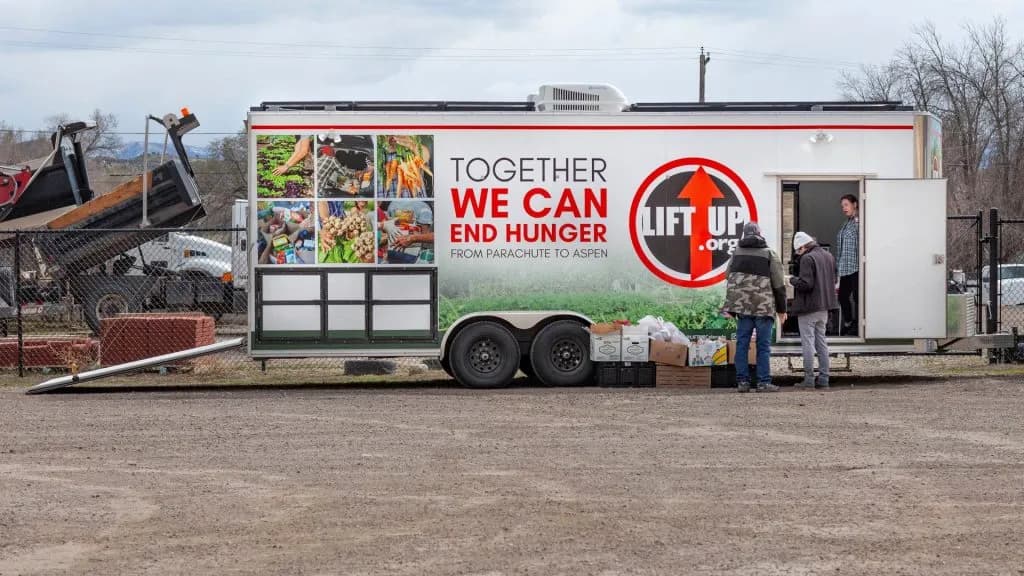
That’s the question driving LIFT-UP’s latest move. On Thursday afternoons, starting with a soft launch on May 14, a mobile market pantry will idle at the Aspen Ranger Station. It sits at 806 W. Hallam St., a specific coordinate in a town where "specific" often feels like a luxury. The window is tight: 3 to 5 p.m. It’s designed for people who are already working, already tired, and already calculating whether they can afford the drive back to Carbondale or Glenwood Springs to grab groceries.
“Country-wide, people are experiencing more need of food security because of how expensive everything has gotten,” says Samantha Freese, LIFT-UP’s executive director. “A huge part of our workforce lives in Aspen and they aren’t making ends meet, despite having jobs up there.”
This isn’t just about handing out cans of soup. It’s about reducing the friction of access. The new service targets those living in employee housing, folks who commute up the valley but might not have the time or fuel to trek to a fixed-location pantry. The mobile unit brings the food down to them. It’s a low-barrier environment, Freese notes, “designed to meet people where they are.”
The inventory tells a story of local investment. Eighty percent of the food comes from donated funds used to buy fresh produce and pantry staples directly from the Food Bank of the Rockies and thirteen local valley farms. The remaining twenty percent is a mix of food donations and grocery rescues, including partnerships with Harvest for Hunger and Walmart. It’s fresh. It’s local. It’s not just the usual surplus.
Getting that truck up the mountain wasn’t free, but it was necessary. Earlier this year, LIFT-UP used donated funds to purchase a new truck capable of pulling the mobile pantry trailer all the way to Aspen. But the trailer itself needed upgrades to handle the journey. Sunsense Solar in Carbondale stepped in to complete several updates, specifically targeting the power system.
“We just really wanted to help out with LIFT-UP. It’s certainly a more-than-worthy organization. We were glad to help,” says Scott Ely, owner of Sunsense Solar. He points out that the primary fix involved the batteries, which are “the base of the system for portable power like that.” Without reliable power, the refrigeration units fail. Without refrigeration, the fresh produce spoils. It’s a simple chain of logic that requires expensive hardware to maintain.
Now, the organization is looking for volunteers to assist the full-time staff. They need people on the ground in Aspen to help the mobile unit succeed long-term. It’s not just about showing up; it’s about sustaining the rhythm of a weekly service in a high-cost environment.
Picture this: A nurse finishes a shift at the hospital. She doesn’t have the energy to drive an hour down the valley for a full grocery haul. She drives to the Ranger Station. She sees the trailer. She gets a box of apples, some greens, and staples for the week. She drives home. That’s the transaction. That’s the relief.
The service operates every Thursday. The location is fixed. The need, as Freese notes, is rising as other bills get higher and higher. For the neighbors in the upper Roaring Fork Valley, it’s a tangible answer to a question that’s been hanging in the thin mountain air all season.
Keep up with Aspen
The day's Western Slope news, one email each morning. Free.
NWRM CASA Honors Judge O’Hara and Founders at 15th Anniversary

Craig Hosts Only Regional Special Olympics Bowling Competition