Colorado Attorney General Urges USPS to Drop Mail-In Voting Restrictions
Colorado Attorney General Phil Weiser joins 23 states urging the U.S. Postal Service to abandon its plan to restrict mail-in voting for the 2026 midterms, arguing the proposal contradicts a federal court ruling and infringes on state authority.
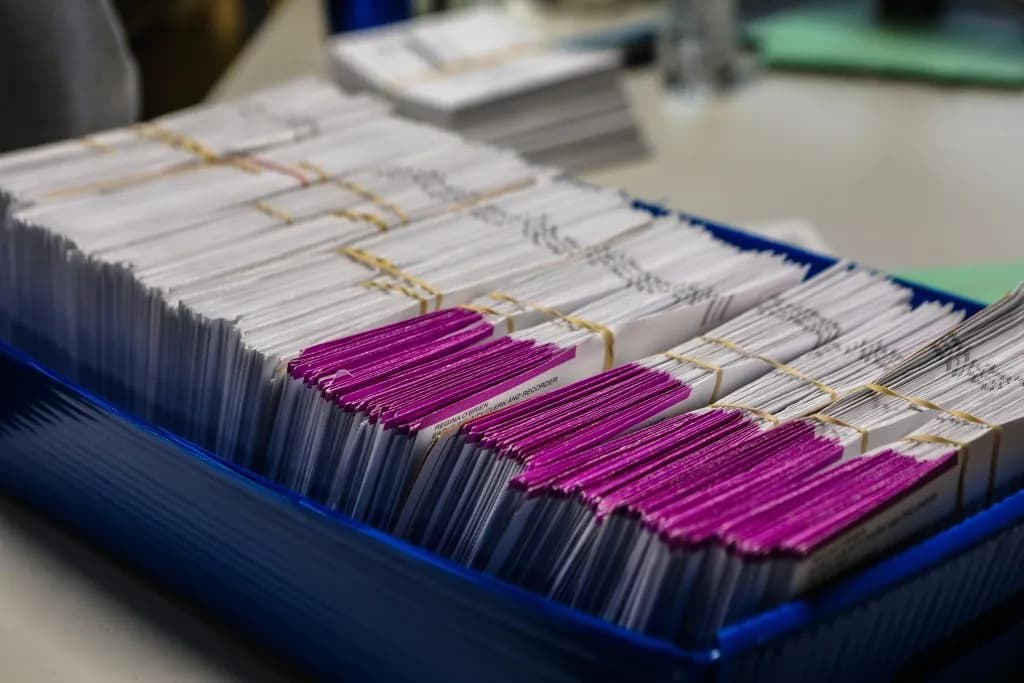
Aspen —Colorado Attorney General Phil Weiser has joined 23 other states and Washington, D.C., in formally urging the U.S. Postal Service to abandon its plan to restrict mail-in voting for the 2026 midterm elections, arguing that the agency’s current proposal directly contradicts a federal court ruling and infringes on state authority.
The dispute centers on President Donald Trump’s executive order, signed March 31, which directs the U.S. Department of Homeland Security to compile a specific list of eligible voters from federal databases and requires the Postal Service to send mail ballots only to those on that list. The order also mandates unique identifiers, such as barcodes, on ballot envelopes and instructs the U.S. Attorney General to prioritize prosecuting state officials who send ballots to ineligible voters.
While a federal judge struck down the executive order on July 25, ruling that its provisions “unconstitutionally violate the separation of powers” by encroaching on states’ constitutional authority to run elections, the agency has not withdrawn its proposal. In a joint letter submitted July 2 via the agency’s open comment process, Weiser and colleagues argue that the Postal Service’s rule violates the judge’s recent order and conflicts with federal election laws.
“This is another unlawful attempt by the Trump administration to seize control of elections that are administered by the states,” Weiser said in a statement. “Colorado is a national leader in secure, accessible elections, and we won’t stand by while the federal government tries to rewrite the rules and create new barriers for eligible voters.”
Weiser, who is also running as the Democratic nominee for governor this year, emphasized that Colorado’s system, established by law in 2013, sends mail ballots to every active registered voter. Although voters retain the option to vote in person at polling centers, the vast majority return their ballots by mail or drop-off box. The state’s mail-in voting system has been linked to increased voter turnout and accessibility, particularly among low-income residents.
Voting rights groups have characterized the executive order as federal overreach, while state and local election officials warn that complying with the new requirements would present significant logistical challenges. The joint letter from Colorado and its allies asserts that the proposed rule creates unnecessary barriers for eligible voters who are not on the newly compiled federal list.
The Postal Service’s decision to proceed with its proposal despite the court ruling has drawn sharp criticism from state officials who argue that the agency is overstepping its governing power. The letter submitted by Weiser and his counterparts highlights the tension between federal directives and state-run election systems, noting that the Constitution grants states the primary authority to determine how elections are conducted.
Weiser’s office has been active in defending Colorado’s voting infrastructure, pointing to the state’s long-standing commitment to mail-in voting as a model for accessibility and security. The ongoing legal and administrative battle over the executive order’s implementation will likely continue to shape how mail-in ballots are distributed and processed in the lead-up to 2026.
The letter outlines specific concerns about the feasibility of creating and maintaining a federal voter list that accurately reflects eligibility for all 50 states, each with its own registration laws and procedures. State officials argue that a one-size-fits-all federal list could exclude eligible voters who are registered under state-specific criteria.
As the Postal Service reviews public comments and weighs its options, the 24 states represented in the letter remain united in their opposition. The outcome of this administrative and legal standoff could determine whether mail-in voting remains a default option for millions of Americans or becomes subject to federal restrictions.
The sound of a ballot dropping into a secure box in a downtown Denver post office, the quiet hum of sorting machines processing thousands of envelopes across the state, and the steady rhythm of a system that has operated without interruption since 2013.
Keep up with Aspen
The day's Western Slope news, one email each morning. Free.