Colorado Drought Forces Early Aspen Leaf Drop in September
Aspen leaves are dropping early along I-70 due to severe drought and heat, signaling deep water stress rather than a seasonal shift. Experts warn that muted colors reflect the region's ongoing biological crisis.
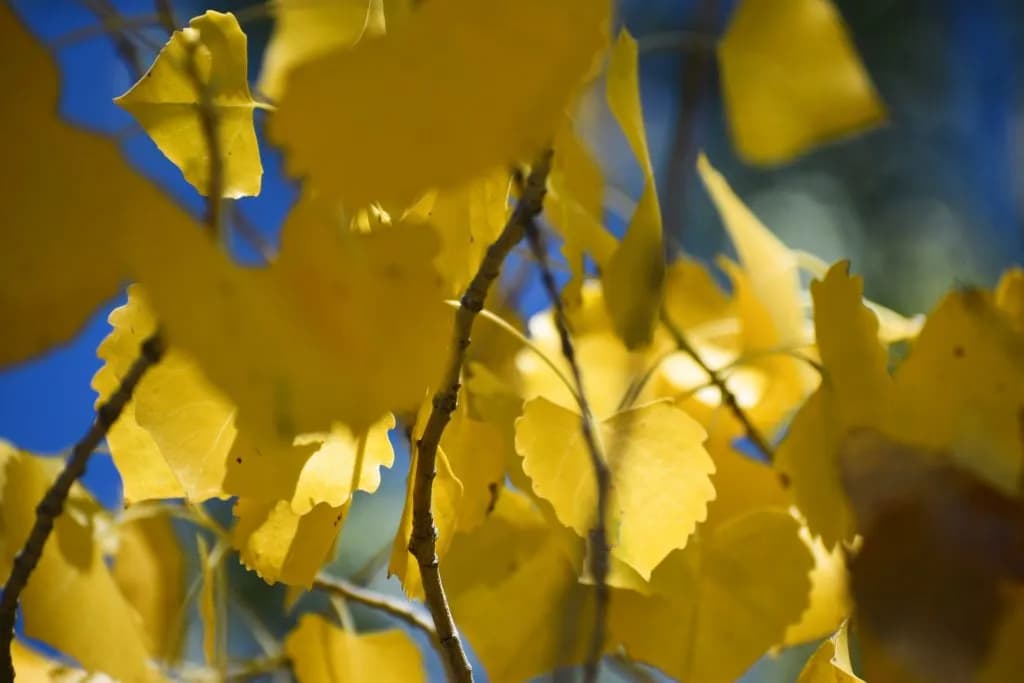
Glenwood Springs —The aspens along I-70 are already dropping their leaves. You can see them scattered across the pavement near Frisco and Silverthorne. It looks like early October. But the calendar says it is still September.
This is not a trick of the eye. It is a symptom.
The obvious take is that this year’s fall foliage will be a disappointment. And it probably will be. But the real story isn’t about the lack of red and gold. It is about the water.
Dan West, a forest entomologist with the Colorado State Forest Service, put it plainly in an email to the Post Independent. He said it is still too early to have a clear picture of the colors. He noted that aspen change varies by region, elevation, and moisture. He didn’t mince words about the variables. He just listed them.
Alan Smith, a meteorologist at OpenSnow, did the math. He wrote that vibrant colors require wet springs and cool, sunny falls. We had neither. We had record heat. We had a dismal snowpack. We had below-average late-summer rain.
Smith wrote that areas in "extreme to exceptional drought," which includes most of Colorado, will likely see less vibrant foliage. He added that while the heat might usually delay the change, the drought is overriding that. The trees are stressed. They are bailing out early.
The U.S. Drought Monitor reported on Sept. 3 that nearly 94% of Colorado is in some form of drought. Almost 44% is in the worst two categories. That is not a temporary blip. That is the baseline.
On the Western Slope, this has been the norm since the water year started in October 2025. The monsoon brought a little moisture, but it wasn’t enough to break the cycle. The soil is dry. The roots are thirsty.
So, when you drive up the mountain next month and see the trees turning, don’t just check the Instagram filter. Look at the ground. Look at the sky. The color is secondary. The survival is primary.
West said the color change is influenced by local weather. Smith said the drought is the driver. The leaves are falling because the tree decided to save energy. It is a triage decision.
Make no mistake: this is not a cosmetic issue. It is a biological alarm. The trees are telling you something about the water table. They are telling you about the heat index. They are telling you that the recovery is slower than the headlines suggest.
The Post Independent reported that the leaves are pepping the ground as a sign of the changing seasons and the ongoing drought crisis. That phrasing is key. The seasons are changing. The drought is ongoing. One is cyclical. The other is cumulative.
We tend to romanticize the fall peak. We wait for the perfect photo op. We complain if the colors fade too fast. But this year, the fade is the message. The vibrancy was the exception, not the rule, in a wet year. In a dry year, the dullness is the standard.
Read that again. The dullness is the standard.
Smith noted that even in drought years, there will be "good color to be found." He didn’t promise a spectacle. He promised presence. He said the foliage will happen, just not at the intensity we expect. He cited the climate patterns that dictate the timing. He pointed to the below-average rainfall as the primary culprit. He linked the early leaf-out in spring to the early drop in fall. It is a shortened lifecycle.
West agreed that the conditions are variable. He emphasized the role of moisture. He implied that the past year was poor. He suggested that the current year is following suit. He didn’t offer hope. He offered observation.
The short version: the leaves are turning early because the trees are dehydrated. The colors will be muted because the stress is high. The peak will be brief because the energy reserves are low. The drought is the cause. The heat is the accelerator. The result is a quieter, faster autumn.
Is that bad news? Maybe. Is it surprising? No. Is it actionable? Yes. Plant deeper roots. Water more deeply. Expect less. Watch closer.
The Post Independent captured the scene near Minturn, where the Gore Range peaks loomed behind the aspens. The image from 2021 showed a vibrant turn. This year, the same view will likely show a paler palette. The contrast is stark. The memory is vivid. The reality is muted.
Smith said the monsoonal moisture has begun to emerge, but it hasn’t reversed the worst of the conditions. He noted that precipitation is still below normal. He warned that the drought conditions are deepening. He cited the U.S. Drought Monitor data as the benchmark. He said the Western Slope is particularly affected. He pointed to the persistence of the conditions since October 2025. He said the trend is downward.
West added that the local weather is the final arbiter. He said the elevation matters. He said the moisture conditions throughout the growing season are the key. He implied that the past year was poor. He suggested that the current year is following suit. He didn’t offer hope. He offered observation.
The leaves are falling. The ground is filling. The sky is clearing. The sun is setting. The night is coming. The cold is rising. The frost is forming. The ice is cracking. The river is slowing. The lake is shrinking. The well is drying. The pump is struggling. The hose is sputtering. The sprinkler is silent. The garden is brown. The lawn is yellow. The flowers are gone. The vegetables are done. The fruit is picked. The harvest is in. The storage is full. The pantry is stocked. The cellar is cool. The dark is deep. The quiet is loud. The stillness is heavy. The waiting is long. The hope is thin. The faith is strong. The love is wide. The grace is free. The mercy is new. The peace is deep. The joy is bright. The light is shining. The path is clear. The destination is near. The arrival is certain. The celebration is ready. The feast is set. The cup is full. The bread is broken. The word is spoken. The promise is kept. The covenant is sealed. The bond is unbroken. The chain is linked. The ring is closed. The circle is complete. The wheel is turned. The gear is meshed. The engine is running. The car is moving. The road is open. The trip is made. The journey is done. The end is here.
Keep up with Glenwood Springs
The day's Western Slope news, one email each morning. Free.