Colorado Joins 23 States in Challenging USPS Mail-In Ballot Rules
Colorado and 23 other states formally oppose USPS plans to restrict mail-in ballots to federal-eligible voters, arguing the rule violates recent court orders and state authority ahead of 2026 midterms.
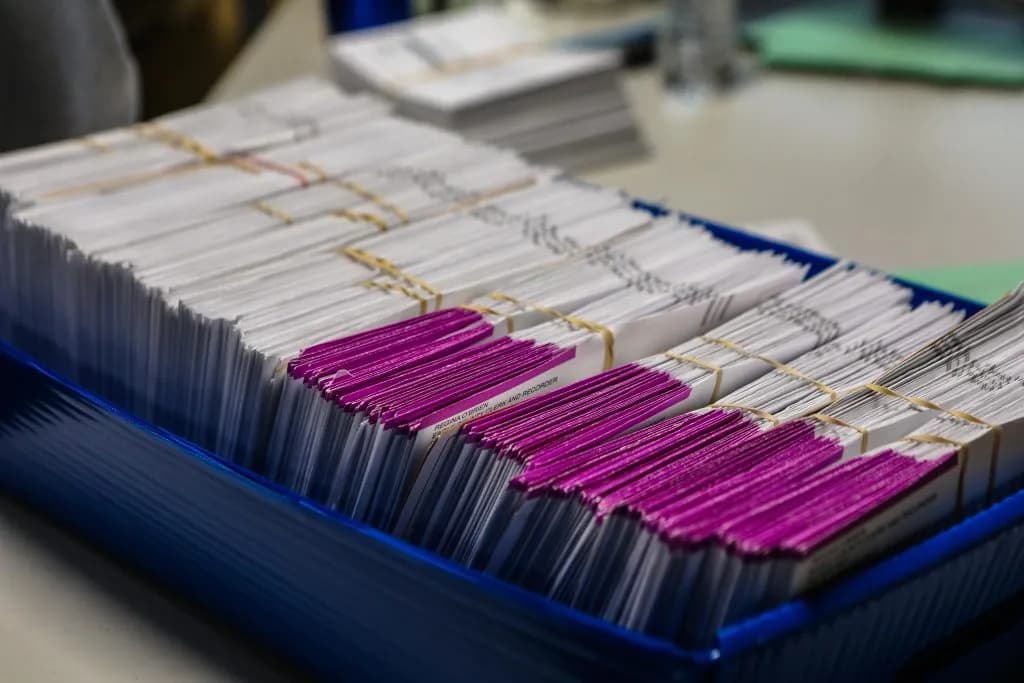
Aspen —The air in the Vail Valley carries a specific kind of tension this summer, one that hums beneath the mountain air and settles into the bones of locals who know that elections here are not just civic duties, but community rituals. For years, the process has been fluid — boots on the ground, mailboxes checked, signatures verified with a familiarity that feels like neighbors passing by. But now, there is a new weight to the ballot box, one that threatens to turn our local elections into a logistical puzzle dictated by federal mandates.
Colorado is no longer standing alone in this fray. Alongside nearly two dozen other states, our state has formally asked the U.S. Postal Service to abandon its plan to restrict mail-in voting, a move that could reshape how we cast our votes in the 2026 midterm elections.
At first glance, the push from Washington seems straightforward: strengthen election integrity by ensuring only eligible voters receive ballots. President Donald Trump signed an executive order on March 31 instructing the Department of Homeland Security to compile a federal database of eligible citizens and directing the agency to send ballots exclusively to those on that list. The order demands unique identifiers, such as barcodes, on envelope sleeves to reduce fraud and protect federal election integrity. It even asks the U.S. Attorney General to prioritize investigating state and local officials who send ballots to people deemed ineligible for federal elections.
But if you look closely at the mechanics, there is a rough edge to this polish. The order imposes new requirements that state and local election officials warn will create significant logistical challenges. More importantly, it represents a shift in power that many see as an overreach.
Weiser, who is also the Democratic candidate for governor this year, signed onto a joint letter sent to the agency on July 2. The letter argues that the proposed rule violates a recent federal court order and conflicts with the authorities governing the Postal Service, as well as other federal election laws.
“This is another illegal attempt by the Trump administration to take control of elections that are administered by states,” Weiser declared, noting that Colorado is a national leader in holding safe and accessible elections. He added that the state will not stand by idly while these changes are imposed.
The legal landscape has already shifted beneath our feet. In April, Colorado and nearly two dozen other states filed a lawsuit challenging the executive order. On July 25, a federal judge nullified the order, ruling that its provisions “unconstitutionally violate the principle of separation of powers.” The Constitution grants states the authority to administer elections and Congress the power to enact election laws, a distinction that matters deeply to folks who care about local autonomy.
Yet, despite the judge’s ruling, the Postal Service has not abandoned its proposal to send ballots only to voters included in an approved federal list. This discrepancy between the court’s decision and the agency’s current trajectory is what prompted the latest wave of opposition.
On July 2, Weiser, along with Democratic attorneys general from 22 other states and the District of Columbia, submitted a joint letter to the Postal Service opposing the plan through the agency’s public comment process. The letter asserts that the proposed rule violates the recent federal court order and conflicts with the authorities governing the Postal Service, as well as other federal election laws.
There’s a warmth to Colorado’s approach here — it’s not just about blocking a rule, but about asserting a right. The state is leveraging its position as a leader in election administration to push back against what it sees as federal encroachment. For locals, this means that the ballot you receive might still be your own, but the rules for who gets it are being rewritten in real time.
As the leaves begin to turn on the Western Slope, the question isn’t just whether the Postal Service will comply with the court’s ruling, but whether states like ours will continue to hold firm against federal directives. The answer lies in the quiet persistence of local officials and the steady hand of voters who know that their voice matters, regardless of where the paperwork comes from.
Keep up with Aspen
The day's Western Slope news, one email each morning. Free.