Colorado Lawmakers Strike Deal To Kill Road Initiative
Restore Our Roads withdrew Initiative 175 after striking a deal with Colorado lawmakers to earmark $120 million for road repairs, avoiding a constitutional mandate that would have drained general fund education and Medicaid budgets.
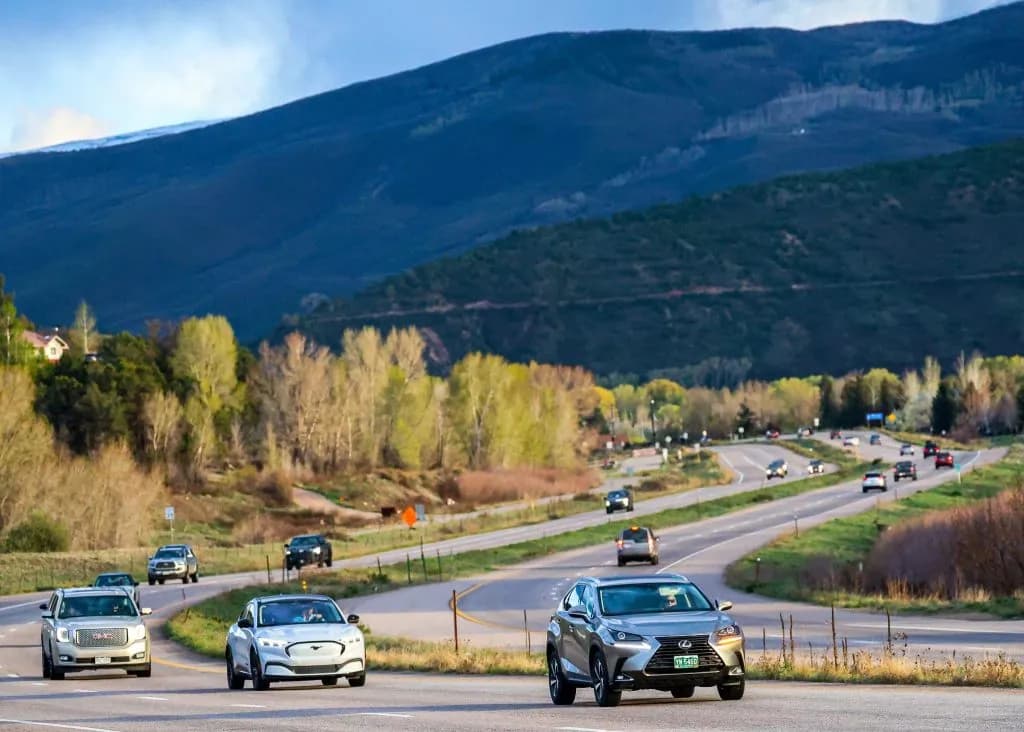
Aspen —The asphalt on I-70 doesn’t care about your political party. It cracks in the same jagged, ugly lines whether you’re a Democrat or a Republican, and it potholes your suspension with the same indifferent thud whether you’re hauling livestock or commuting to work. For years, folks around here have watched the state’s road infrastructure decay into a patchwork of temporary fixes and deferred maintenance, a reality that made the promise of Initiative 175 feel less like policy and more like survival. But here is the counterintuitive truth that just landed on our doorsteps: we didn’t win a constitutional mandate to fix the roads. We got a promise.
The group Restore Our Roads announced on Thursday, Aug. 27, that it is withdrawing its ballot initiative after striking a deal with lawmakers and Colorado Attorney General Phil Weiser. Jeff Keller, the co-chair of Restore Our Roads, said in a news release that their goal has always been to give taxpayers a voice in how transportation taxes are used, and now they finally will. It’s a victory framed in language of empowerment, but if you look closely at the mechanics, it’s a compromise born of fear.
The original measure, Initiative 175, would have added language to the state constitution requiring the legislature to spend all money collected from vehicle registration, motor parts, and gas taxes on roads. According to an analysis by the nonpartisan Legislative Council Staff cited in the Aspen Times, that would have required spending more than $2 billion annually on road projects. The catch? About $700 million of that would come from state dollars, with the bulk — $540 million — coming from the general fund. That is the same pot of money that primarily supports Medicaid and K-12 education.
Democratic lawmakers, who have been battling chronic budget challenges that spurred billion-dollar deficits over the past two years, saw a threat. They feared the measure would siphon funding from education and healthcare at a critical time. So, in the final days of the 2026 session, they passed a bill to temporarily lower the taxes used to generate road funding, effectively neutralizing the measure if it passed. Gov. Jared Polis signed that bill into law. It was a defensive move, a way to say, "We’ll fix the roads, but on our terms."
Now, with the deal struck, that defensive bill becomes moot. State Rep. Andrew Boesenecker, a Fort Collins Democrat and lead sponsor of the neutralizing bill, said lawmakers have committed to passing a bill next session that would earmark up to $120 million for road maintenance and repair. That money would likely come from enterprise funds, which are supported by fees rather than the state’s general fund. It’s a fraction of the $2 billion the initiative would have mandated, and it relies on legislative goodwill rather than constitutional compulsion.
There’s a warmth to the idea that we avoided a budgetary war, but there are rough edges here. The Western Slope’s road conditions have long plagued communities, and a $120 million earmark is a drop in the bucket compared to the scale of decay on our highways. Yet, the alternative was a constitutional lock that might have starved schools and hospitals to pave asphalt. The measure drew mixed opinions from county commissioners and local government groups, reflecting the tension between immediate infrastructure needs and long-term fiscal stability.
We are left with a commitment to act in January, when lawmakers return to the Capitol. It’s not the ironclad guarantee we sought, but it’s a start that keeps the general fund intact for our kids and our sick. The deal is done, the ballot measure is gone, and we’re left waiting to see if the next session delivers on its word. Outside, the wind picks up off the mountains, carrying the scent of dry pine and diesel exhaust, a reminder that while politics negotiates in quiet rooms, the roads out there are still cracking under the weight of every car that passes.
Keep up with Aspen
The day's Western Slope news, one email each morning. Free.