Colorado Parks and Wildlife Officially Launches K-9 Unit to Manage Black Bear Conflicts
Colorado Parks and Wildlife transitions its K-9 unit from experimental to official status, using dogs like Samson to prevent black bear conflicts and reduce euthanasia rates.
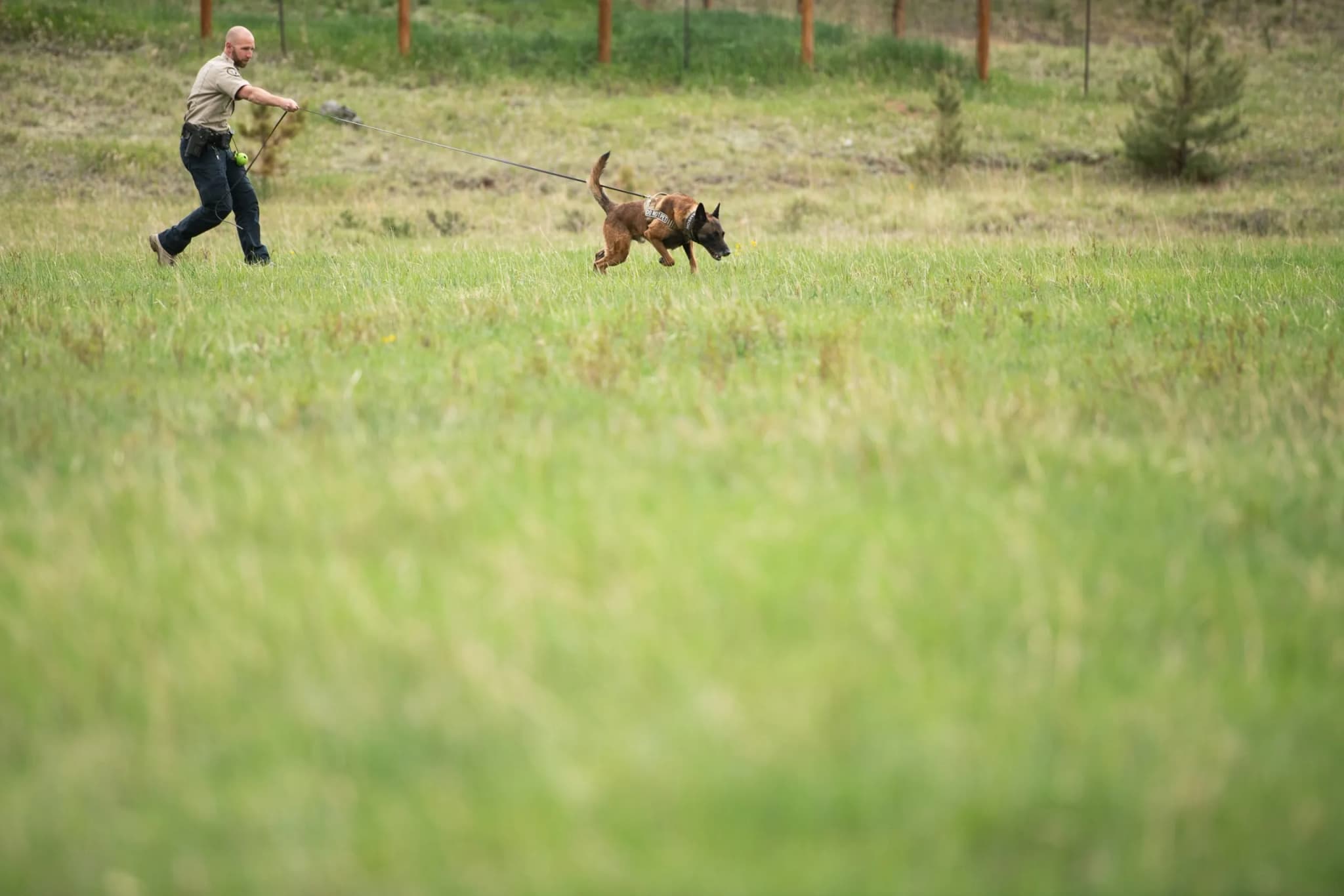
Colorado —“Samson is just one of the dudes, but boy does he have a sniffer.”
Ian Petkash doesn’t say it with much fanfare. He says it while watching a 75-pound Belgian Malinois tear across a grassy field in Park County, dragging his handler behind him like a tethered balloon. The dog stops. He whips his head left. He lunges at nothing. Then he moves like a serpent, coiling and striking at the air until he’s zeroed in on a single, small green dental floss pick stuck in the dirt.
It’s a test. The wind is blowing in his face, masking the scent. A volunteer hid the pick to outsmart him. He found it. Petkash throws a ball. Samson catches it. He’s never been paid on that scent before, Petkash notes, which means the dog is working off pure instinct and training, not just the promise of a treat.
This is the new reality for Colorado Parks and Wildlife (CPW). Last year, the agency’s K-9 unit shed its experimental skin and became an official, state-funded part of the operation. It wasn’t a sudden explosion of budget; it was the culmination of a 10-year trial. And it’s changing how the state manages its most famous wild neighbor: the black bear.
Picture this: a bear wandering too close to a campground in Breckenridge or near a trailhead in Bailey. Usually, that ends with the bear being tracked, maybe tranquilized, and often euthanized if it’s deemed a repeat offender. It’s the classic human-wildlife conflict. But now, there’s a dog. Samson, funded by a $12,000 grant from ex-Steeler Ben Roethlisberger, is part of a team that includes more than just him. They are using these dogs to find kids who wander away from campsites, to uncover freezer bags of illegally caught fish, and yes, to bust poachers.
But the bear angle is the one that matters most to locals. CPW estimates the state’s black bear population between 17,000 and 20,000. They are the largest carnivore in Colorado now, a title they inherited after Ed Wiesman killed the last grizzly with an arrow back in 1980. An average adult male weighs 275 pounds. That’s 125 pounds more than a male mountain lion. They live in Gambel oak and aspen country, ranging from 10 to 250 square miles.
The pressure is on. In 2025, the agency received 5,299 bear reports. That’s up from 4,996 the year before. It’s the highest number since 2019. It beats the seven-year average for bear-related conflicts. People are seeing more bears. Bears are seeing more people. And the old methods of simply removing the problem animal are becoming less sustainable, or at least less popular.
Samson isn’t just a police dog. He’s a deterrent. When he’s out there, sniffing the air near a trailhead, he changes the equation. He’s all business, Petkash says. He wants treats. He wants snuggles from his handler. But he wants everyone else to leave him alone.
The program isn’t just about catching fish thieves. It’s about keeping the bears alive. If a dog can help a bear realize it’s in a human zone before it gets shot, that’s a win for the community and the wildlife. It’s a shift from reaction to prevention. And it starts with a dog finding a piece of dental floss in a field.
Later that afternoon, the crowd at the Bailey branch of the Park County Library watches the demonstration. Coolers are opened. Simulated animal remains are hidden. Samson works the room. He’s not just showing off. He’s proving that a $12,000 investment, plus the ongoing cost of training and care, might be cheaper than the alternative of managing a bear population that’s growing faster than the infrastructure can handle.
The sun dips lower over the Rocky Mountains. Samson sits. He looks at Petkash. He’s waiting for the next command. The bears are still out there, somewhere in the darkening oak and aspen. But now, they have a better chance of staying there, rather than ending up in a dump truck heading to the highway.
Keep up with Colorado
The day's Western Slope news, one email each morning. Free.
Steamboat Recommends E-Motorcycle Education to Clarify Rules
BLM Clears 113 Roan Plateau Parcels for December 2026 Oil and Gas Lease Sale
Southern Colorado Releases 2,500 Acre-Feet to Save Drying Arkansas River
Federal Report Sets 200,000 Acre-Foot Water Conservation Target for Upper Basin
Colorado Parks and Wildlife Deploys Precision Drones for Weed Control