Colorado Ranks Sixth in US Wind Energy Output Amid Iowa Competition
New CoPIRG report reveals Colorado generated 44% of state electricity from solar and wind in 2025, ranking sixth nationally for wind and leading in battery storage despite fierce competition from Iowa and Kansas.
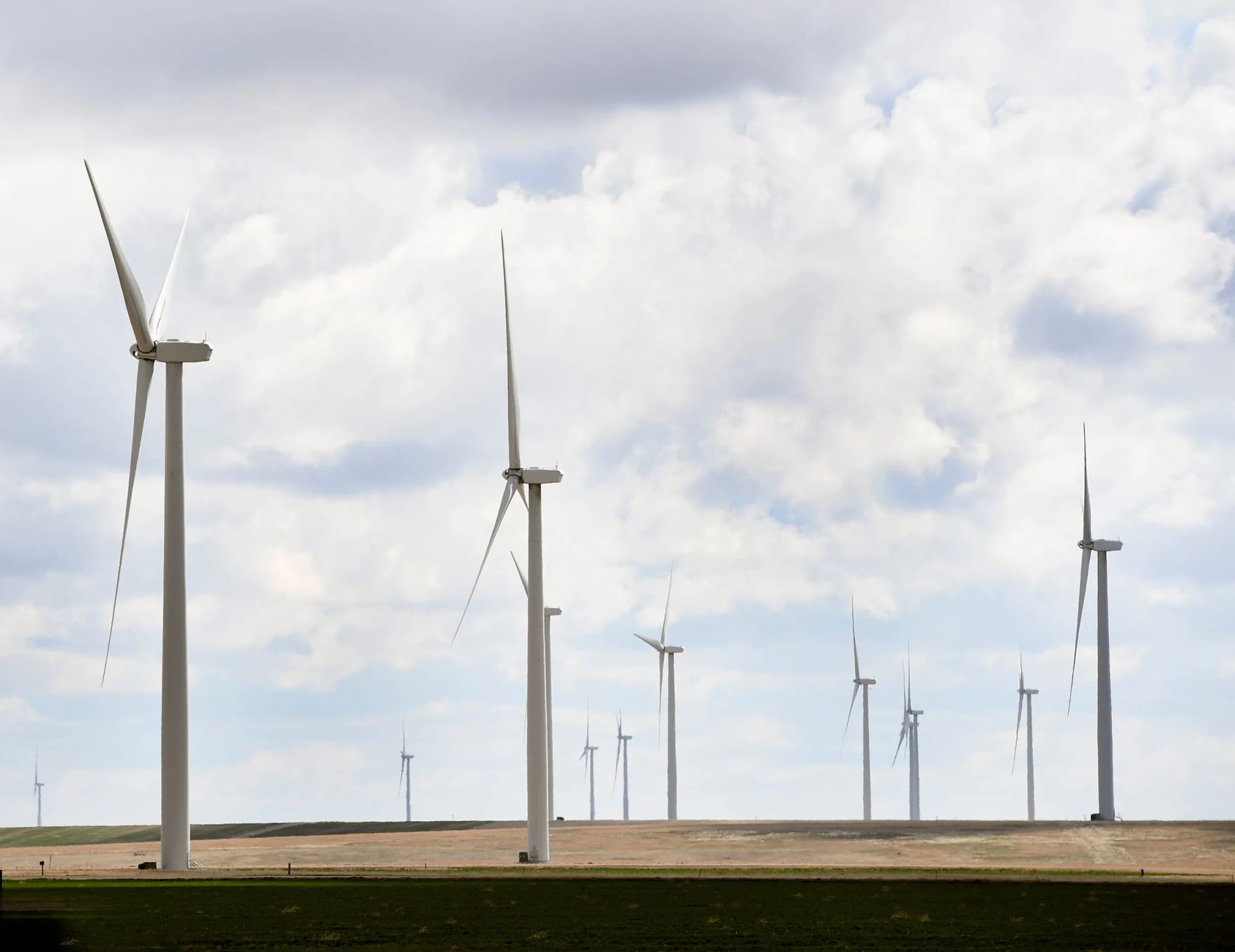
Colorado —“Colorado’s growing solar and wind farms generated the equivalent of 44% of the total electricity consumed in the state in 2025, up from 19% in 2016.”
That’s the headline number from a new report by CoPIRG and Environment Colorado, and it’s the kind of statistic that makes energy policy nerds in Denver nod approvingly. But for folks living in the valleys and high country, the real story isn’t just that we’re making more clean power. It’s who else is doing it, and why the political map doesn’t look the way you’d expect.
The study ranks Colorado sixth in the nation for wind energy and tenth for installed battery storage. Those are solid numbers. They put us in the same tier as Minnesota, Oregon, and Washington — states with similar populations and a reputation for progressive energy policies. But the data reveals a surprising competitor right next door: Iowa.
“Here’s another group comparison,” the report notes, pointing out that Iowa’s wind farms are producing an “energy bonanza.” Kansas is climbing the ranks, too. These are deep-pink-to-red states, ostensibly less welcoming to renewable energy than our own. Yet they’re generating massive amounts of wind.
The question is whether Colorado’s advantage is political or geographical. We have the geography — the wind corridors along the I-70 corridor near Bovina, for instance, are visible from the highway and generate real power. But Iowa has the scale. And Utah, while lacking the same massive wind geography, is finding other ways to move the needle on clean energy.
Battery storage is where Colorado pulls ahead of some of these rivals. The report highlights that we are ahead of Kansas and Iowa in pairing solar and wind farms with battery backup. This is critical. You can build the biggest wind farm in the world, but if the wind stops blowing at 8 p.m. when everyone gets home and turns on their lights, you need storage to fill the gap. Colorado appears to be investing in that reliability infrastructure more aggressively than its peers.
Electric vehicles tell a different part of the story. Washington state is dominating EV adoption, outpacing Colorado’s substantial growth. The number of charging ports follows the vehicle registrations, suggesting that infrastructure is keeping pace with demand in the Pacific Northwest. Here, we’re catching up, but we’re not leading.
The report comes with a warning, though. Clean energy advocates are pointing to federal cuts to subsidies and tax credits for solar, wind, and EV sales as a threat to this progress. If the money dries up, the momentum slows.
For Delta County, this isn’t just about national rankings. It’s about the grid stability that keeps the lights on during a winter storm. It’s about whether the wind turbines visible from your driveway are contributing to a reliable local grid or just exporting power to the rest of the state. The data suggests we’re building a more resilient system than Iowa or Kansas, but we’re playing catch-up on the electric vehicle front.
“The data backs that up,” as the report puts it, showing that Colorado is serious about the transition. But the competition is fierce, and the political landscape is shifting faster than the wind.
As one advocate for the study noted, “The outcome remains uncertain, but the combination of policy and geography is giving us a distinct edge in reliability.” That edge matters. It means fewer blackouts. It means lower costs over time. And it means that when the federal government pulls back, Colorado might just have the infrastructure to keep going.
Keep up with Colorado
The day's Western Slope news, one email each morning. Free.
Steamboat Recommends E-Motorcycle Education to Clarify Rules
BLM Clears 113 Roan Plateau Parcels for December 2026 Oil and Gas Lease Sale
Southern Colorado Releases 2,500 Acre-Feet to Save Drying Arkansas River
Federal Report Sets 200,000 Acre-Foot Water Conservation Target for Upper Basin
Colorado Parks and Wildlife Deploys Precision Drones for Weed Control