Colorado River Faces Historic Lows in Water Flow
The Colorado River is expected to hit historic lows in water flow this summer, affecting 40 million people and having severe implications for agriculture and local economies.
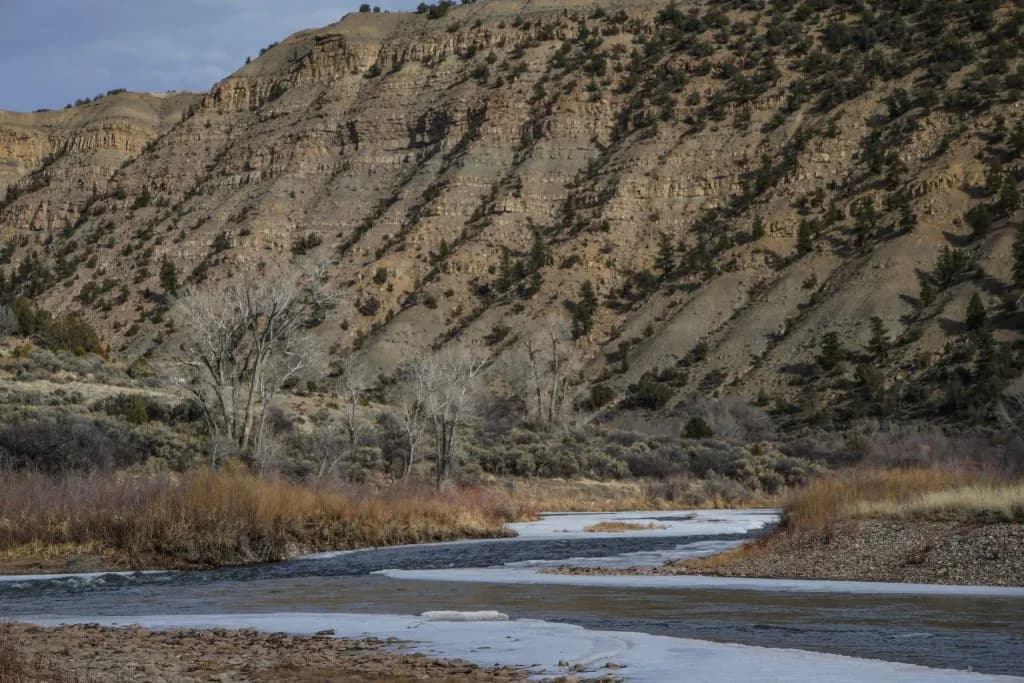
Craig —Standing on the banks of the Colorado River in Grand Junction, the water level is visibly lower than usual — a stark reminder of the crisis unfolding. The river's flow is expected to hit historic lows this summer, with only about 2.3 million acre feet of water projected to reach Lake Powell, a mere one-third of normal. This will be the fifth lowest amount in 63 years, according to Cody Moser, a hydrologist at the Colorado River Basin Forecast Center.
The Colorado River Basin, spanning seven states, is the lifeblood for 40 million people, including those in western Colorado. Lake Powell, the nation’s second-largest reservoir, acts as a critical "bank account" of water, allowing Lower Basin states to draw from it during dry years and Upper Basin states to replenish it after using their share. However, the ongoing shortages and drought have pushed the system to the brink. The hot winter, with temperatures several degrees above normal, has resulted in low snowpack and poor precipitation in key areas, including the Colorado River Headwaters region, which includes parts of northwest Colorado.
In this region, which encompasses Grand, Summit, Eagle, Pitkin, and Routt counties, river basins have received a dismal 70% of average precipitation since October. This is the lowest level of precipitation anywhere in the 246,000-square-mile basin, according to National Oceanic and Atmospheric Administration data. The warm temperatures have also led to more rain than snow in areas that typically rely on snowfall for winter precipitation, and snow is melting at unusually high elevations, such as 10,000 feet. Moser notes that many locations are experiencing rain instead of snow, further exacerbating the water shortage.
The implications of this crisis are far-reaching, and the community is bracing for the impact. The basin states failed to reach an agreement on managing the water by a critical deadline last month, leaving the federal government to intervene. This will likely lead to significant changes in how water is allocated and managed, affecting everything from agriculture to municipal water supplies. Make no mistake, this will be a difficult summer for folks around here, with water restrictions and shortages expected to hit hard.
As the situation continues to unfold, it's worth watching how the federal government will step in to manage the crisis. The Bureau of Reclamation will play a critical role in allocating water and ensuring the long-term sustainability of the system. However, the short version is that there simply isn't enough water to go around, and tough decisions will need to be made. The community will be looking to officials for guidance and support, but so far, there's been little indication of what that will look like.
In Delta County, where agriculture is a significant part of the economy, the water shortage will be particularly felt. The county's farmers and ranchers rely heavily on water from Lake Powell and its tributaries for irrigation, and any reduction in water allocation will have a direct impact on their livelihoods. This will also affect the local economy, as agriculture is a substantial contributor to the area's revenue. The economic implications of this crisis cannot be overstated, and the potential consequences for the community are severe.
The Colorado River Basin Forecast Center's projections are clear: the water supply forecast will likely trend lower over the next two weeks, and the situation will only worsen before it improves. As Moser stated, "I anticipate this water supply forecast trending lower, at least during the next two weeks." This is a dire prediction, and one that should not be taken lightly. The fact that the Colorado River Headwaters region is experiencing such poor precipitation is a significant concern, and it's an area that will be closely monitored in the coming weeks.
Read that again: one-third of normal water flow is expected to reach Lake Powell this summer. That's a staggering reduction, and one that will have far-reaching consequences for the entire basin. As the community prepares for the challenges ahead, the severity of the situation and the potential implications for the local economy and way of life are becoming clear. The question on everyone's mind is: what's next?
Keep up with Craig
The day's Western Slope news, one email each morning. Free.
Glenwood Springs Closes I-70 Interchange for $14 Million Road Overhaul

Colorado's New Digital Warrant Law Forces Social Media Platforms to Act Fast