Colorado Ski Visits Collapse 24% in Worst Season Since 1981
Colorado ski visits plummeted by 24% to 10.5 million in the 2025-26 season, marking the sharpest downturn in over 40 years due to a massive snowpack deficit. The article analyzes how resorts are shifting revenue models from volume to season pass retention.
Colorado —Colorado’s ski industry just lost its mind.
Visits to the state’s 26 ski hills collapsed by 24% in the 2025-26 season. That is the sharpest downturn in more than 40 years. After four years of record-breaking traffic, the numbers fell from 13.9 million to 10.5 million.
It’s the lowest showing since 1991-92.
Not even the early March 2020 closures during the pandemic marked a steeper decline. That was a 19% drop. This winter was worse. It eclipsed the lousy snow season of 2011-12, which saw a 9% fall. It only failed to unseat the dismally snowless 1980-81, when visits plummeted 30%.
The cause is simple. The winter that wasn’t.
Unseasonably warm temperatures and a massive snowfall deficit left Colorado with one of the worst snowpacks in half a century. Resorts closed earlier. The average number of days open fell to 129. That’s 15 days below the 20-year average of 144.
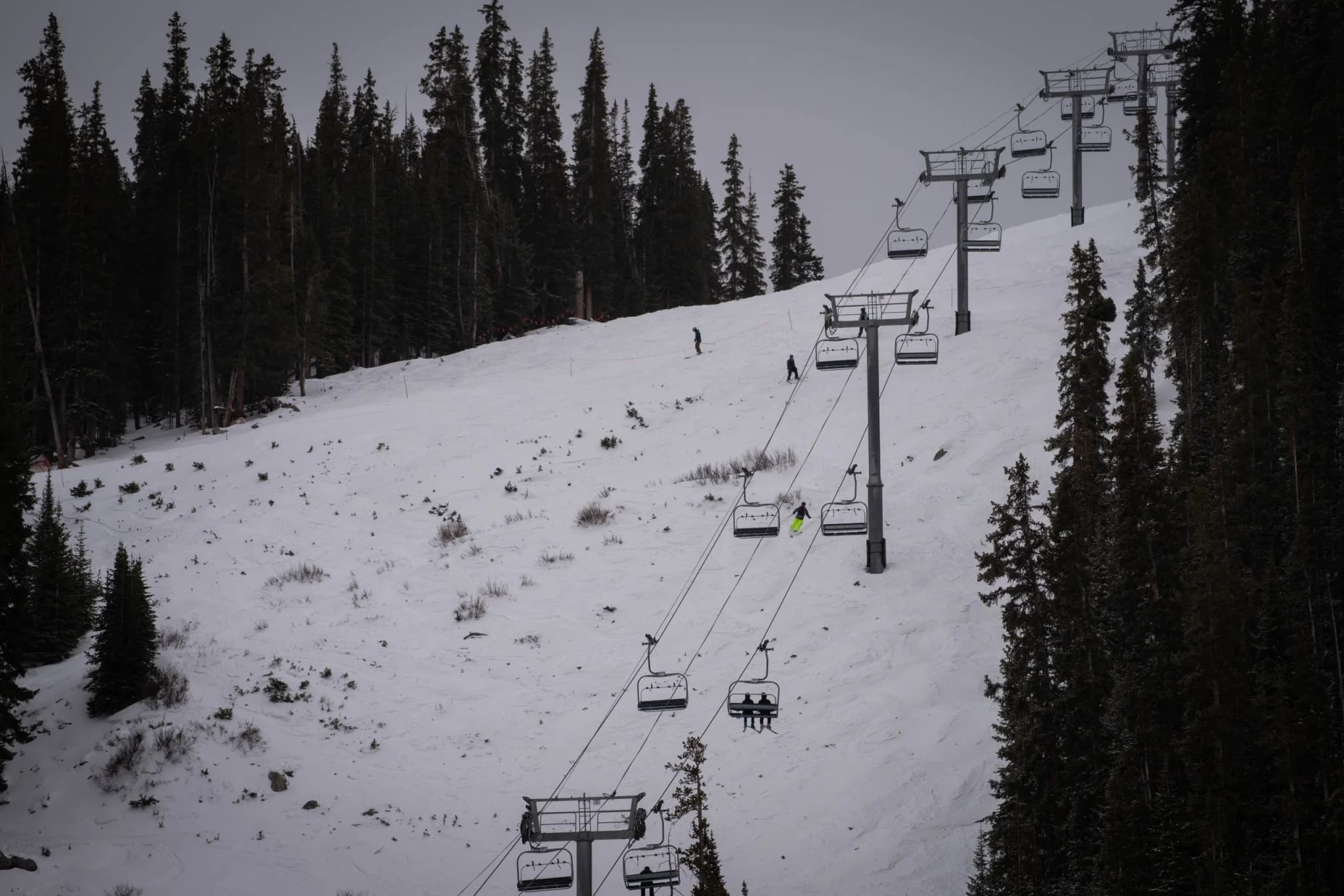
Locals who drove up I-70 expecting powder found empty lifts and bluebird skies. The Lower Hall’s Alley run at Monarch Mountain had little snow but clear skies on Friday, March 20. The resort closed two weeks later, on March 28.
The financial shock hits hard. This collapse follows four consecutive years of record visitation. Since 2021-22, the state logged record numbers every single season. The all-time high was 14.8 million visits in 2022-23.
Now, the party is over.
Nationally, the picture is grim but less catastrophic. The U.S. saw 52.6 million visits, down from 61.6 million the previous year. The 2025-26 season ranks 32nd out of 48 on record. The Rocky Mountain region, covering six states, saw 20.1 million visits. That’s a 24% drop from 26.5 million in 2024-25.
But here is what the press releases won’t tell you. The industry isn’t dying. It’s changing.
Visits are no longer the only barometer of health. Resorts don’t need you to buy a day ticket anymore. They need you to buy a season pass.
In 2015-16, 51% of skiers bought day tickets. A decade later, that percentage is 32%. Season pass purchases have boomed. U.S. resorts sold 81% more season passes in 2024-25 than they did in 2015-16. The extra-large destination resorts in Colorado have seen season pass sales more than double in the last decade.
Resort companies are making money months before the snow flies. They lock in revenue in the fall. They hedge against bad weather. A bad winter means fewer skiers on the ground, but it doesn’t necessarily mean bankruptcy if you’ve already sold the passes.
This is a feast-to-famine cycle. The 2025-26 winter was the famine. The previous four years were the feast.
The short version? The model is shifting from volume to retention. You might see fewer people skiing this year, but the money was likely secured last November.
Still, 10.5 million visits is a lot of empty chairs. And for the locals who pay for the infrastructure that gets them up the mountain, the tax base just took a hit. The 1980-81 season is the only one with a bigger decline, but that was before the modern era of corporate consolidation and premium pricing.
Worth watching is how long the season passes hold up. If the snow keeps failing, will skiers cancel their passes? Or will they just accept the higher price of admission for a chance at mediocre snow?
The data is murky for the 1976-77 season, but newspaper clippings suggest it remains the ugliest ever for Colorado ski hills. This year might not be the ugliest. But it’s certainly the most expensive lesson in a decade.
The streak is over. The question is whether the money stays.
Keep up with Colorado
The day's Western Slope news, one email each morning. Free.


Federal Report Sets 200,000 Acre-Foot Water Conservation Target for Upper Basin

Colorado Parks and Wildlife Deploys Precision Drones for Weed Control