Colorado Skiing Roots Trace From Scandinavian Immigrants to Modern Resorts
Colorado’s multi-billion-dollar ski industry evolved from Scandinavian necessity to cultural identity, driven by the 10th Mountain Division and major resorts like Vail and Aspen.
Steamboat Springs —“The ‘The mountains and skiing have become synonymous with our identity,’ said Colorado Snowsports Museum Curator and Director of Collections Dana Mathios. ‘I think that’s largely because of how deep these roots run in our state.’”
It’s a statement that lands with the weight of a fresh powder day, heavy and undeniable, settling over the Western Slope like the morning fog rolling off the Yampa. For 150 years, Colorado has been a state, and for nearly as long, skiing has been the rhythm of its winter heartbeat. What began as a practical necessity for travel has snowballed into a multi-billion-dollar industry, a cultural engine that pulls millions of visitors through our mountain passes every year, turning our rugged geography into a global playground.
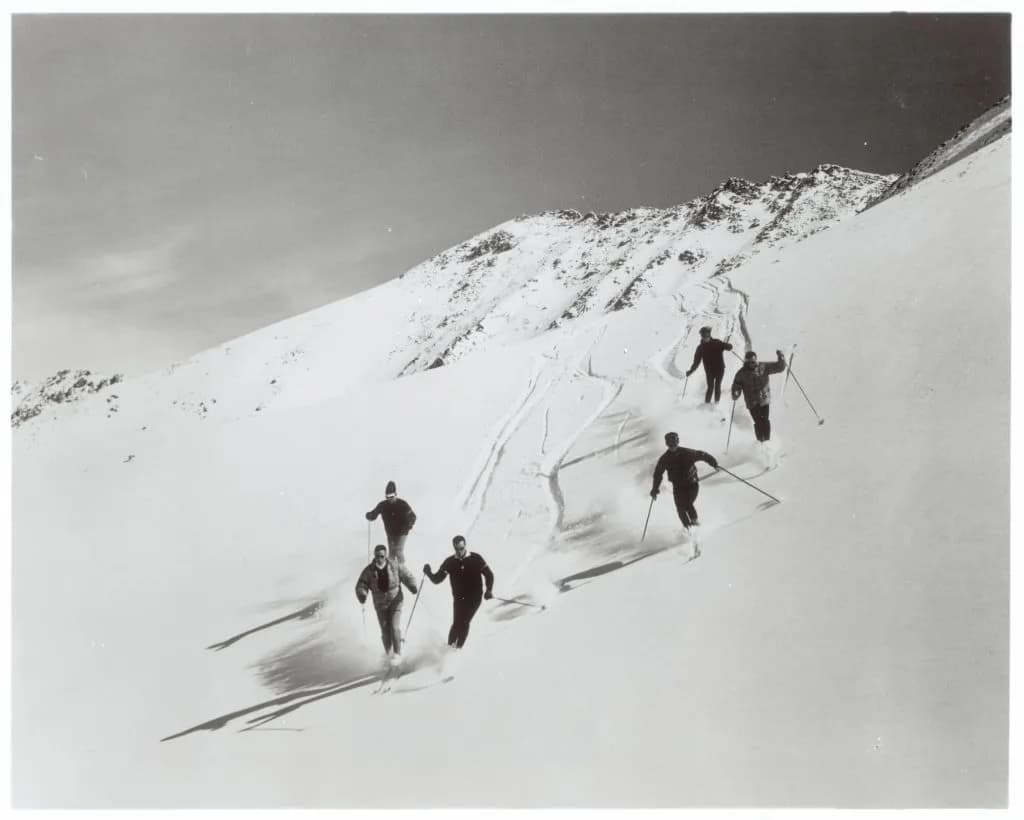
But if you look closely at the history books, the story isn’t just about lift tickets and luxury lodges. It’s about the men and women who carved these turns out of raw earth and ice, starting with the Scandinavian immigrants who arrived during the gold rush, hoping to strike it rich but finding a different kind of fortune in the deep, powery snow. In those early days, nine-foot-long skis were more effective for navigating the Elk Mountains than snowshoes, a fact captured in archival photos of mail carrier Albert A. Johnson, one of the best skiers of the 1880s, gliding through the high country.
The narrative arc of Colorado skiing is as thrilling as plunging down a steep slope, winding through characters like Father John Lewis Dyer, a preaching mail carrier who brought the sport to the masses, and the 10th Mountain Division. These elite light infantry units, trained in our very own backcountry during World War II, returned home with a vision. They didn’t just take vacations; they built resorts. Dozens of them. They took the discipline of war and transformed it into the leisure of the weekend, laying the foundation for the modern ski industry.
Sam Bock, History Colorado Director of Interpretation and Publications, notes that exploring this history is an exercise in understanding who we are as Coloradans. “I think the big question 150 years ago in the state was, ‘What are we going to be?’” Bock said. It took five tries over 17 years to go from territory to state, and those questions of identity weren’t fully answered then, and perhaps they still aren’t. But skiing has become a defining feature, a way to answer those existential queries with every turn carved into the mountain.
Today, the landscape is dominated by giants. Major resorts like Vail Mountain, Breckenridge, Aspen-Snowmass, Steamboat, and Winter Park attract roughly one-fifth of the total ski visitation in the United States. We buy multi-resort passes from conglomerates like Vail Resorts and Alterra Mountain Co., sliding plastic cards that grant us access to millions of acres of snow. It’s convenient. It’s commercial. It’s massive.
Yet, as Mathios points out, “You can build ski resorts anywhere, but you can’t recreate the unique relationship between Colorado’s mountains and the generations who made them part of our identity.” The landscape provided the perfect stage, but the people provided the drama. They transformed natural beauty into a culture of adventure, innovation, and community.
There’s a warmth to the way locals speak of these mountains, even when the wind chill bites through your parka. It’s not merely about the sport; it’s about the lineage. It’s about the memory of the 10th Mountain Division soldiers who learned to ski on these slopes, and the modern families who now spend their winters chasing the same light. The industry has changed, of course. It’s grown richer, louder, more complex. But the core remains. The skis are different, the lifts are faster, but the act of descending remains a conversation between the skier and the mountain, a dialogue that has been going on since the first Scandinavian immigrant strapped on those long, wooden planks and looked out over the valley, wondering what this place would become.
The sun dips below the ridge, casting long, blue shadows across the snowfields, and for a moment, the noise of the chairlifts fades, leaving only the sound of wind moving through the pines and the quiet crunch of snow underfoot.
Keep up with Steamboat Springs
The day's Western Slope news, one email each morning. Free.
Aspen's ACES Returns Annual Harvest Party to Rock Bottom Ranch
Glenwood Ghostwalk Brings Frontier History to Life in Linwood Cemetery