Colorado Startup Week Bans Screens to Prove Human Connection Still Sells
Over 10,000 attendees flocked to Denver for Colorado Startup Week, which banned online participation this year. Organizers argue that physical presence is the key differentiator in an AI-saturated market.
Erik Mitisek made a decision that would have sounded insane to most tech executives: he banned the screen.
“We did not allow an online option,” Mitisek, the event organizer and cofounder of Colorado Startup Week, said. “The whole point of Colorado Startup Week is to get people together.”
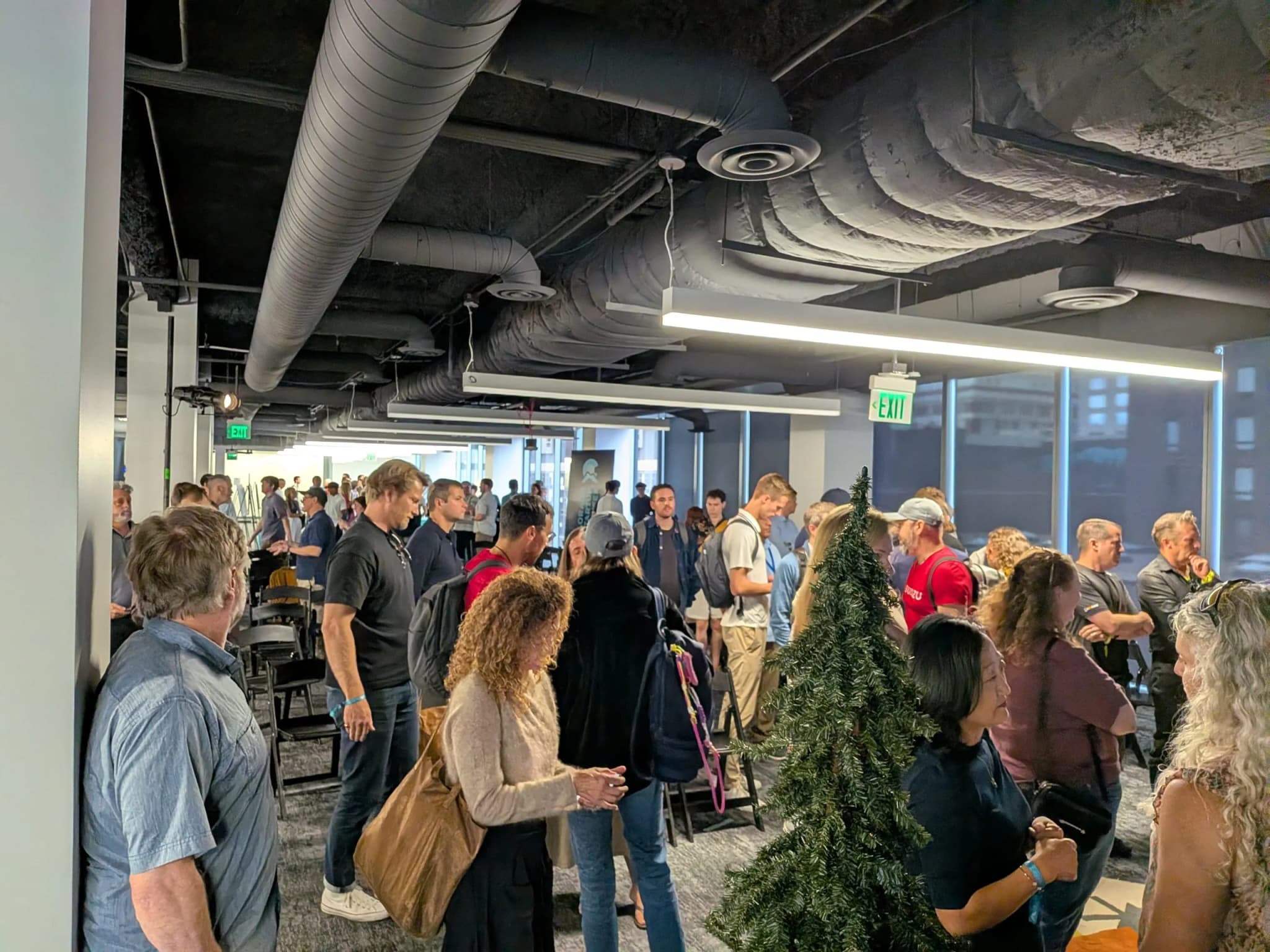
That single constraint defined the 15th annual event, which wrapped up Friday at the renovated CenturyLink building on 15th Street in Denver. More than 10,000 people walked through those doors this week. They came for mentors, investment, and a chance to talk shop with other founders. But the sheer volume of bodies in the room signaled something bigger than a networking mixer. It was a physical assertion that human connection still holds market value, even in an industry obsessed with automation.
For context, this is the second year the event has operated under its new name, having shed the "Denver" moniker to reflect a statewide scope. The headquarters is an old building, but it’s been renovated to handle the crowd. Ten thousand people is not a small number for a free annual event. It’s a logistical beast. And it required every attendee to be physically present in Denver, not logging in from their kitchen table.
While the event is traditionally a hub for tech startups seeking capital, a distinct counter-current ran through the sessions. Artificial intelligence dominated the conversation in nearly every hour of the week. It was everywhere. But alongside that digital saturation, a very human theme emerged: the "Experience Economy."
Michael Zeisser, a partner with Denver investment firm FMZ Ventures, coined the term during an hour-long session on Wednesday. He argued that we are currently in the "early innings of a big transformation" toward a new economic sector.
“Arguably today, there really isn’t an Amazon of experiences,” Zeisser said during the session. “There isn’t a Nike of experiences, or a Warner Brothers of experiences... If people want experiences, these kinds of companies will be created. And the contention is they could be created in Colorado.”
Zeisser’s point was that while algorithms curate our content, they can’t replicate the analog act of gathering. He pointed to a world increasingly influenced by smartphones and screens, suggesting that the premium on unmediated human interaction is rising.
The panel supporting this thesis was a mix of high-profile local figures. It included Phil Weiser, the Colorado Attorney General; Mark Frank, CEO of mental health therapy company SonderMind; Robin Thurston, CEO of Outside Interactive; and Nicole Glaros, a tech investor and cofounder of ForDenverFC. Bennie Fowler, a Super Bowl 50 Champion with the Denver Broncos who now advises entrepreneurs, was also partially pictured on stage.
“We have sports, we have outdoor, we also have psychotherapies because experiences are actually very broad,” Zeisser told the crowd.
This is a pivot for Colorado’s tech identity. For years, the state has marketed itself as a hub for software and remote work. The "Experience Economy" argument flips that script. It suggests the next wave of investment isn’t just in code, but in the infrastructure for people to be together. It’s a bet that locals and visitors will pay a premium for things you can’t stream.
For the 10,000 attendees who made the trip to Denver this week, the cost was time and travel. The return? A reminder that while AI might write the code or curate the feed, it can’t sit across from you at a table. The data is clear: when given the choice, thousands of people chose to show up in person rather than log in. That’s a market signal that tech investors are now actively trying to capitalize on.
Keep up with the Western Slope
The day's Western Slope news, one email each morning. Free.