Colorado Winter Wheat Harvest Drops 52% to Worst Since 1965
Severe drought and freezing temperatures slash Colorado's 2026 winter wheat production by 52%, marking the lowest yield on record since 1965 and threatening national bread supplies.
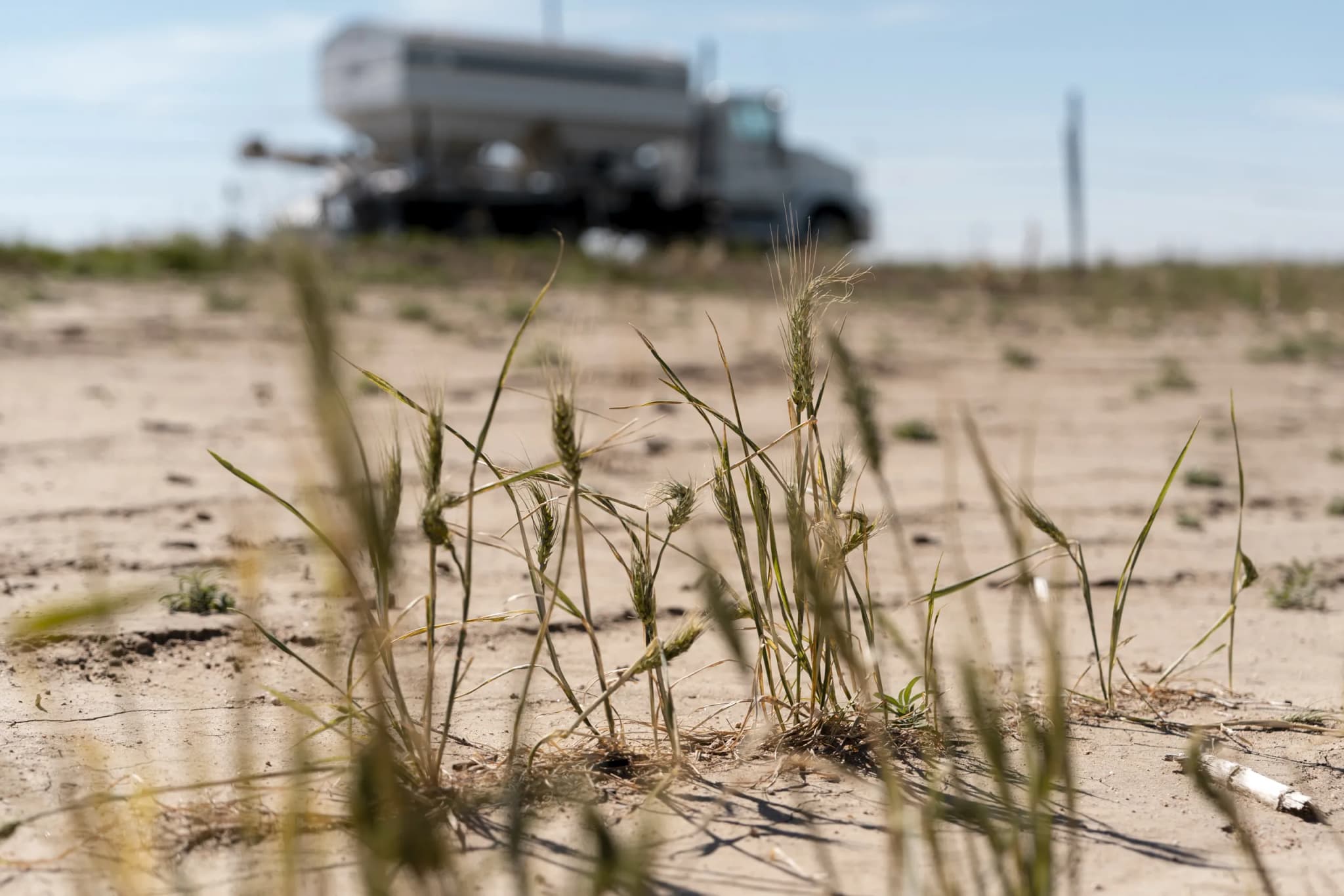
Colorado —Colorado is forecast to produce just 33.6 million bushels of winter wheat in 2026. That is a 52% drop from the state’s 10-year average. The cause is a perfect storm of severe drought and ill-timed freezing temperatures that have crippled the crop across eastern Colorado. The U.S. Department of Agriculture’s National Agricultural Statistics Service calls it the worst harvest since 1965.
Picture a field in Lincoln County on a Monday in mid-June. Normally, you would see amber waves of grain rippling in the breeze, dense stems reaching waist-high, heavy with the promise of bread and noodles. This year, the wheat barely clears the ankle. It is sparse. It is struggling. The visual is not just different; it is heartbreaking.
The conditions required for No. 2 hard red winter wheat to thrive were absent almost entirely this year. Farmers plant in the fall, hoping for sprouts before the first hard freeze. They need snow cover to protect the green shoots from freezing solid, and they need that snowmelt to water the crop as spring warms up. They need adequate spring rainfall to maximize growth. Then, finally, hot and dry weather to ripen it.
Almost none of those conditions existed.
Freezing temperatures battered the crop over the winter. Wind stripped away what little moisture remained. There was little to no snowfall to insulate the plants. When spring arrived, there was no snowmelt to feed the roots. Precipitation has been dismal at best.
Brad Erker, executive director of the Colorado Wheat Administrative Council in Fort Collins, heard the stories firsthand. During the annual Wheat Field Days earlier this month, he listened to farmers who have worked the land for 50, sometimes 60 years. They told him this year’s crop is the worst they have ever seen.
“I had folks who have been farming 50, sometimes 60 years, say it’s the worst they’ve ever seen,” Erker said. “NASS says it’s the worst since 1965, but I think even their numbers are a little optimistic.”
The calamity didn’t start in June. It started in 2025. According to NOAA’s National Integrated Drought Information System, persistent dryness throughout last year left soil moisture depleted in the zone where most roots reside. The ground was already thirsty before the snow even fell.
This is not just a local issue for the folks farming northeast Colorado. This is a national supply shock. The wheat grown here is primarily used for baking bread and making noodles. When the yield drops by half, the ripple effect hits grocery stores, bakeries, and export markets. The "short story," as Erker calls it, is drought and freeze. The long story is a climate pattern that has been breaking down for months, leaving the soil dry and the crops vulnerable to every shift in temperature.
The fields in Lincoln County stand as proof of that vulnerability. The stalks are thin. The heads are small. The yield will be a fraction of what it was a decade ago. And for the growers who have watched this land for six decades, it feels like the worst of it yet.
Keep up with Colorado
The day's Western Slope news, one email each morning. Free.


Federal Report Sets 200,000 Acre-Foot Water Conservation Target for Upper Basin
Colorado Parks and Wildlife Deploys Precision Drones for Weed Control