Core Transit Driver Refuses Vail Artist Ride Over Art Cart
A Core Transit driver refused to board a Vail artist carrying an art cart, describing him as homeless. The company admitted the operator violated policy and promised internal corrective measures.
Aspen —The gravel of the Eagle County Airport parking lot crunches under tires, a steady rhythm against the low hum of idling engines. It’s a Friday morning, the kind where the air feels crisp but carries the faint, dry scent of pine needles baked in the sun. In the distance, the jagged teeth of the Sawatch Range catch the early light, a silent backdrop to the chaos of commuters and travelers.
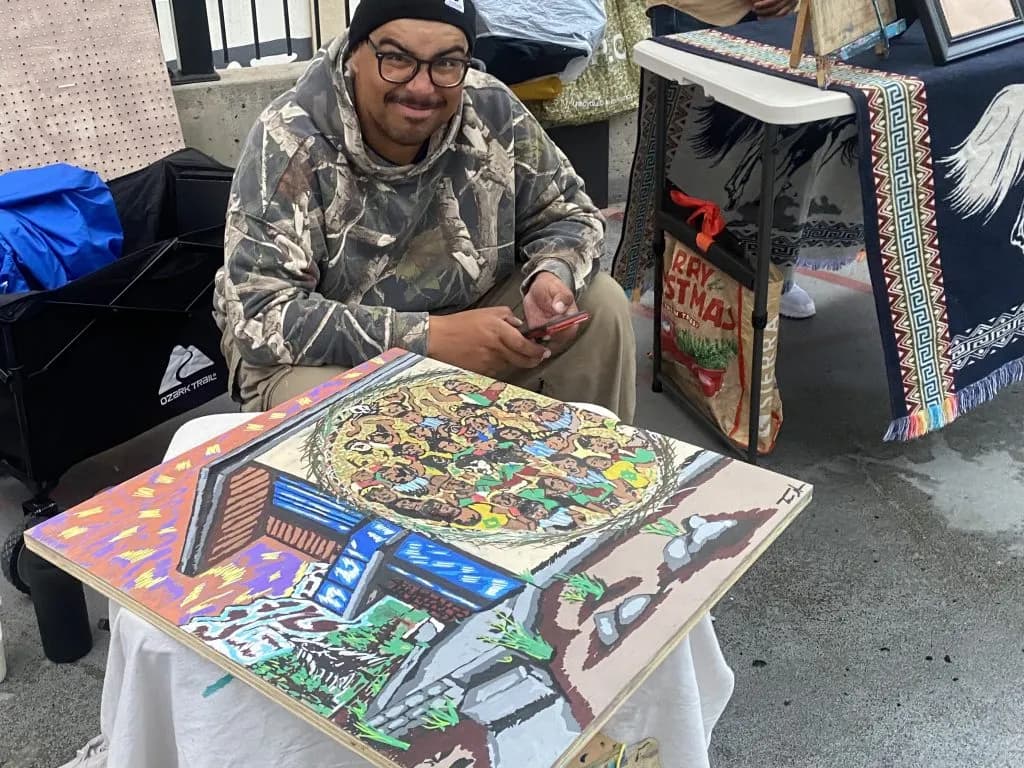
It’s here, amidst the mundane shuffle of people heading to work or vacation, that Terrance Greer found himself standing in front of a Core Transit bus, pulling a 33x24x18-inch cart loaded with art supplies. Greer, a Vail resident of Mexican descent, was en route to the Riverwalk Art Battle in Edwards, a competition where artists have a limited window to create and be judged by the audience. He wasn’t carrying skis or snowboards, though the bus system regularly transports those five-foot-long items. He was carrying his livelihood.
As he approached the vehicle, the driver let other passengers board first. “I got the sense that there was going to be trouble,” Greer told the Vail Daily. The driver cut the door shut with what he described as a “weird energy” and claimed she needed to call dispatch to ask about his “wagon.” Because Greer was standing right there, he heard the entire exchange. On the phone, the driver described him as “a homeless man carrying car junk.”
Greer speaks with a standard American dialect. He is six feet, one inch tall, with a stocky build. To many, he might not fit the stereotype of homelessness, but in that moment, the label stuck. “I’ve been called names before, but I’ve never had a situation where I’m denied a service like transportation and felt like it was purely based on me being a big Mexican man,” he said. The humiliation was immediate. He didn’t know what to do next, only that he was running late for a deadline that couldn’t be missed.
Scott Robinson, with Core Transit, acknowledged the friction points. He noted that the company’s internal policy for refusing service is minimal: basically, you need to be wearing clothes. If you have an item with you — say a stroller, a pair of skis, or in this case, a wagon — the policy dictates that if the person can keep it under their control on the bus, it’s okay to come on. Robinson admitted that the bus operator didn’t follow this policy. “We took a look at it with operations and what we identified was, unfortunately, our bus operator didn’t follow our policy, and we’ll be taking internal steps to ensure that doesn’t happen again,” he said.
Two other witnesses saw the incident unfold. They provided Greer with the bus number so he could file a formal complaint. A few moments later, another Core Transit worker approached him. “He walked up to me and said ‘I just want to say that’s super messed up, I’ll make sure you get on,’” Greer recalled.
The bus pulled away, leaving behind a trail of dust that slowly settled over the asphalt. The airport remained busy, the flow of people unbroken by the small, personal collision that had just occurred. For Greer, the art supplies in the cart were safe, but the trust in the system that moves people through the valley had a crack in it. He stood for a moment, watching the rear of the bus disappear around the bend, the engine’s noise fading until it was replaced by the distant chatter of the terminal and the wind moving through the bare branches of the nearby trees.
Keep up with Aspen
The day's Western Slope news, one email each morning. Free.