Diane Prather Shows How Western Slope Families Pass Down Rural Wisdom
Diane Prather’s Craig Daily Press column highlights how Western Slope families pass down rural wisdom through daily habits like smoking pork and checking fuses, proving that simple memories serve as active educational tools for the next generation.
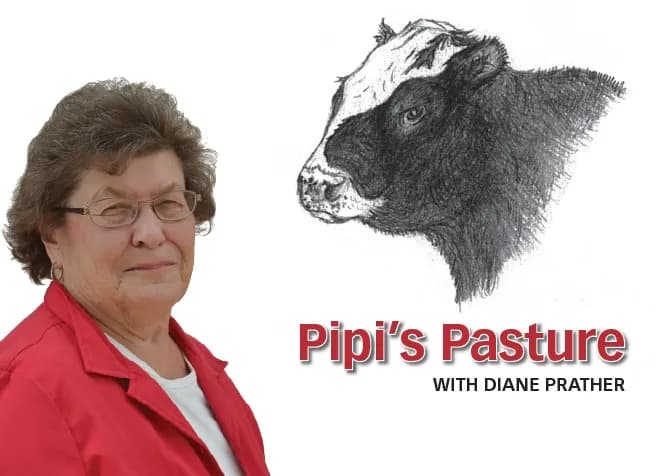
Steamboat Springs —The air in the Prather family yard still holds the faint, sweet scent of hickory smoke, a ghost of a smell that lingers long after the grill has cooled. Kenny Prather stands there, watching his eight-year-old son, Brian, mimic the way his father moves around the smoker. It is a quiet inheritance, passed down not through textbooks, but through the slow, deliberate act of cooking a pork loin.
This is the heart of the story that Diane Prather wrote for the Craig Daily Press. It isn’t about a new highway or a property tax hike. It’s about what happens when you stop looking at the Western Slope as just a collection of coordinates and start seeing it as a place where habits are forged in fire and dirt.
Prather, writing under the byline "Pipi’s Pasture," opens with a phone call from her grandson. Kenny had fired up Grandpa Lyle’s smoker, replicating the technique he had watched for years. Now, Brian is watching Kenny. The cycle is complete. "Memories live on," Kenny told her, suggesting the topic for her column.
It sounds simple. Maybe too simple for a news cycle hungry for conflict. But Prather digs deeper, arguing that rural life offers a unique educational advantage that suburban sprawl often lacks. When you live on a farm or a ranch, you aren’t just observing nature; you are embedded in it. Children learn by watching, often more than we give them credit for.
The column highlights specific moments Prather recalls from her own childhood. It’s not just about "nature" in the abstract. It’s about watching a caterpillar close up as it wriggles across a county road. It’s the thrill of spotting a white weasel, nearly invisible against the snow. It’s the patience of pushing fallen autumn leaves down a creek with a stick. These aren’t just activities; they are lessons in attention. And crucially, they are lessons in connection. Children appreciate the parent who takes the time to point these things out, and eventually, they become the ones pointing them out to their own kids.
The column shifts from the sensory to the practical with a story about vehicle repair. It’s a classic rural scenario: something breaks, and the instinct is to assume the worst. Kenny, trying to fix a vehicle issue, tore into the car. He ignored the advice his father had repeated so often it had become part of his DNA: "Always check the simple things first."
The result? Parts strewn across the yard. The car disassembled and reassembled. The realization that the culprit was just a fuse. Kenny laughed at himself, but Prather notes the deeper truth. He knew Grandpa Lyle was "watching and also laughing." The advice wasn’t just a tip; it was a memory that guided action, even when the conscious mind forgot to listen.
This matters because it challenges the idea that tradition is static. In a world that often pushes for the new, the fast, and the complex, the Prather family is demonstrating the value of the slow and the simple. The smoker is still in use. The advice about fuses still applies. The lesson about the weasel still holds weight.
Prather quotes her friend Lou Dean, who lives in Dinosaur, Colorado. "Memories are a gift," Lou says. It’s a simple statement, but it reframes the entire narrative. We often think of memories as things we lose, fading like old photographs. But in this valley, memories are active. They are tools. They are the smoke rising from the grill.
The article doesn’t end with a grand thesis about the decline of rural values. It ends where it began, with the act of cooking. The pork loin is done. The smoker is cooling. Brian is still watching. The next generation is learning, not by being told what to think, but by watching what is done.
Stand there long enough and you realize that the landscape of the Western Slope isn’t just defined by the mountains or the rivers. It’s defined by these small, repeated acts. The manner in which a fuse is checked. The style in which a loin is smoked. The rhythm with which a story is passed from one generation to the next, until the memory itself becomes part of the land.
Keep up with Steamboat Springs
The day's Western Slope news, one email each morning. Free.