Rocky Mountain Youth Corps builds tiny house in Oak Creek
The Rocky Mountain Youth Corps pivots from traditional service work to a paid construction trades program, building a tiny house in Oak Creek with South Routt High students.
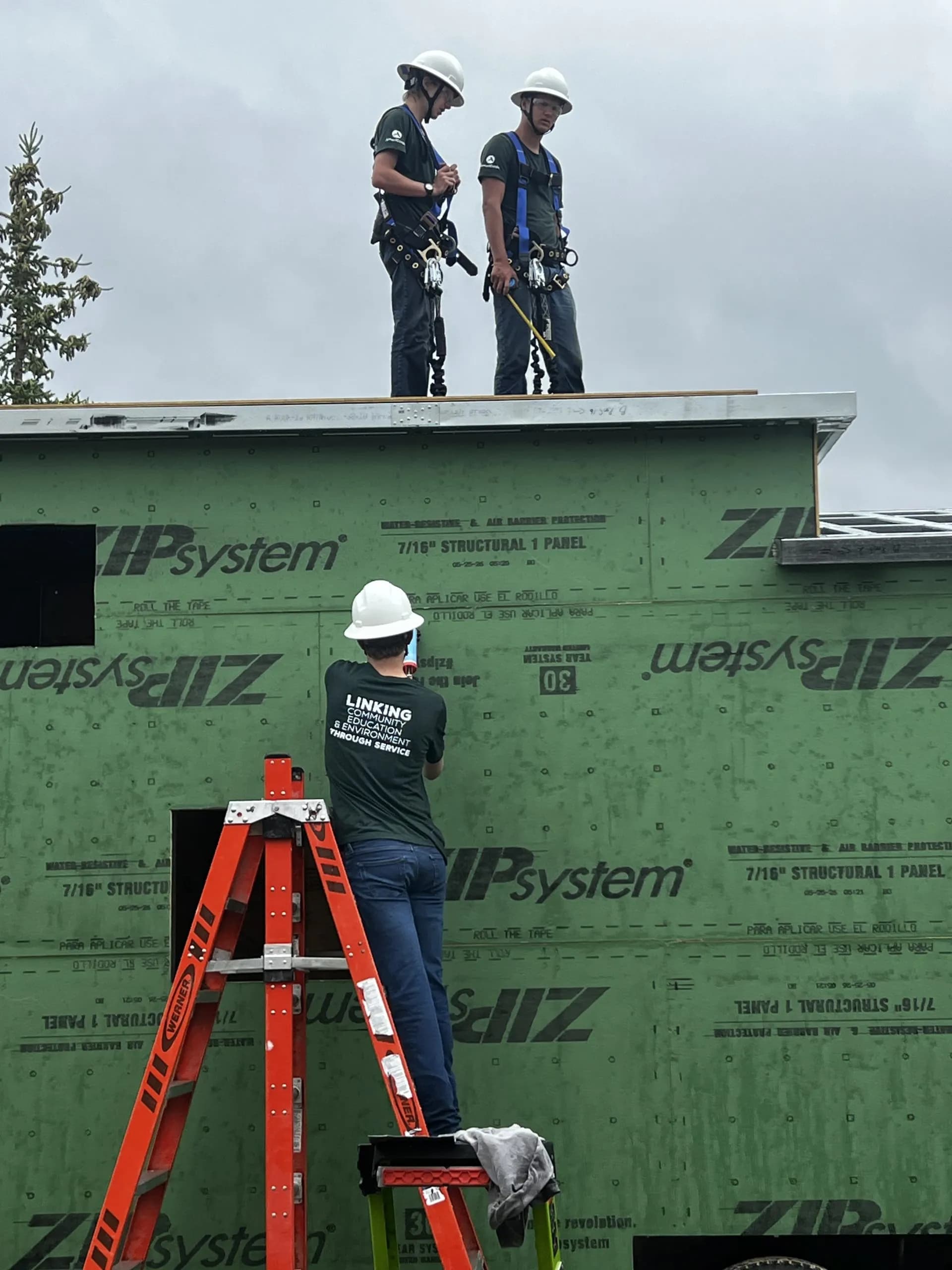
Steamboat Springs —The sound of a Shop-Vac humming against the quiet of a rainy June afternoon in Oak Creek is a specific kind of industrial lullaby. It mixes with the distant, tinny thump of The Doors’ “Roadhouse Blues” bleeding from a Bluetooth speaker, a playlist choice by Steamboat Springs High junior Silas Setter, who admits he gets mad when Lorrel Mahosky, another student working the roof, switches it up to Katy Perry. It’s a small friction point in a project that is otherwise defined by collaboration and the wet, earthy smell of fresh-cut lumber and wet shingles.
This is the scene at Soroco High School, where seven crew members from the Rocky Mountain Youth Corps (RMYC) are not just killing time or completing community service hours in the traditional sense. They are building a tiny house.
It’s a pivot for the organization. For years, RMYC’s identity has been tied to the wilder edges of the Western Slope — trail building in the parks, wildfire mitigation in the forests, historic preservation in the old mining towns. But as the Colorado Sun reported, a difficult past year brought budget cuts to longstanding partners like the U.S. National Park Service, the Bureau of Land Management, and the U.S. Forest Service. The service opportunities dried up, leaving the corps looking for a new way to engage youth and keep its programs alive.
The solution arrived in the form of a nine-week Construction Trades program, a partnership with the South Routt School District and the Yampa Valley Partnership for Students, Stewardship & Sustainability. It’s a paid program that walks local high schoolers through the entire process of erecting a structure from the ground up. But it’s also a classroom and a job site rolled into one, requiring a teacher who can wear multiple hats.
Casey Hill, the wood shop teacher at South Routt County High School, is standing on the ground, pointing and offering suggestions to two of the seven crew members. He is serving as general contractor, teacher, parent, and foreman. “It’s sort of a hybrid between education and employment,” Hill said. “And I’m a cross between a teacher and foreman.”
If you look closely at the work being done, you see the rough edges of learning. Hill is instructing the students on how to stack materials, noting that the farthest eave has to go on last because they have to blend where the two roofs meet. One student looks up, soaked from the drizzle, and replies, “I see what’s happening.” It’s a simple exchange, but it captures the essence of the program: it’s not just about building a house; it’s about understanding the logic of construction.
The students involved come from Craig, Steamboat, and Oak Creek, integrating into a curriculum that is part of the area schools’ Career and Technical Education (CTE) framework. This isn’t just vocational training in the abstract; it’s tangible. It’s the smell of sawdust, the weight of a hammer, and the responsibility of a deadline.
There’s a warmth to the way these kids work, even when the weather turns. They’re not waiting for a government contract to open up; they’re creating their own path. The program represents a slight fork in the trail for RMYC, moving away from the traditional service model toward a more direct, skill-based engagement with the local community. It’s about giving these young people a trade, a paycheck, and a sense of place.
As the rain lets up and the sun breaks through the clouds over the Yampa Valley, the tiny house stands a little taller. The sound of the Shop-Vac fades, replaced by the chatter of students debating the merits of different rock bands. It’s a small structure, but it’s built on a foundation of necessity and innovation, showing how a community figures out how to keep its youth engaged when the big institutions pull back.
Keep up with Steamboat Springs
The day's Western Slope news, one email each morning. Free.