Doris Kearns Goodwin Blames Local Housing Crisis at Vail Symposium
Historian Doris Kearns Goodwin linked Beaver Creek's housing costs to a broken American dream, urging locals to drive change through city councils and school boards.
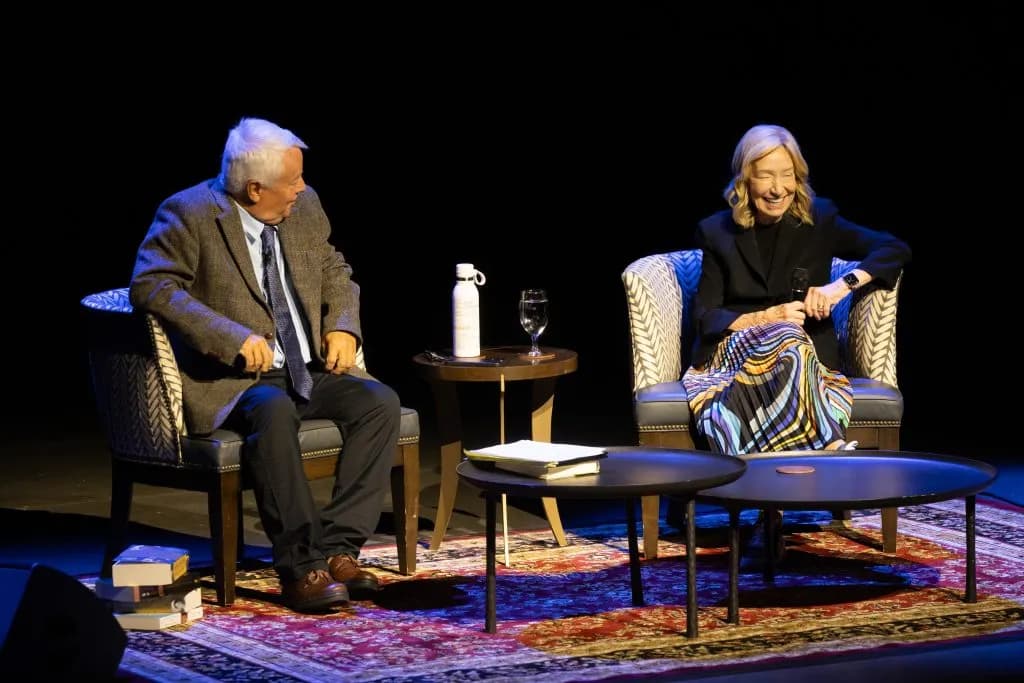
Aspen —A packed house at the Vilar Performing Arts Center in Beaver Creek. That’s where the most striking data point of Tuesday night actually lives, not in the historical anecdotes, but in the sheer volume of people who showed up to hear a historian talk about why they can’t afford their homes.
Doris Kearns Goodwin, the United States’ premier presidential historian, took the stage at a Vail Symposium event. On paper, she specializes in events from the past — Abraham Lincoln, Theodore Roosevelt, Franklin D. and Eleanor Roosevelt, the Kennedys, Lyndon B. Johnson. In practice, the conversation with host Clay Jenkinson drifted relentlessly toward the present. The audience didn’t want to know what happened in 1865. They wanted to know why the 2024 version of the American dream feels like a broken promise.
Jenkinson, a Vail Symposium regular and historian in his own right, guided the chat. He used his knowledge of Goodwin’s work to steer the discussion back to modern crises. The turning point came when an audience member, whose question had been emailed in ahead of time, asked: “What’s the status of the American dream?”
Goodwin didn’t dodge it. She channeled Lincoln, paraphrasing a line from her book Team of Rivals: “A democracy should be judged by whether people can rise to the level of their talent and discipline.”
Then she hit the nerve that keeps locals up at night. “But here you’ve got a younger generation who has worked hard, they’ve gone to school, and they can’t realize what their parents had,” Goodwin said.
Let’s do the math on that statement. It isn’t abstract philosophy; it’s a housing crisis. Goodwin argued that despite the nation’s wealth, we haven’t figured out how to make life easier for people trying to live a fundamentally decent life. She cited healthcare, education, and the ability to make a good living at something they care about as the missing pieces. The disconnect is stark: we have the GDP, but not the stability for the people living here.
She pushed back against the idea that change only comes from Washington. “Change has always taken place from the local level up, from the ground up,” Goodwin continued. She pointed to the settlement house movement helping Theodore Roosevelt, the union movement central to FDR’s accomplishments, and the Civil Rights movement driving 1960s changes.
“It always comes from the ground up,” she said. “People have to trust that they can do something in their city council, that they can do something in their local school board; people have to start running for office again — which I think is beginning to happen.”
For folks around here, that advice lands with a specific weight. The Vilar Performing Arts Center is in Beaver Creek, a town where property taxes and cost of living are already straining the budget. Goodwin’s point about local governance isn’t a platitude; it’s a survival mechanism. She warned that progress goes backward and forward, noting how Reconstruction took away from the Civil War’s early gains and how Jim Crow is returning in places we thought had moved past it.
The Vail Daily reported on the event, highlighting how Jenkinson’s questions and the audience’s input kept Goodwin anchored in current events. The historian didn’t offer a feel-good conclusion about the future of our nation. She offered a diagnosis: we are wealthy, but we haven’t built the infrastructure for dignity at the neighborhood level.
The practical bottom line? If you’re struggling to pay your property taxes or find a job that pays enough for healthcare, Goodwin’s argument is that the solution isn’t waiting for a national election. It’s showing up to your city council meeting. It’s running for school board. It’s trusting that the community level is where the leverage actually exists, even when it feels like the ground is shifting under your feet.
Keep up with Aspen
The day's Western Slope news, one email each morning. Free.