Eagle County Businesses Complete H.O.P.E. Suicide Prevention Training
Three Eagle County companies completed a 12-month H.O.P.E. suicide prevention certification, aiming to reduce workplace isolation and support employee mental health.
Aspen —“It’s hard work; it can be discouraging sometimes because what we’re doing is suicide prevention, and how can you ever know — I can’t look around this valley and say we prevented suicide,” said David Otey.
Otey, a mental health speaker who grew up in a small town in Texas, leads the local H.O.P.E. certification cohort for Eagle County businesses. He sees a direct parallel between his home state’s agricultural and oil communities and the high-altitude valleys of Colorado. When tragedy strikes, he notes, “a loss really ripples out through a small community.”
That ripple effect is visible in the data. Eagle County sits within what mental health experts call a “suicide belt,” a region of the Rockies with some of the highest suicide rates in the country. The Eagle County Coroner’s Office reported 15 total suicides in its 2024 annual report, and six so far in 2025. Experts attribute part of this to the “Paradise Paradox”: the mountains draw people in, but the geography fosters isolation.
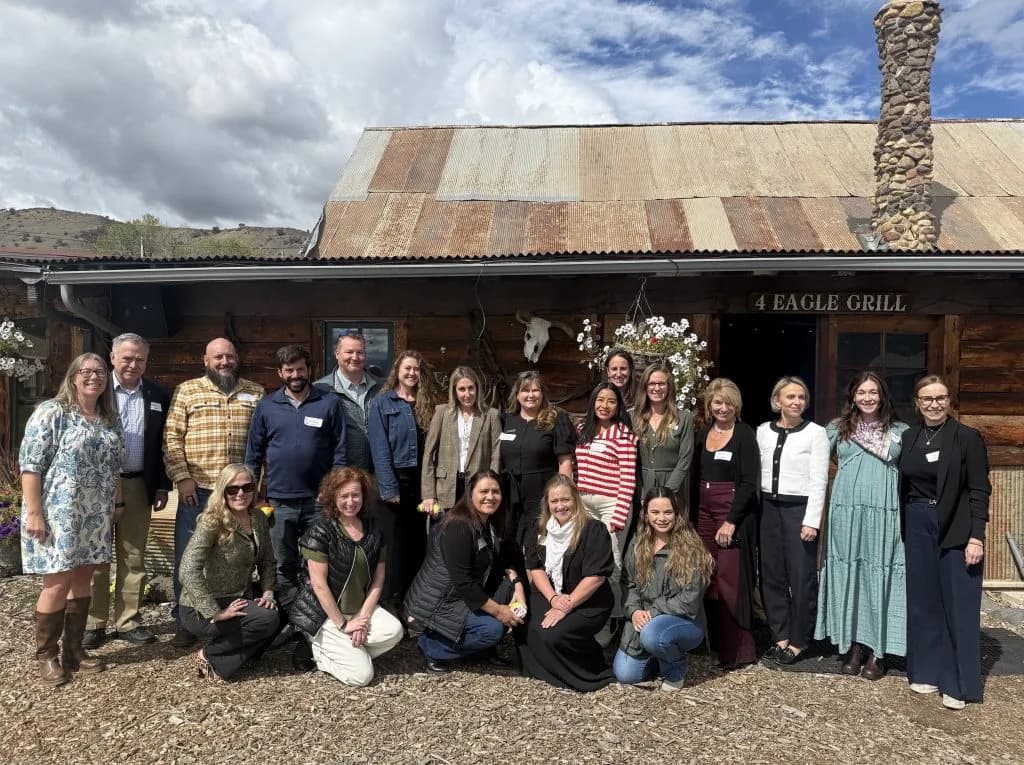
To combat that isolation, local businesses are turning to structured training. On Sept. 29, three companies — Mountain Recreation, The Westin Riverfront Resort & Spa, and East West Hospitality, celebrated the completion of a 12-month H.O.P.E. training program. The national certification helps businesses create supportive workforces, aiming to reduce mental health emergencies and improve well-being.
The training wasn’t just about adding a new checklist item. It required each company to audit what was already working, identify psychosocial risks, and develop specific communication strategies.
Erin Leach, the people and culture manager at Mountain Recreation, highlighted a specific challenge for her team. As one of the largest youth employers in the valley, more than half of its staff is Gen Z. “A lot of this stuff, not only is it difficult to talk about with adults, but I think it’s even more difficult to talk about with youth,” Leach said.
The goal, she explained, is to make employees feel supported in all aspects of life. For a company that employs thousands of young people, that means creating an environment where mental health is treated with the same seriousness as safety gear or lift tickets.
The question is whether corporate training can actually shift a community’s mental health trajectory. Otey admits the metric is difficult to pin down. You can’t easily measure a life saved by a manager who knows how to start a conversation. But the shift in workplace culture is tangible.
“What we can do is we can see people who feel better equipped to deal with a lot of challenges in the workplace,” Otey said.
For neighbors in Eagle County, the change is already visible in small ways. Mountain Recreation employees have worn yellow T-shirts on Mental Health Awareness Day, a simple visual cue that signals the company is paying attention. The Westin Riverfront and East West Hospitality have integrated similar response strategies into their daily operations, ensuring that when an employee is struggling, there is a clear path to support rather than silence.
The training doesn’t end with the certificate on the wall. It’s a framework for ongoing management. As Otey sees it, the work is less about fixing the valley and more about ensuring no one feels like they’re alone in it.
“We can see people who feel better equipped to deal with a lot of challenges,” Otey said. “That’s what we can do.”
Keep up with Aspen
The day's Western Slope news, one email each morning. Free.