Eagle Valley Land Trust Borrows Strategies From Denver Rally
Eagle Valley Land Trust staff returned from the Denver Land Trust Alliance Rally with new strategies to boost local impact, while voters prepare for Proposition 137 and a secured tax credit extension.

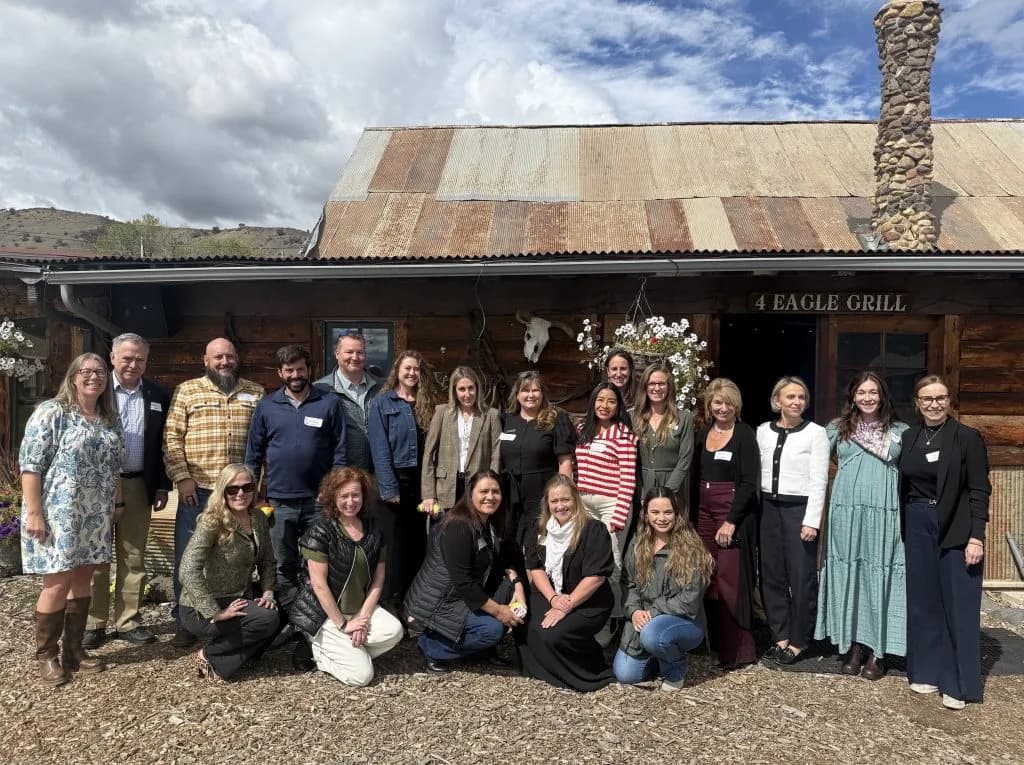
Aspen —Bergen Tjossem, the face behind the Eagle Valley Land Trust, didn’t spend the recent Land Trust Alliance Rally in Denver hiding in a hotel room. He was out there, part of a six-person staff team, navigating the conference floor alongside board members. The goal wasn’t just to listen; it was to borrow. As Tjossem put it, the team came home with “plenty of ideas worth borrowing and stacks of notes on how we can continue to improve and grow our local impact.”
The rally itself is a massive undertaking, drawing hundreds of conservation professionals from across the nation. For Colorado, hosting the event in downtown Denver provided a unique platform. More than 35 Coloradans — including land trust staff, partners, and Tribal leaders — took the stage as speakers. Topics ranged from the technical aspects of conservation easement monitoring to the softer skills of community outreach and project finance.
To hear them tell it, conservation is less about solitary heroics and more about coordinated effort. The Eagle Valley Land Trust operates within a network of roughly 480 accredited land trusts nationwide, all adhering to strict standards for ethics and financial health. Locally, this collaboration is facilitated by Keep It Colorado, a statewide network that allows land trusts of varying sizes to share resources, train staff, and advocate for policy changes.
The financial backdrop for these efforts is distinctively Colorado. Since 1992, voters have supported Great Outdoors Colorado (GOCO), which directs a portion of state lottery proceeds toward parks, trails, and open space. This funding has directly benefited Eagle County, supporting projects like the Brush Creek Valley Ranch and Open Space in Eagle. Additionally, the state offers a Conservation Easement Tax Credit, a tool that incentivizes landowners to permanently protect their properties.
That incentive is now secured for the near future. This year, the state legislature, guided by Western Slope representatives Rep. Elizabeth Velasco and Sen. Dylan Roberts, extended the tax credit through 2036. The move passed with bipartisan support, signaling a durable commitment to conservation mechanisms that rely on private landowner participation.
Looking ahead, the focus shifts to the ballot. Voters will encounter Proposition 137 this year, a measure that proposes altering how certain conservation funds are generated. The proposal touches on the existing sales tax applied to sporting goods purchases and rentals. Crucially, the measure does not increase that tax rate nor does it change consumer prices. Instead, it aims to set aside an equivalent amount of revenue specifically for conservation purposes.
The question is whether this structural shift in funding generation will provide the stability needed for long-term stewardship. Tjossem’s team is already applying the lessons from Denver to their local strategy, aiming to translate national best practices into tangible protections for Eagle Valley’s landscape. As he noted, the work requires navigating a constantly shifting ground of laws, values, and environmental challenges. But with the right partnerships and funding mechanisms, the math holds up.
“Conservation is a team sport,” Tjossem concluded, emphasizing that while individual land trusts play a critical role, the ultimate success of protecting Colorado’s natural heritage depends on a collective effort spanning from local landowners to state legislators.
Keep up with Aspen
The day's Western Slope news, one email each morning. Free.