Eagle Event Honors Lawmakers Who Saved Colorado Farms
Eagle Valley leaders honored Rep. Velasco and Sen. Roberts for extending Colorado’s conservation easement tax credit, a move credited with keeping struggling family farms in operation.
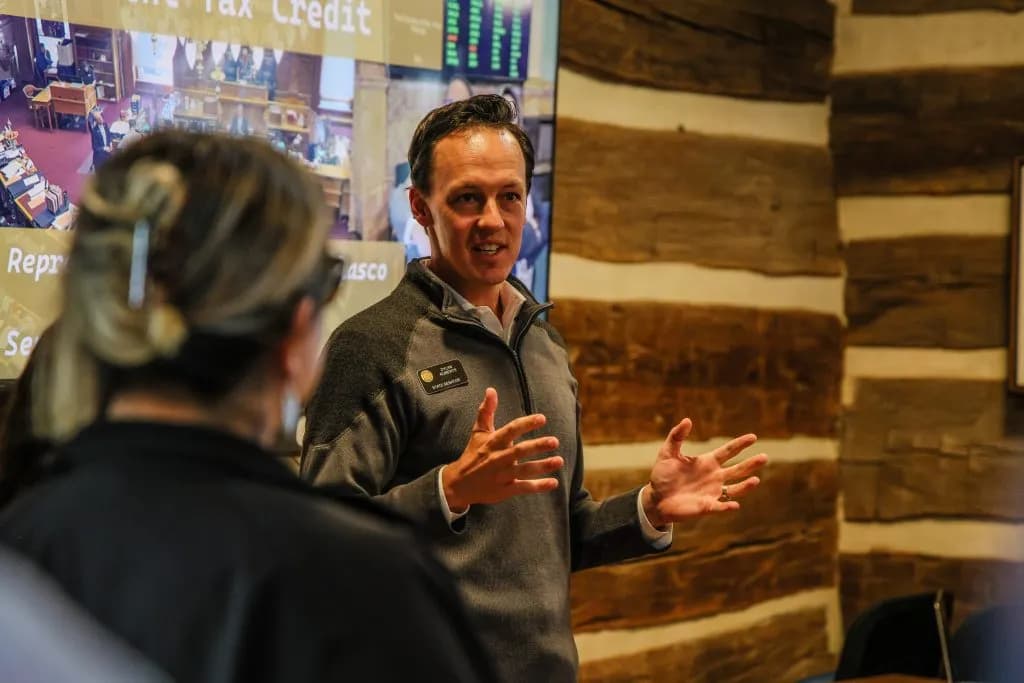
Aspen —Robyn Paulekas didn’t just talk about policy. She talked about survival.
Paulekas is the executive director of Keep It Colorado, a statewide coalition. On Monday, she stood before a crowd at the Edwards Hotel in Eagle. The Eagle Valley Land Trust had organized the event. It was called “Conservation in Action.” The room was full of locals. Ranchers. Farmers. Developers. Everyone wanted a piece of the pie.
The pie is shrinking.
The group recognized the passage of HB26-1230. This bill extends the state conservation easement tax credit to 2035. Read that again. 2035. That’s a decade of breathing room for landowners who might otherwise be forced to sell to developers.
The program is simple. A landowner voluntarily restricts the use of their land. In exchange, they get a transferable state income tax credit. They can keep it or sell it. If they sell it, they get cash. They use that cash to keep farming. Or ranching. Or just staying put.
Paulekas called it an “abundance of riches.” She’s not wrong. Other states are watching Colorado. They want to copy the model. Why? Because it works. A study by the Property and Environment Research Center looked at 12 states with similar programs. Colorado came out on top. Not because the credits are bigger. But because they’re flexible.
That flexibility is what saved the family farms.
Rep. Elizabeth Velasco, D-Glenwood Springs, and Sen. Dylan Roberts, D-Frisco, were the prime sponsors. They got the bill through the legislature. They were recognized at the event. Velasco used to be a wildland firefighter. She knows what happens when you lose control of the land. Fire spreads. Water runs off. Wildlife loses its home.
“It was an honor to be able to do this work,” Velasco said. She mentioned visiting projects across the state. She noted that the program allows landowners to create “very special pockets” in their communities.
Roberts heard the testimony. He heard from the farmers and ranchers who were on the brink.
“The farmers and ranchers, who probably would be out of business and had to sell their land if it weren’t for the ability to put their property under a conservation easement,” Roberts said. “They’re still farming and ranching today because of that … we have to keep it going.”
The event highlighted the partnership between local trusts and state legislators. The Eagle Valley Land Trust, Aspen Valley Land Trust, and The Nature Conservancy all played a role. But the credit belongs to the legislators who pushed the bill through.
Make no mistake, this wasn’t a partisan victory. It was a practical one. The credit helps rural communities. It protects water, wildlife, and open space. And it keeps land in family hands.
Paulekas pointed out that the program benefits both the economy and the environment. For rural areas, that’s crucial. Agriculture and ranching depend on land. Without the tax credit, many of those operations would have folded.
The recognition of Velasco and Roberts was well-deserved. They understood the stakes. They knew that without the extension, the program would have expired. And when it expires, the credits disappear. Landowners lose their safety net.
The event served as a reminder of how much work goes into conservation. It’s not just about signing documents. It’s about building relationships. It’s about listening to the people who live on the land.
Velasco emphasized the importance of flexibility. She said the program allows landowners to tailor their easements to their needs. That’s key. One size doesn’t fit all. Some landowners want to preserve open space. Others want to protect wetlands. Still others want to maintain agricultural use. The program accommodates all of that.
Roberts focused on the personal stories. He spoke about the narratives he heard during the legislative process. Stories of families who had farmed the same land for generations. Stories of ranchers who were close to selling out. Stories of people who found a way to stay.
Those stories matter. They’re not just anecdotes. They’re evidence that the program works.
The coalition behind Keep It Colorado includes a wide range of partners. From local land trusts to national organizations like The Nature Conservancy. Each brings something to the table. Local knowledge. Funding. Expertise. Political clout.
Together, they formed a strong front. And they succeeded in getting the bill passed.
Now, the focus shifts to what’s next. The event examined future political pursuits. What’s coming down the pipeline? What other bills are in play? How will the landscape change?
Those are the questions now. The celebration is over. The work continues.
But for now, the easement stands. The land stays. The families remain.
And that’s worth watching.
Keep up with Aspen
The day's Western Slope news, one email each morning. Free.