Evergreen Musician Marks St. Mary's Glacier First Full Melt
A local musician performed at a small ceremony marking the first complete melt of St. Mary's Glacier, prompting reflection on Colorado's changing climate.
Glenwood Springs —"I melt away, I melt away, I melt away — don’t forget my name."
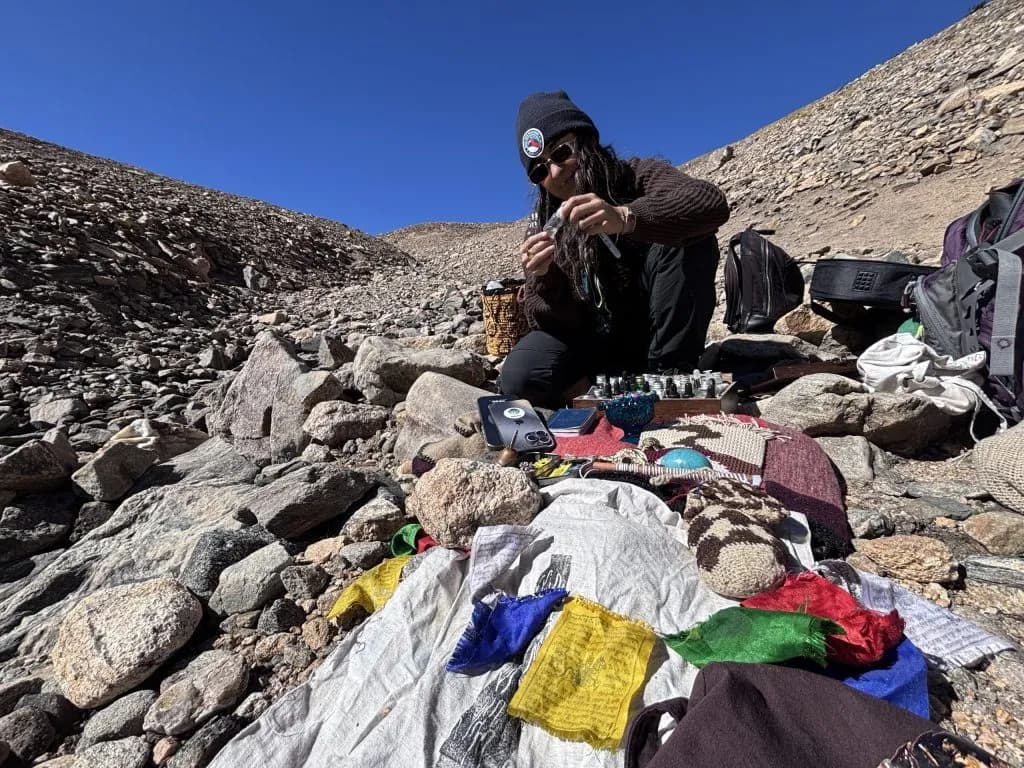
Those words didn’t come from a politician or a scientist. They came from Morgan Sierra Mae, a guitarist who grew up in Evergreen, sitting cross-legged on bare rock in a valley that used to be white.
For a century, St. Mary’s Glacier was a fixture of Colorado summers. An hour from Denver, it was a place where you could ski in July. It was iconic. It was real.
Then, this September, the ice vanished. Completely.
Here is the data point that should sting: This is the first time in recorded history that the snowfield has melted entirely. That means for at least 100 years, there was always snow. Now, there is nothing.
On paper, it’s a "glacier." In practice, scientists say it wasn’t a true glacier anyway. A true glacier is ice dense enough to move under gravity. St. Mary’s was a perennial snowfield. But now? It’s not even that. It’s just a place. Or maybe, a spirit.
Marcela Fernandez, the founder of Glacier Nation, an international climate movement, organized the ceremony. She saw the headlines during New York City Climate Week and canceled plans to visit Mount Shasta in California to get here.
"Who accompanies St. Mary’s now?" Fernandez asked. "Who is with her? Who’s listening and capturing the last drop of water, or what she wants to tell us?"
She believes every time a glacier or perennial snowfield disappears, we should collect the lessons.
The ceremony was small. About eight people. They held hands. They lowered their heads. They asked the mountain for safe passage — a tradition Fernandez said is practiced in her home country of Colombia.
Mae sang. Her voice echoed through the rocky valley, a natural amphitheater carved over thousands of years by snow and ice. The constant babble of a mountain stream provided the rhythm.
This isn’t just about one spot in the Rockies. Glaciers are disappearing from Columbia to Colorado. The pattern is clear. The timeline is shorter than we think.
What does this cost us? Not just dollars. We lose the visual proof. The summer ski runs are gone. And so is the psychological anchor that said, "The cold is still here."
The bottom line for locals: The drive up to St. Mary’s is still there. The trailhead is still there. But the view is gone. If you go, you’re not seeing a glacier. You’re seeing the absence of one. And that absence is the most urgent climate story we have right now.
Keep up with Glenwood Springs
The day's Western Slope news, one email each morning. Free.