Explore Books Curates Summer Reads in Aspen
Aspen's Explore Books curates a selection of summer reads including Liz Moore's thriller and Richard Powers' Pulitzer winner, offering locals a mix of mystery and nature-focused literature.

Aspen —"The God of the Woods" asks a question that sticks in your throat like a fishbone: "What are we willing to do for a family and what are we not?"
Annika White, a bookseller at Explore Books in Aspen, doesn’t just recommend Liz Moore’s new thriller. She warns you. Don’t be intimidated by the size. You will fly through it. It is the perfect summer mystery, a wide web of characters and lore that pulls you in from the first page.
This is the kind of story that makes locals nod. We love a good mystery here. We love a family with secrets. We love the idea that the ground beneath our feet holds more than just dirt and pine needles.
Moore’s novel drops us into August 1975. Early morning. A camp counselor finds an empty bunk. Barbara Van Laar is gone. She isn’t just any thirteen-year-old. She is the daughter of the family that owns the summer camp and employs most of the region’s residents. This isn’t the first time a Van Laar child has vanished. Her older brother disappeared fourteen years earlier. Never to be found.
As the search begins, panic sets in. But the real story isn’t just about a missing girl. It’s about the layered secrets of the Van Laar dynasty. It’s about the blue-collar community working in their shadow. Moore weaves these threads together. It is her most ambitious novel yet.
And that matters because it mirrors our own lives. We all have families. We all have secrets we keep from the neighbors. We all wonder how much we’re willing to sacrifice.
But the Aspen shop isn’t just selling paperbacks. They are curating a mood.
Richard Powers’ "The Overstory" sits next to Moore’s book on the shelf. It won the 2019 Pulitzer Prize in Fiction. It is a sweeping work of activism and resistance. It is also a stunning evocation of the natural world.
Elizabeth Sills, another bookseller at Explore, describes it as a beautifully interwoven story of people and trees. The intricacies connect us all to the natural world. It is for anyone who loves imperfect characters. It is for anyone who loves stunning imagery.
Powers takes us from antebellum New York to the late 20th-century Timber Wars of the Pacific Northwest. The story unfolds in concentric rings of interlocking fables. There is a world alongside ours. It is vast. It is slow. It is interconnected. It is resourceful. It is magnificently inventive. And it is almost invisible to us.
We walk past these trees every day. We don’t see them. We don’t hear them. But they are there.
Then there is Ian McEwan’s "What We Can Know." It came out in June 2026. Penguin Random House priced it at $20. It is a multi-century mystery.
The story starts at a dinner for close friends and colleagues. It is 2014. Renowned poet Francis Blundy honors his wife’s birthday. He reads aloud a new poem dedicated to her. "A Corona for Vivien."
Much wine is drunk. A delicious meal is consumed. Little does anyone know that for generations to come, people will speculate about the message of this poem. The only copy goes missing.
It is a tale of nature, mystery, and family. It is exactly what the Aspen shop wants you to read this week.
The staff at Explore Books in Aspen knows something we don’t. They know that books are not just ink on paper. They are mirrors. They are windows. They are traps.
You pick up a book. You think you are escaping. You are not. You are confronting yourself.
The parking lot at Explore Books is empty now. The sun is setting behind the Elk Mountains. The air is cool. The smell of pine is strong.
A car pulls in. The driver gets out. She walks into the store. She picks up a book. She doesn’t know why she picked it up. She just knows she needs it.
She walks out. She reads it on her porch. She thinks about her family. She thinks about the trees. She thinks about the mystery.
And then she goes back inside.
Keep up with Aspen
The day's Western Slope news, one email each morning. Free.


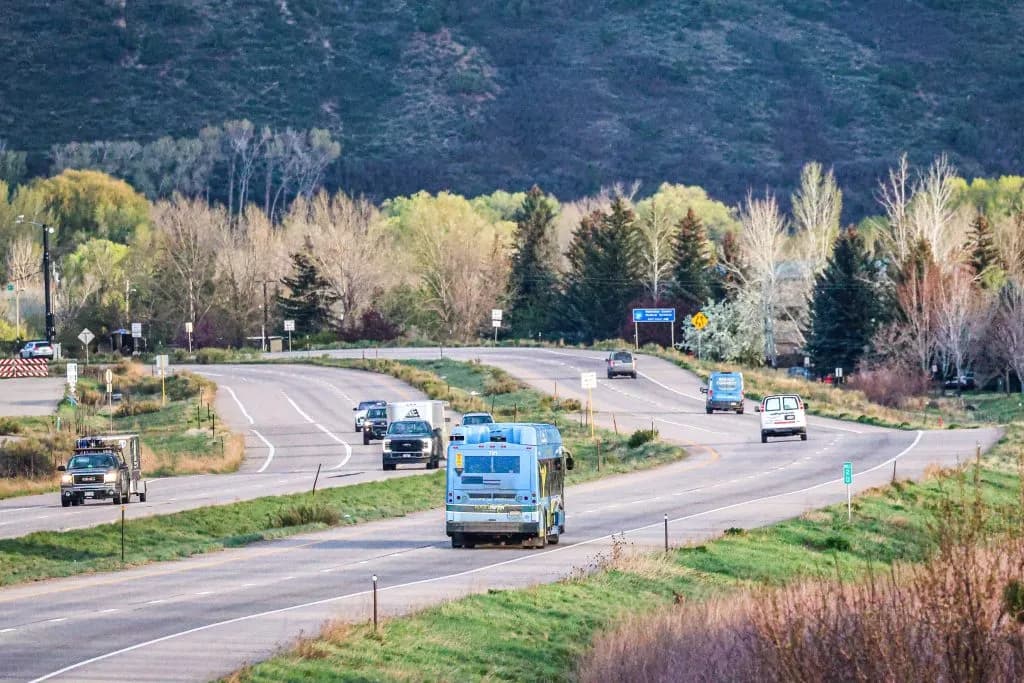
Roaring Fork Transportation Coalition Proposes HOT Lane to Ease Aspen Congestion
Eagle County Judge Receives Legacy Award for Mental Health Court Reforms