Fishhook Fire Reaches 97% Contained After Southwest Team Takes Command
The Fishhook Fire north of Rabbit Ears Pass reached 97% containment by July 27 after the Southwest Area Incident Management Team assumed command, leveraging a structured base camp off Highway 131 to manage logistics and personnel effectively.
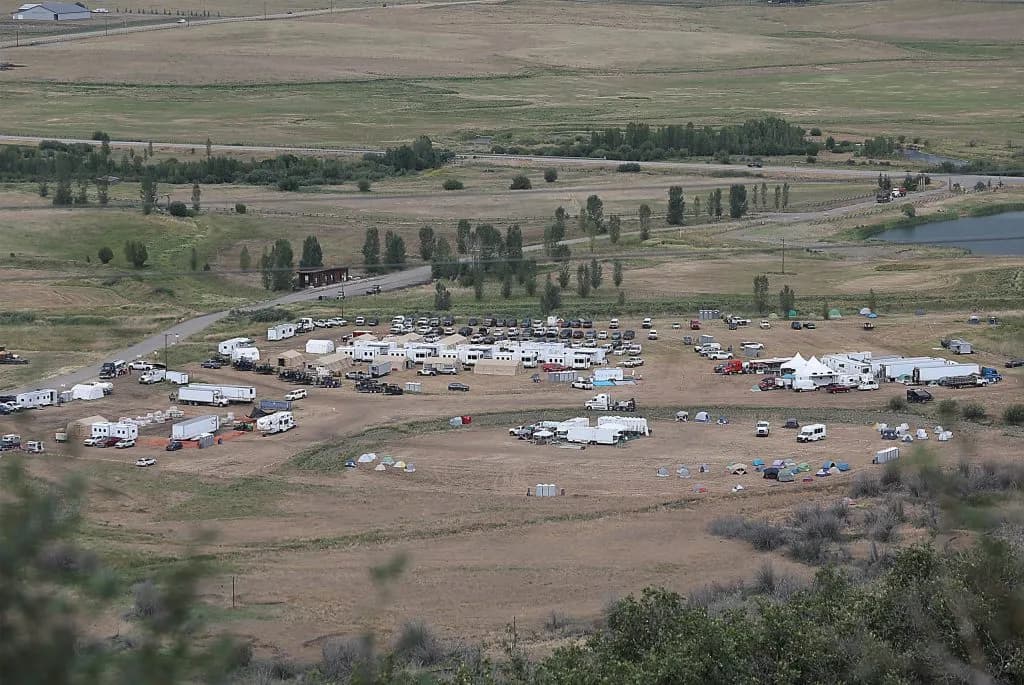
Glenwood Springs —A row of white tents sits on a dry hayfield off Colorado Highway 131, less than fifteen minutes from downtown Steamboat Springs. It is mid-July, the air is thick with residual heat, and the camp feels like a temporary city paused in time. By Wednesday, July 22, most firefighters had departed for the fire line, leaving behind a highly organized grid of trailers and utility areas under the blazing sun.
This quiet scene belies the complex machinery that kept the Fishhook Fire in check. The fire, which ignited on July 12 north of Rabbit Ears Pass, burned on Routt National Forest land. It was reported just two hours after the Green Ridge Fire broke out south of Stagecoach Reservoir. For context, this winter saw Colorado’s lowest snowpack on record and one of the worst starts to a water year in history. Only three years — 1977, 2002, and 2018 — experienced a drier start. Those conditions propelled 97% of the state into drought by mid-July, creating prime fodder for wildfire season.
The response was a logistical marathon. U.S. Forest Service personnel initially commanded the effort, but after five days without containment, they handed over to the Southwest Area Incident Management Team 1. This team, comprised primarily of personnel from Arizona and New Mexico, took command early on Friday, July 17.
As of Monday, July 27, the fire is 97% contained with roughly 20 personnel still responding. But getting there required mobilizing around 100 people initially, a number that shrank as containment grew.
Incident Commander Jay Lusher explained the structure to Post Independent staff during a nearly three-hour tour. The base camp features a command division with four extending branches: finance, logistics, planning, and operations.
“Finance makes sure everyone gets paid, that we have our contracts in place and can pay the vendors and the people here on the fires,” Lusher said.
Logistics handles the tools and supplies. Planning manages information. Operations keeps the fire line staffed. The tents on the perimeter are strategically placed so firefighters working 12-hour shifts can avoid light and noise, ensuring adequate rest.
On paper, this looks like standard procedure. In practice, it’s a significant financial and operational undertaking for the region. The Southwest Area team brings external resources, but they integrate with local infrastructure. The base camp’s location off Highway 131 minimizes disruption to local traffic while providing quick access to the fire’s epicenter.
The Fishhook Fire demonstrates how modern wildland response works: it’s not just about throwing water on flames. It’s about paying the bills, keeping the supplies moving, and managing a workforce that doubles in size during peak demand. For locals near Steamboat Springs, the visible presence of these teams means roads may be busy and air quality affected, but it also signals a robust system ready to handle the state’s increasingly arid climate.
The bottom line is efficiency. The team downsized as needed, contained 97% of the fire in under two weeks, and left a camp that reflects careful planning. For taxpayers and local businesses, the cost is embedded in federal contracts and vendor payments, but the benefit is a contained fire that didn’t spread further into Routt County.
Keep up with Glenwood Springs
The day's Western Slope news, one email each morning. Free.

Red Mountain Development Erases Steve Bob Trail Access in Glenwood Springs
Garfield County educator turns childcare into mentorship program
