Garfield Re-2 Teacher Completes State Apprenticeship Program
Justyne Terry becomes the first person in Colorado to complete the new Teacher Degree Apprenticeship Program, offering a solution to the state's teacher shortage by allowing students to earn while they learn.
Aspen —“I learned about how there was a big teacher shortage, and then I saw these little kids; they reminded me of my own kids, and I just felt like that was where I needed to be.”
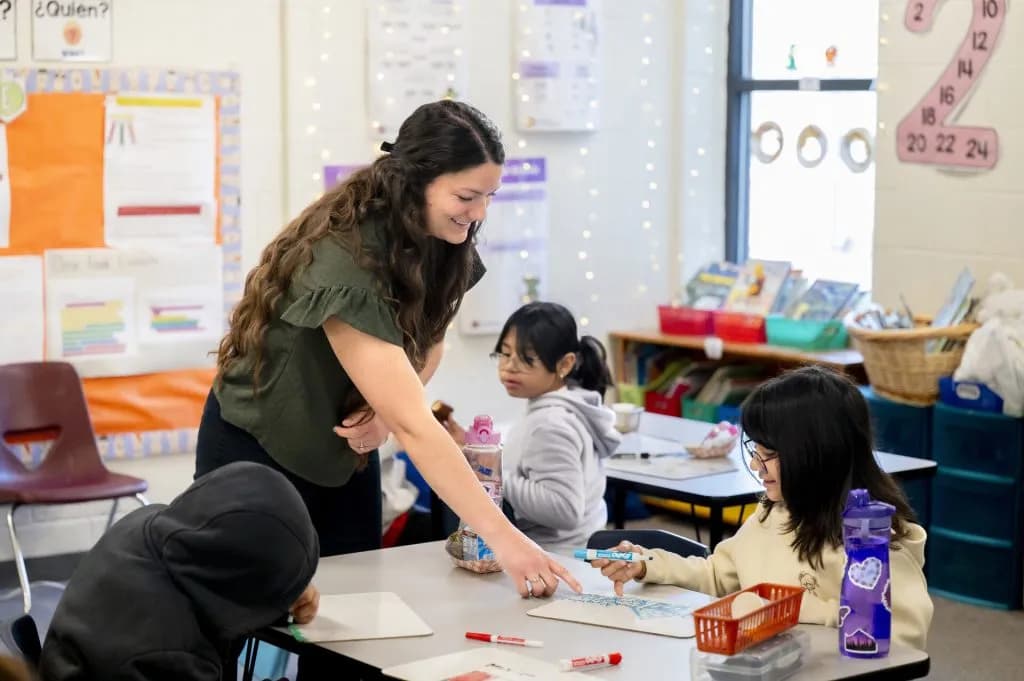
Justyne Terry didn’t set out to be a teacher. She was working as a paraprofessional in a kindergarten classroom when the realization hit her. The kids looked like her own. The shortage was real. So she switched degrees and never looked back.
That pivot led her to become the first person in Colorado to complete the state’s new Teacher Degree Apprenticeship Program. She graduated on May 1. She’s now a licensed third-grade teacher apprentice at Wamsley Elementary School in Garfield Re-2.
It sounds like a win for the community. And on paper, it is. But let’s look at the mechanics, because the model is designed to solve a specific financial and logistical problem: how do you get teachers into classrooms without waiting four years for them to finish a degree while working a second job?
The program, established by lawmakers in 2023, lets students work toward a bachelor’s degree while completing on-the-job training for up to three years. They earn a higher income during this time. They accumulate over 4,500 paid training hours. They get credentialed the whole time.
“Students like Justyne … are credentialed the whole time they’re in the apprenticeship pathway, which is very unique in teacher education,” said Liz Qualman, director of Colorado Mountain College’s teacher education program.
This isn't just a pilot project for a few lucky students. Colorado Mountain College launched this at its campuses with support from Opportunity Now Colorado, a workforce initiative funded by the state through Senate Bill 23-087. The goal is to expand training pathways into high-demand careers.
The first cohort of roughly 50 students joined in August 2024. Qualman noted that while some, like Terry, came from traditional pathways, the majority — 85 to 90 percent — are non-traditional students. Their average age is 35.
That demographic shift matters. These aren't fresh-faced 22-year-olds who just finished their student teaching. These are people who already know what the job entails. Terry, 34, fits that mold perfectly. She wasn't guessing if she liked teaching; she was already in the classroom, watching the kids, and realizing she needed to be the one leading them.
The state has been bleeding teachers since 2020. Several schools are still advertising vacant positions well into the school year. This apprenticeship model is the state’s answer to that bleeding. It allows school districts to employ these apprentices directly. They aren't just interns; they are employees earning an income while they learn.
For context, this program is funded by the Colorado General Assembly. It’s a state-level investment to plug local holes. Garfield Re-2 is one of the districts benefiting. Wamsley Elementary is where Terry applied what she learned.
The data points are clear. Over 4,500 hours of paid experience. A bachelor’s degree. A teaching license. All achieved without the traditional debt burden that often keeps new teachers from staying in the profession long-term.
But here is the practical bottom line for locals in Rifle and beyond. This program reduces the time it takes to fill a classroom vacancy. It brings in older, experienced hires who might otherwise never enter the profession. It keeps the money in the local economy by paying these apprentices during their training.
Terry’s success is a single data point. One graduate. But it proves the model works. The question now is whether the state will scale this up fast enough to keep up with the vacancies. Because right now, the shortage is still there. And until every classroom has a licensed teacher, the program is just a bandage, not a cure.
Still, for the folks in Garfield County watching their property taxes and school budgets, seeing a local resident like Terry step into a third-grade classroom with full credentials is a tangible step forward. It’s not just a statistic. It’s a teacher in the room.
Keep up with Aspen
The day's Western Slope news, one email each morning. Free.