Glenwood Springs RMI Quarry Expansion Clears BLM Paperwork Hurdle
The U.S. Bureau of Land Management declares Rocky Mountain Industrials' quarry expansion proposal complete, allowing technical review to begin on the tripled surface area and safety costs.
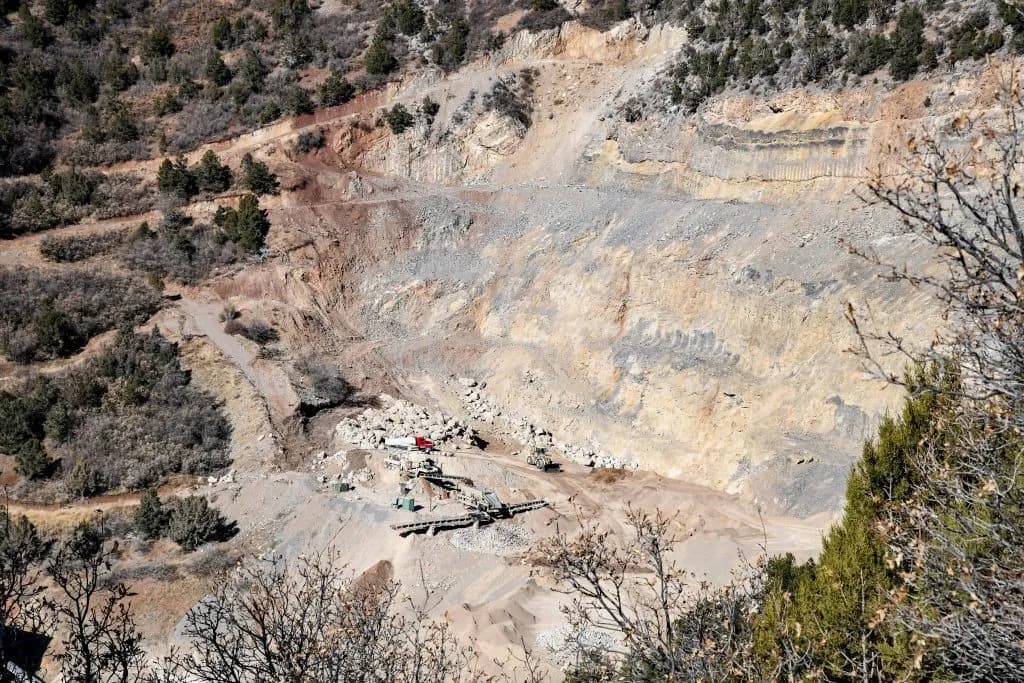
Glenwood Springs —The question on the minds of Glenwood Springs neighbors isn’t whether Rocky Mountain Industrials (RMI) plans to expand its limestone quarry. It’s whether they can do it without turning the north side of town into a perpetual construction zone, and who pays for the rock that’s currently threatening to fall on them.
The U.S. Bureau of Land Management (BLM) has declared RMI’s latest operational plan complete, a procedural milestone that allows the proposal to move into technical review. This is not an approval of the expansion itself, but rather a confirmation that the paperwork is in order. The agency compared the determination to verifying all the pieces of a puzzle are present before starting to assemble them.
The part everyone skips past is the sheer scale of what RMI wants to do. The proposal would more than triple the federally approved surface area of the Mid-Continent limestone quarry, expanding from approximately 16 acres to 56.1 acres. RMI is seeking authorization to extract material several hundred feet uphill from the current site. This includes blasting an unstable, prominent rock ledge that remains after the west front wall collapsed in 2023.
Heather McGregor, vice president of the Glenwood Springs Citizens’ Alliance, stood there long enough to watch the bureaucratic gears turn. She called the BLM’s determination a significant step, but emphasized it is not a final decision. “The term ‘complete’ simply means, according to the explanation we’ve received, that the application contains all required elements, but does not evaluate its impacts,” McGregor said. For her organization, the importance lies in what comes next: BLM now has the material to begin evaluating those impacts.
The state’s role in this dance is equally critical. The Colorado Division of Reclamation, Mining and Safety (DRMS) has already rejected a related RMI proposal to expand the state permit boundaries from 38 to 56.1 acres through a technical review, arguing instead for an amendment process. DRMS also noted that RMI must first secure BLM’s approval, as the federal agency administers the land where the quarry sits.
Then there is the matter of safety and cost. In April, DRMS increased RMI’s restoration bond by $704,000 to cover the installation of anchor bolts in that overhanging rock ledge. The state plan requires these anchors to secure the unstable face left behind by last year’s collapse. RMI must now prove that expanding operations uphill won’t compromise the stability of what remains or leave taxpayers footing a larger bill for repairs.
The BLM’s announcement confirms they have received all required information to begin this next phase of technical review. They will now assess how the pieces fit, identify potential gaps or concerns, and determine if additional information or modifications are needed. It is a period of scrutiny, not celebration.
Stand there long enough and you can see the quarry’s footprint growing in the maps, even if the physical expansion hasn’t yet broken ground. The community waits to see if RMI’s ambition to reach higher up the slope aligns with the state’s demand for security and the federal agency’s need for a solid plan. The puzzle is assembled; now comes the work of fitting it together.
Keep up with Glenwood Springs
The day's Western Slope news, one email each morning. Free.