Gov. Jared Polis Celebrates Colorado’s No. 1 Education Ranking
Gov. Jared Polis announced Colorado’s No. 1 national education ranking Tuesday at Farrell B. Howell K-8 School, attributing the jump to expanded universal preschool enrollment despite lingering reading and math deficits.
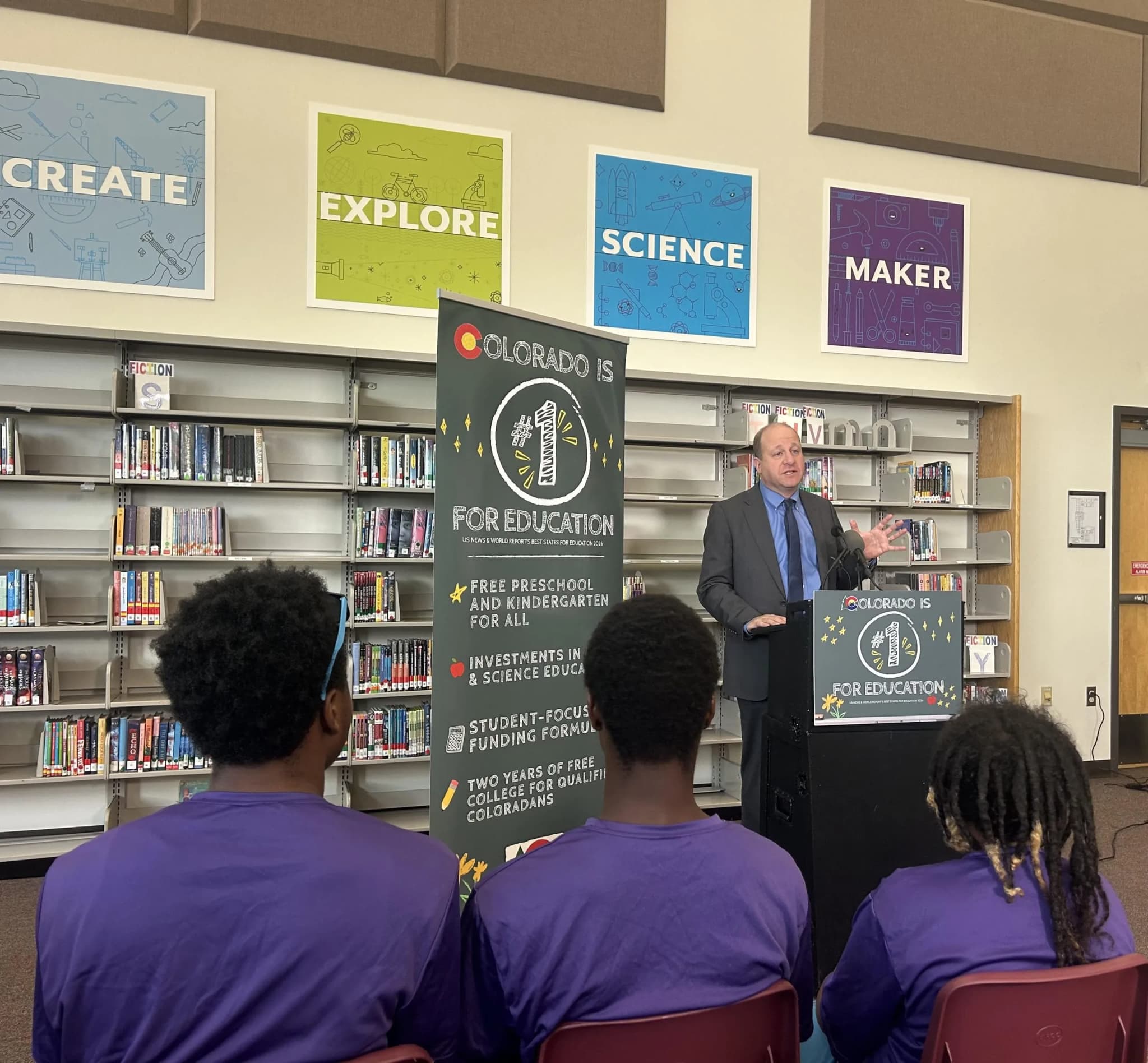
Colorado —Colorado ranked No. 1 in the nation for education.
Gov. Jared Polis announced the title Tuesday at Denver’s Farrell B. Howell K-8 School, celebrating a jump from third place last year. The win comes from U.S. News & World Report, which analyzed metrics spanning preschool, K-12, and higher education.
It’s a good headline. It’s also misleading if you stop reading there.
The same report notes that more than half of fourth and eighth graders in Colorado fall short of reading proficiency. Students are lagging in math. The state’s K-12 ranking relied heavily on enrollment numbers and test percentiles, not just raw proficiency. Colorado jumped ahead of other states specifically because of enrollment in preschool.
That’s the lever that moved the needle.
The state launched expanded universal preschool in 2023. It provides up to 15 hours of subsidized care for four-year-olds the year before kindergarten. More hours are available for kids with additional needs. More than 45,000 four-year-olds participated in the program this past school year.
That’s a lot of kids in classrooms. It’s also a lot of money in the budget.
Polis called the ranking a “low bar.” He noted that being No. 1 in a country that underperforms many other wealthy, industrialized countries doesn’t mean Colorado is leading the world. It just means we’re ahead of the pack here.
“Being No. 1 in a country that underperforms many other wealthy, industrialized countries is a low bar,” Polis said. “It’s certainly better than being No. 3 or, God forbid, No. 49 or 50, but I think it shows that we need to redouble our efforts to really invest in what works, support student learning, provide different options for students that work to help not just rest on the laurels.”
He added that the current status isn’t good enough for the global economy. It’s not good enough for the children who aren’t getting what they need to succeed.
The metrics behind the ranking are specific. They include the percentage of the class of 2024 whose SAT or ACT scores landed them in the 75th percentile. They include four-year high school graduation rates for public schools. They include eighth-grade performance on the National Assessment of Educational Progress, known as “The Nation’s Report Card.”
That test measures reading and math proficiency every two years. It’s a snapshot, not a movie.
The Farrell B. Howell K-8 School received the Governor’s Bright Spot Award alongside other schools for improving student achievement. The school was the backdrop for the announcement. It doesn’t mean every school in the state is performing at that level. It means some are, and the state is counting them.
The universal preschool expansion is the primary driver for the top spot. Enrollment numbers went up. That’s a positive for families paying for childcare. It’s a positive for the workforce if parents can return to jobs. It’s a significant line item in the state budget.
The ranking doesn’t fix the reading deficit. It doesn’t fix the math lag. It highlights that Colorado is investing heavily in the early years. The question is whether that investment translates to better test scores later.
Polis acknowledged the gap. He said the state needs to invest in what works. He didn’t specify which programs those are in the announcement. He just said the current approach isn’t enough on its own.
The U.S. News & World Report methodology is transparent. It uses data available to the public. It doesn’t measure teacher quality directly. It doesn’t measure classroom resources per student. It measures outcomes and access.
Colorado has improved access. The outcomes are still mixed.
The ranking is a political win. It’s a policy win for the preschool expansion. It’s not a total victory for student learning.
The cost of that preschool expansion is significant. The subsidy for 15 hours a week adds up across 45,000 kids. That’s taxpayer money. That’s local funding tied to state decisions. The benefit is clear: more kids in school earlier. The cost is clear: higher taxes or reallocated funds.
The ranking says we’re first. But the kids in the back of the classroom in Pueblo or Grand Junction might not feel like they’re winning. They’re still falling short in reading. They’re still struggling with math.
Polis is right to call it a low bar. But it’s a bar that matters for families paying for childcare. It matters for the state budget. It matters for the next election cycle.
The data is out there. The ranking is earned. The reading deficit remains.
Keep up with Colorado
The day's Western Slope news, one email each morning. Free.

Federal Report Sets 200,000 Acre-Foot Water Conservation Target for Upper Basin
Colorado Parks and Wildlife Deploys Precision Drones for Weed Control