Governor Jared Polis Vetoes Credit Card Swipe Fee Bill
Governor Jared Polis vetoed Senate Bill 134, preventing the elimination of credit card swipe fees on sales tax, citing legal risks over small business savings.

Colorado —Colorado Governor Jared Polis has vetoed a suite of progressive bills targeting consumer costs, including a measure that would have eliminated credit card swipe fees on sales tax.
The decision caps a term where Polis rejected 12 bills this year, setting a new personal veto record. It also signals a preference for established industry stability over the aggressive cost-cutting measures proposed by Democrats.
The most significant rejection was Senate Bill 134. The bill sought to prohibit credit card companies from charging merchants swipe fees on the sales tax portion of a transaction, starting in 2028.
Proponents argued this was a straightforward fix for small businesses. They noted that merchants currently pay fees on the total bill, including the tax they are merely collecting for the state. Removing that layer would put money back into the pockets of local shop owners.
Chris Strowmatt, general manager of Denver’s Blue Bonnet Restaurant, said the veto ignores the reality on the ground.
“This is an example of not paying attention to what the small businesses are telling you and instead choosing big business over your true constituents,” Strowmatt said.
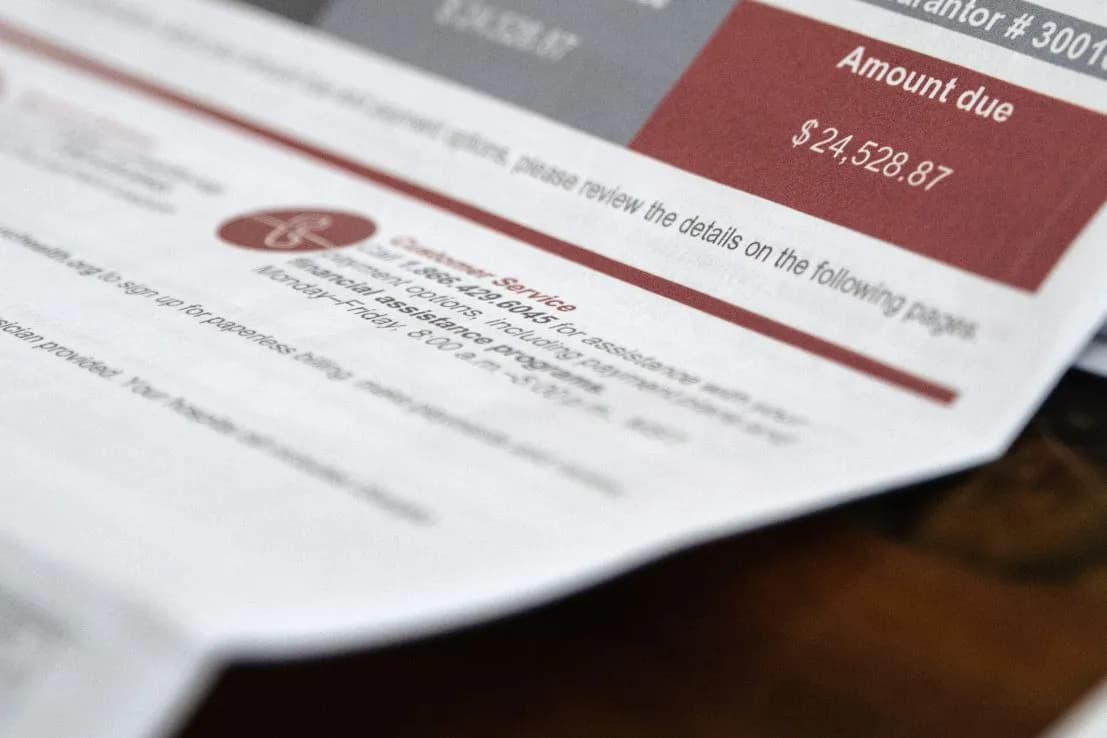
Blue Bonnet paid $62,000 in swipe fees last year. Across the state, local businesses paid $218 million in fees specifically on sales tax in 2024, according to CMSPI, a consulting firm tracking global payments.
Polis, however, found the legal risks too high. In his veto letter, he wrote that the bill presented “too much legal risk to Colorado’s business environment and consumers, with limited upside for our small businesses.”
The opposition was well-funded and loud. The Electronic Payments Coalition spent $6 million on ads opposing the bill. They hired former U.S. Rep. Ed Perlmutter to lobby against it. The airline industry also weighed in, arguing the change would disrupt mileage reward programs.
Polis refused to take a side during the legislative session. He called it a “complicated bill” with “a lot of legal risks and policy pros and cons.”
He voted with the industry.
The governor also axed a bill on “surveillance pricing.” House Bill 1210 would have stopped corporations from using online data to set individual prices for customers and wages for workers.
State Rep. Javier Mabrey said the bill was necessary to protect privacy.
“Our phones have become extensions of our brains,” Mabrey said. “We put our most intimate thoughts into them... And the biggest companies in the world are collecting that data and selling it to other companies who are using it to determine how much to pay us, how much to charge us.”
Polis disagreed. He said the bill was too broad. It would have punished lower prices, not just higher ones, if technology incidentally influenced them. He also noted it was redundant with an AI bill he signed recently.
Another veto targeted arbitration reform. Senate Bill 134’s counterpart, this measure aimed to make binding arbitration clauses in consumer contracts more fair.
Rep. Yara Zokaie said arbitration is taking away the right to sue.
“Arbitration reform is just one important step that we can take to tackle what is an increasingly pervasive thing that you’ll find in contracts,” Zokaie said.
Polis said the bill was too vague and would complicate the process. He encouraged sponsors to refine it and reintroduce it later.
The vetoes leave the status quo in place. Credit card fees on sales tax will continue. Surveillance pricing will remain unregulated by state law. Arbitration clauses will stay in contracts.
For the Western Slope, the credit card fee veto is the one that hits closest to home. Small businesses in Delta, Montrose, and Ouray rely on those margins. The $218 million statewide figure breaks down to roughly $218 million in lost revenue for local merchants who had to pay to collect taxes for the state.
Polis chose legal certainty over immediate savings. The courts will decide if his assessment of the risk holds up.
Keep up with Colorado
The day's Western Slope news, one email each morning. Free.

Federal Report Sets 200,000 Acre-Foot Water Conservation Target for Upper Basin

Colorado Parks and Wildlife Deploys Precision Drones for Weed Control