Griffey's Final Morning: A Hunter Reflects on Losing His German Wirehaired Pointer
A hunter reflects on the death of his chaotic German wirehaired pointer, Griffey, exploring the complex bond between owner and dog after 14 years of shared seasons.
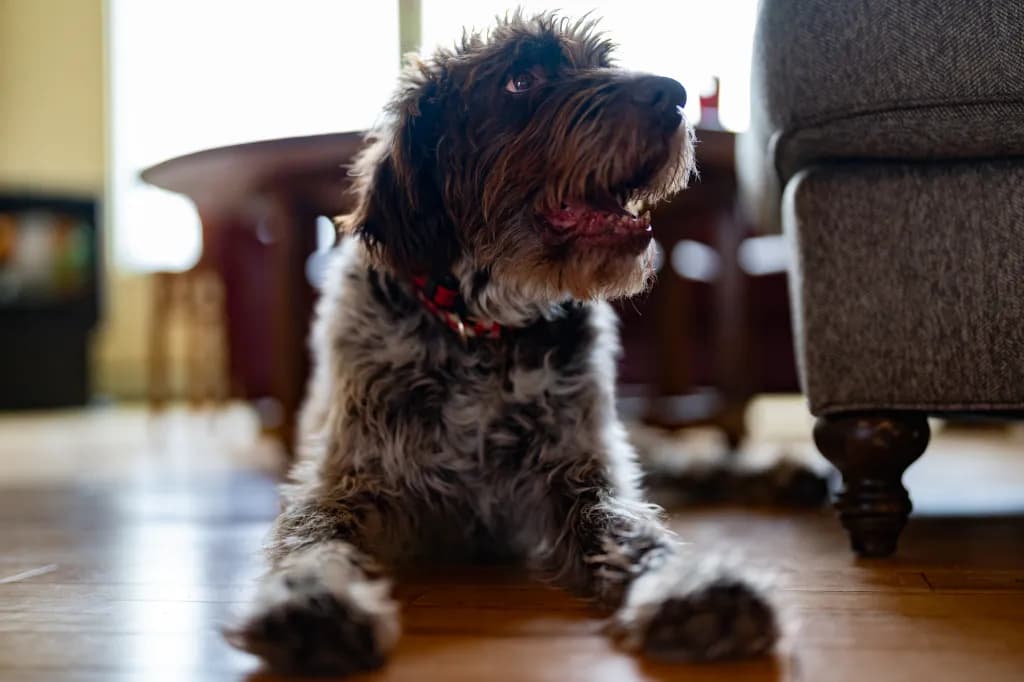
Steamboat Springs —The cold tile floor of the vet clinic holds a specific weight, doesn’t it? It’s the kind of cold that seeps through your boots and settles into your bones, a physical reminder that time is no longer on your side. For nearly 14 years, Griffey had been a force of nature in our lives, a German wirehaired pointer whose mischievous eyes and tri-colored coat defined the rhythm of our seasons. But on that final morning, he could not lift his head. He lay there, reaching a paw toward us with a trust that felt like an accusation, seeking comfort from the very people who had brought him to his end.
Why do we keep doing this? Why do we bring the dog who has given us everything to the place where he gives it back?
According to a piece originally published in the 2026 edition of Colorado Hunter & Angler Magazine, Griffey was our family’s third hunting dog. He wasn’t even the puppy I had originally selected from the breeder’s photos; my wife and daughter fell for his fuzzy snout and enthusiastic disposition before I could stop them. We named him after Ken Griffey Jr., the legendary centerfielder, hoping for a player who could chase fly balls with grace and smash home runs with ease. If you look closely at the expectations we place on these animals, you see a mirror of our own desires for control and elegance. We wanted the fluidity of an English setter named Homer, who would hold his tail like a sail in the breeze. We wanted the furtive slither of Pete, our Vizsla, who would freeze for minutes at a time when locking onto a pheasant.
Griffey was none of that. He was the proverbial bull in a china shop.
In the field, he was a bulldozer. He would crash through brush and cattail marshes at full speed, bounding over clumps of grass with a relentless energy that defied the quiet protocol of pointing dogs. When he scented a bird, his nub of a tail would circle continuously until the flush happened, breaking every rule I had ever tried to teach him. There is a warmth to that chaos, really, even if it frustrated me in the moment. He didn’t hunt with finesse; he hunted with his whole body, a pure expression of unfiltered joy.
The article details the morning his story truly began, a warm October day in Iowa where he encountered his first bird. He pointed a cock pheasant, the bird exploded from cover, and it dropped cleanly in the grass twenty-five yards away. Griffey looked at me, then hesitantly at the bird. I told him to fetch, a command we had drilled in the backyard until it was muscle memory. He raced to the pheasant, a lump of... well, the story cuts off there, but you can feel the tension in that pause. You can feel the gap between what we wanted him to be — the graceful, steady retriever who sits proudly — and what he actually was.
We spend so much time talking about the sport, the gear, the land management, and the politics of it all. But underneath that is this raw, personal bond with an animal who doesn’t understand why he’s on a cold floor. He trusts us because we’ve shared the field, the campfire, and the quiet mornings with him. He doesn’t know he’s there to die; he just knows we’re there, and that has always been enough.
The memory of him doesn’t fade into a simple narrative of success or failure. It stays in the texture of that cold floor, in the relentless circling of his tail, and in the quiet betrayal of a trust that was never asked for but always given.
Keep up with Steamboat Springs
The day's Western Slope news, one email each morning. Free.