Healy House Museum Launches Winter Warriors Exhibit on Camp Hale
The Healy House Museum & Dexter Cabin opens 'Winter Warriors: The 10th Mountain Division in World War II,' a new exhibit detailing how Camp Hale trained soldiers in harsh Colorado mountain terrain.
Gunnison —The air in Leadville still holds the ghost of iron dust and silver ore, a metallic tang that settles in the back of your throat if you walk down Harrison Avenue long enough. It’s a town built on the bones of geology, where the wind howls off Mount Elbert with a violence that feels personal, and where the altitude makes your lungs work twice as hard as they would down in the valley. But this spring, that familiar, biting cold is being layered with a different kind of chill — the crisp, archival silence of history being pulled from the shadows and put on display.
On May 22, the Healy House Museum & Dexter Cabin opens its doors to “Winter Warriors: The 10th Mountain Division in World War II,” an exhibit that doesn’t just trace the rise and fall of mining barons but rewrites the narrative of how this high-altitude town became the crucible for the Army’s first and only winter warfare division. The exhibit runs until September 2027, a long stretch that suggests the story of Camp Hale is finally getting the sustained attention it has been denied for decades.
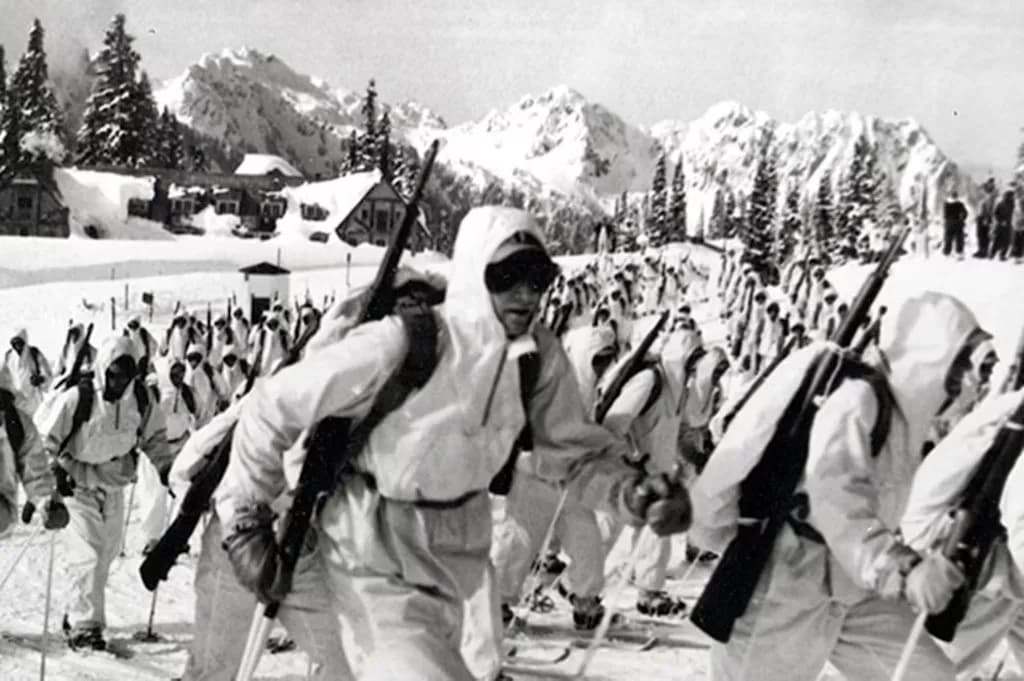
To understand the weight of this new chapter, you have to look past Leadville’s own historic peak and drive east along Colorado State Highway 24, between Minturn and Leadville, to Pando Valley. There, at 9,250 feet, lies a flat, open expanse that measures three miles long and one mile wide — a rare, spacious lung in the Rocky Mountains. Construction on Camp Hale began in April 1942, and within seven months, an instant city had risen from the dirt to accommodate 14,000 soldiers. Up to 15,000 men lived there at its heyday, training in mountain climbing, Alpine and Nordic skiing, cold-weather survival, and various weapons and ordnance, all while the rest of the world watched and waited.
Hannah Cary, director of History Colorado’s Healy House Museum & Dexter Cabin, notes that the idea behind Camp Hale was unique, never done before or since. “Many Coloradans know the broad strokes of this special story,” Cary says. “The ‘Winter Warriors’ exhibit aims to go deeper, showing how these soldiers succeeded thanks to a group effort that extended further than the men who went abroad to fight.”
It’s easy to think of the division only in terms of the soldiers who shipped out to Italy, but the exhibit argues that the real story is local. The U.S. military chose this secluded, harsh terrain specifically because it needed to test troops in conditions that mirrored the European theater’s mountains. During the construction and operation of the camp, Leadville transformed from a quiet, tucked-away mining town into a bustling hub. Soldiers lived here, yes, but they also bought groceries here, sought entertainment here, and relied on the local infrastructure to keep them fed and warm. The town’s history between 1870 and 1920; the gold and silver boom and bust - has long been the museum’s primary focus, but this new exhibit extends that timeline, showing how the military encampment changed life in Leadville and the rest of Colorado.
Camp Hale didn’t just spring up out of nowhere and disappear after the war. The men and women who built up this encampment created lasting legacies for Leadville and beyond, legacies that are now being codified in the permanent memory of the community. This is not just a military history; it is a social history of a town that had to pivot from extraction to support, from mining to hosting.
The context here is vital. Before World War II, the U.S. Army had never experienced mountain warfare on this scale. The rugged Colorado Rockies didn’t just train these soldiers; they transformed them. And now, with the Camp Hale-Continental Divide National Monument protecting more than 53,000 acres in Eagle and Summit counties, the physical space where this happened is under federal protection, ensuring that the landscape itself remains a witness to what happened there.
When you walk into the Healy House Museum, you aren’t just looking at maps and rifles. You are looking at the moment Leadville stopped being just a mining town and became a strategic pillar of the Allied victory. The exhibits will show how the harshness of the Rockies forged a new kind of soldier, one who could climb, ski, and fight in the snow, a skill set that would prove decisive in the Italian campaign. It’s a story of grit, of altitude, and of a town that played a crucial role in world history while most of the country was still figuring out how to mobilize.
Outside, the wind picks up again, rattling the windows of the historic homes that have stood witness to gold rushes and silver crashes. Inside, the air is still, preserved for the “Winter Warriors,” waiting for you to step into the cold and understand the heat of the effort it took to build them.
Keep up with Gunnison
The day's Western Slope news, one email each morning. Free.