Heavy Rain on Gold Mountain and Aspen Acres Fires Closes Highways in Southern Colorado
Heavy rain triggered dangerous flooding and debris flows across southern Colorado, closing Highway 78 and Highway 550 near Ouray and Beulah after the Gold Mountain and Aspen Acres fires stripped the land.
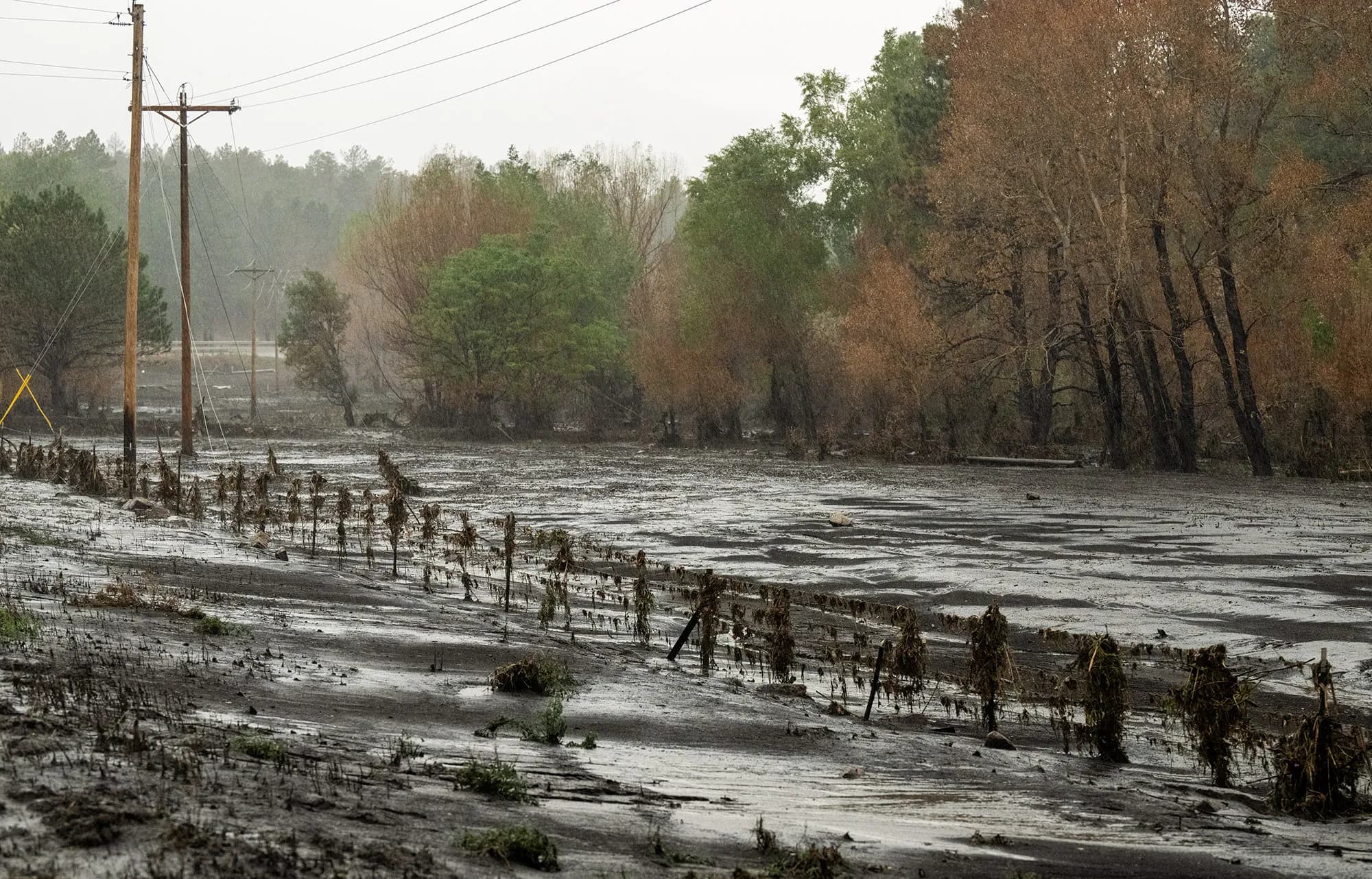
Ouray —The rain didn’t just fall on Colorado’s burn scars. It fell on top of them, and the ground forgot how to hold it.
That is the difference between a storm and a disaster. You don’t need a meteorologist to explain why the mudslide hit Highway 78 harder than the asphalt. You just need to look at the fire maps. The trees are gone. The roots are dead. The soil is loose. When the sky opens up, the valley doesn’t just get wet. It gets buried.
This isn’t a weather event. It’s a geological inevitability.
Heavy rain triggered dangerous flooding and debris flows Wednesday evening across southern Colorado. Emergency crews didn’t just watch; they reacted. Evacuation orders flew out to residents living near the Gold Mountain fire burn scar northeast of Ouray. The Ouray County Sheriff’s Office didn’t mince words in a Facebook post. “Extreme flooding is occurring in this area due to heavy rain on the Gold Mtn burn scar.” They told people to leave. Immediately.
The damage was visible before the reports even finished rolling in. Photos shared by the Colorado Department of Transportation showed water rushing over Red Mountain Pass between Silverton and Ouray. At least eight mudslide areas blocked the highway in both directions. CDOT crews used heavy machinery to clear massive piles of mud and rock. The road became impassable. There is no estimated timeline for reopening. The pass is closed until it is ready.
Another 4-mile stretch of U.S. 550 north of Ouray also fell victim to flooding. CDOT confirmed the closure. The infrastructure that connects these towns to the rest of the state is fragile right now. One more inch of rain, one more slide, and the isolation sets in.
Fifty miles south, the situation was worse. The town of Beulah in Pueblo County took a direct hit. The Aspen Acres fire, the largest active fire in Colorado, has already scorched more than 101,900 acres across Pueblo and Custer Counties since igniting on June 29. It destroyed more than 300 homes. Now, the rain is finishing the job.
Photos from the Pueblo County Sheriff’s Office showed muddy water covering roads. Patios were flooded. Debris was strewn across streets. Video captured fast-moving floodwaters surging down a road. The Beulah Fire Protection and Ambulance District issued a warning at about 7:30 p.m. Wednesday. “This is a dangerous and life-threatening situation,” they said. “Do not attempt to travel through moving or standing water. Evacuated to higher ground now.”
The contrast between the fire’s destruction and the rain’s delivery is stark. Mike Sweeney, writing for the Colorado Sun, noted that runoff from thunderstorms that might have been normally mitigated by a healthy forest inundated creeks in the area. The Aspen Acres fire removed the mitigation. The rain provided the force.
North of Beulah, along North Creek, the impact was visible in the debris and mud deposited along Highway 78. The same logic applied to the blaze that started June 27 near Ouray. Crews assigned to the Gold Mountain fire are building waterbars — shallow ditches — to prevent soil erosion. They are trying to divert runoff from the significant rainfall over the past several days.
It is a stopgap measure. It is not a cure.
The short version is this: The fires stripped the land. The rain washed it away. The result is closed highways, evacuated homes, and a community learning that their ground is no longer solid. The question isn’t when the roads will reopen. It’s how many more slides it will take to close them for good.
Keep up with Ouray
The day's Western Slope news, one email each morning. Free.



Snyder Fire Holds at 10% Containment as Gold Mountain Blaze Threatens Ouray
Ouray County Sheriff Declares State of Emergency as Gold Mountain Fire Burns 600 Acres