Hegseth Faces Bipartisan Pushback on $1.5 Trillion War Budget
Defense Secretary Pete Hegseth defends the historic $1.5 trillion military budget and rising $29 billion Iran conflict costs amid bipartisan skepticism over munitions depletion and ally support.
Aspen —What does a $1.5 trillion war budget actually buy you when the munitions are running low and your allies are watching you from the sidelines?
That’s the question facing Delta County residents, who see their local National Guard units rotate out and back in, and who watch the price of gas and goods tick upward. The answer, according to Defense Secretary Pete Hegseth, is that we’re spending big to keep the lights on, but the bill is getting steeper.
The Trump administration’s 2027 military budget proposal calls for a historic $1.5 trillion. But the real story isn’t just the size of the check; it’s what’s being bought with it. The cost of the ongoing Iran conflict has risen to approximately $29 billion. That’s not a typo. Nearly $24 billion of that total is dedicated solely to replacing munitions and repairing equipment. The rest covers operational costs to keep forces deployed.
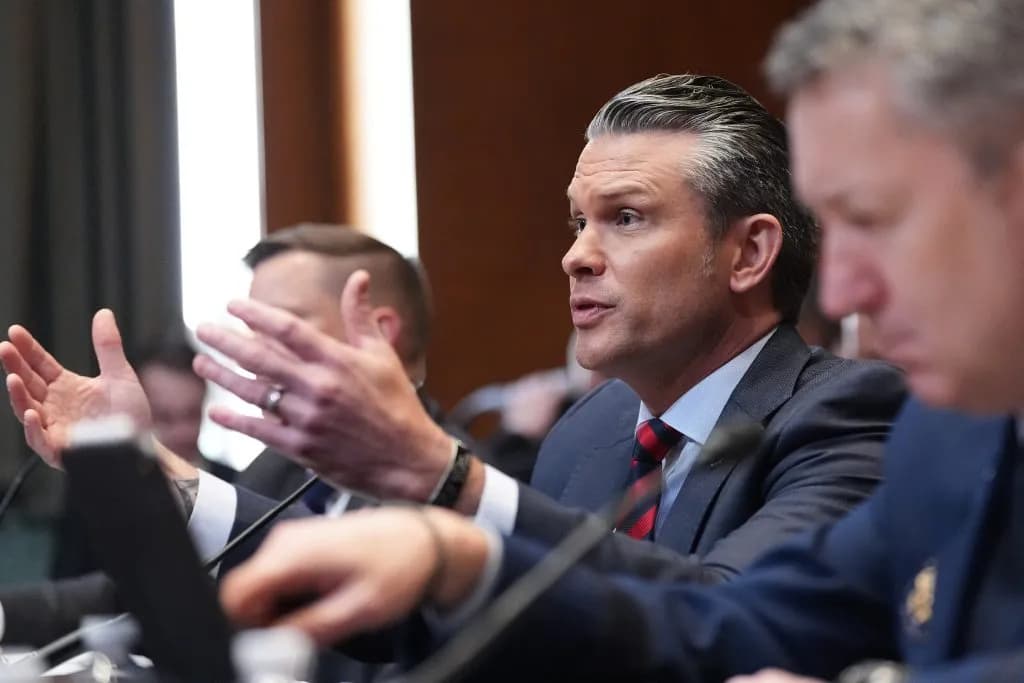
Hegseth faced a bipartisan grilling on Tuesday, and the pushback wasn’t just from Democrats. Republicans, who usually cheer the spending, were asking the hard questions.
“I take issue with the characterization that munitions are depleted in a public forum,” Hegseth said. “That’s not true.”
He insisted the military has plenty of missile defense systems and other stockpiles for future conflicts. But he also admitted the Pentagon is working to ramp up production. The updated estimates show the cost rising from the $25 billion figure Pentagon comptroller Jay Hurst revealed just two weeks ago. And that’s before you even count the cost to repair or rebuild U.S. military sites damaged in the region.
The tension between spending and stockpiling is real. If you’re a local business owner relying on stable supply chains, or a veteran wondering if the equipment your unit uses is up to date, this matters. The administration is betting that high spending will secure victory and deter future aggression. Critics are asking if it’s securing influence instead.
That brings us to the allies. Trump has been blunt, criticizing NATO countries for not helping reopen the Strait of Hormuz or offering more support. He plans to pull thousands of troops out of Germany in the coming months.
Hegseth got hit on this front, too. Kentucky Sen. Mitch McConnell didn’t mince words.
“It seems to me that a lot of the European countries think that we’re reducing our influence there, they’re sort of on their own,” McConnell said.
Oklahoma Rep. Tom Cole, chairman of the House Appropriations Committee, echoed that sentiment in a separate hearing.
“America First has never meant American alone,” Cole said. “American power is most effective when it’s exercised in concert with like-minded nations who share our interests and our values.”
The question for locals isn’t just whether the Pentagon has the bullets. It’s whether the geopolitical strategy holds up when the bill comes due. The $1.5 trillion budget is historic, but the cost of the Iran war is rising faster than expected. And if the allies pull back, as Trump seems to be planning, who pays the difference?
Hegseth’s answer is that the U.S. can handle it, provided we keep spending. But the pushback from his own party suggests that even Republicans are worried about the long-term cost of going it alone.
“The numbers back that up,” Hegseth told the subcommittees. “We are working to ramp up production.”
The production ramp-up is underway, but the consumption rate is already outpacing it. For now, the bill is $29 billion and climbing.
Keep up with Aspen
The day's Western Slope news, one email each morning. Free.