Highlands Ranch Mom Wears Same $150 Dress for 100 Days
A Highlands Ranch mom tackled decision fatigue by wearing the same $150 gray dress for 100 consecutive days, proving that reducing clothing choices saves time and money while fighting the fast-fashion cycle.
Colorado —Is it worth spending $150 on a single dress to save your sanity?
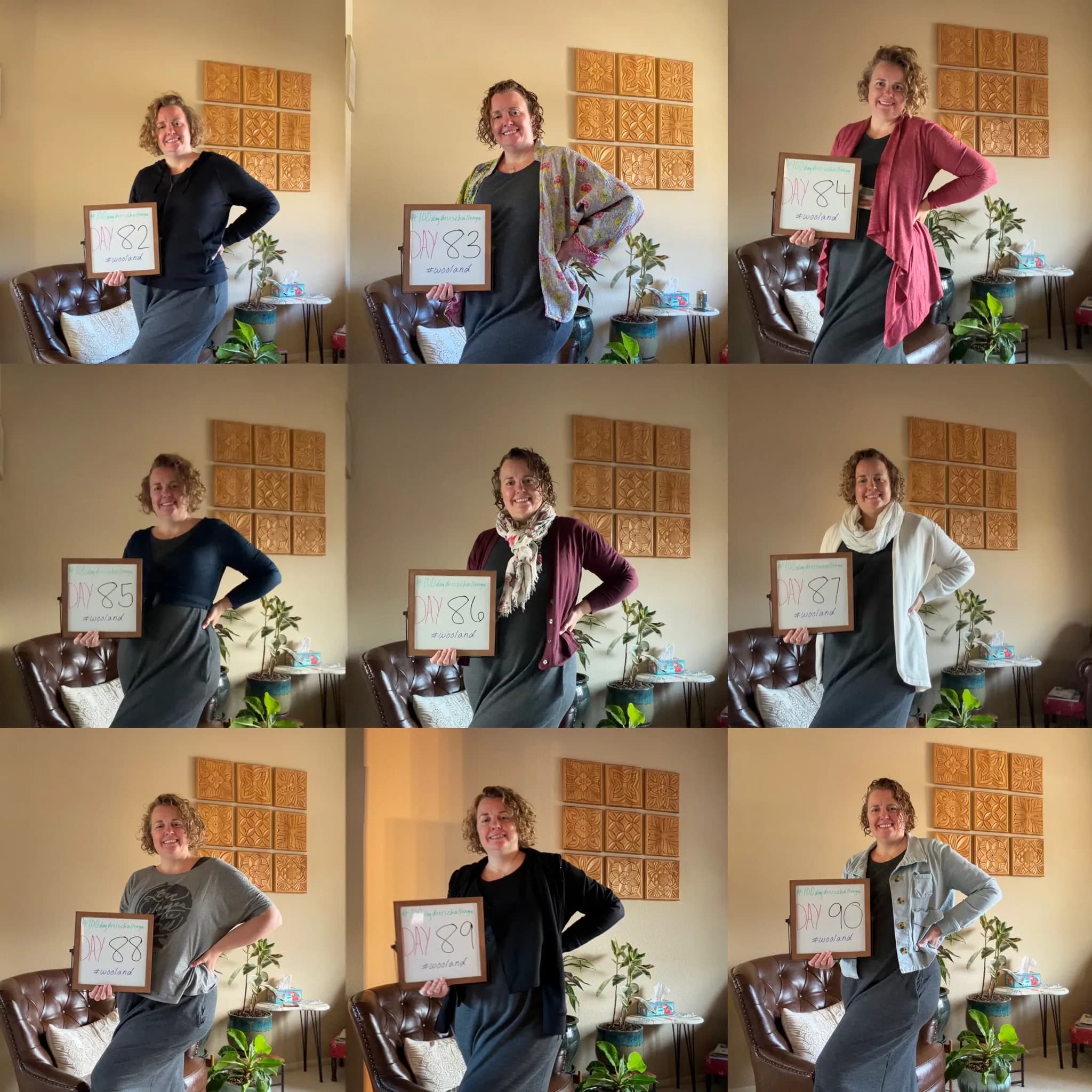
That’s the question Olga Gintchin answered by wearing the same dark-gray wool dress for 100 consecutive days.
The Highlands Ranch mom didn’t do it for the Instagram likes, though her feed became a curated mix of the dress, sourdough loaves, and her xeriscaped yard. She did it because she was drowning in "decision fatigue." She stood in front of a closet overflowing with jeans and clothes she’d bought online but never wore, staring at mounds of dirty laundry and realizing she was spending more time stressing over outfits than living her life.
"This is just stressing me out," Gintchin recalled. "I’ve got to do something."
The result was a $150 "Jess" dress from the brand Wool&. It was plain. Functional. Practical. And entirely gray.
For three and a half months, from mid-January to late April 2026, Gintchin wore that dress every single day. She didn’t just throw it on and call it a day. She layered it. She accessorized. A green cardigan here. A multicolor striped coat there. A $13 thrifted maroon leather jacket added some edge. She wore leggings underneath. She tucked in a blouse to turn a sleeveless scoop neck into a V-neck when the mood struck.
It wasn’t a performance art piece designed to confuse the locals at King Soopers, although most shoppers didn’t notice at all. It was a rebellion against the fast-fashion cycle that dominates social media feeds. While influencers buy "one in every color" of a $10 top and justify wearing it once, Gintchin was proving that one quality garment, cared for properly, could outlast a dozen cheap alternatives.
The experiment was inspired by a promotional gimmick from Wool&. Gintchin had to prove she’d worn the dress daily by posting photos with a whiteboard scrawled with the day’s number. She uploaded them to a Google Drive to win a $100 gift card. The financial return on investment? Negative $50. She spent $150 to win $100. But she wasn’t looking for a profit margin. She was looking for simplicity.
Before this, Gintchin, 46, had only dabbled in minimalism. She’d used disposable diapers for one son and cloth for another, washing them on her deck. She’d worn the same pair of bulky wool socks — gifted by her Bulgarian husband — for over 20 years. She hadn’t given much thought to the environmental cost of her choices until the clutter became unbearable.
The fast-fashion model relies on volume. It relies on you buying more, wearing it twice, and tossing it. Gintchin’s approach relied on one dress. It relied on the idea that if you buy it right, you don’t need to buy it again.
For context, the average American throws away about 82 pounds of clothing per year. That’s a lot of landfill space for clothes that were barely worn. Gintchin’s 100-day streak challenges that metric directly. It suggests that the solution to consumer overload isn’t better organization, it’s reduction.
The dress didn’t just reduce her closet clutter. It reduced her mental load. It eliminated the morning debate of "what to wear." It turned getting dressed from a source of stress into a non-issue.
Gintchin’s experiment proves that folks don’t need a massive budget to live sustainably. You just have to stop buying things you don’t need. The $150 dress cost less than the cumulative price of the dozens of cheap tops she would have bought and discarded in the same timeframe. It cost less than the therapy she might need for her decision fatigue.
In practice, this means less time shopping. Less time cleaning. Less time worrying about what’s in vogue. It means wearing the same gray dress until it finally wears out, and then buying another one.
The bottom line? Gintchin saved time, reduced waste, and proved that a $150 investment can outlast a fast-fashion wardrobe. The only downside is that she still has to do the laundry. But that’s a small price to pay for not having to think about it.
Keep up with Colorado
The day's Western Slope news, one email each morning. Free.


Federal Report Sets 200,000 Acre-Foot Water Conservation Target for Upper Basin

Colorado Parks and Wildlife Deploys Precision Drones for Weed Control