Holy Cross Energy Charges Pitkin County Residents for Peak Electricity Usage
Holy Cross Energy implements a $1 per kilowatt-hour demand charge for Pitkin County residents, penalizing peak evening usage to manage infrastructure costs and keep long-term rates lower.
Gunnison —“‘Could I throw in a little wash in the morning before I leave for work?’”
That’s the question Holy Cross Energy is asking Pitkin County residents as they try to justify a new fee that hits your electric bill harder than you might expect.
The utility implemented a demand charge of $1 per kilowatt-hour last month. It applies to small, general residential services using less than 50 kilowatts. The charge reflects your single highest energy reading in a given month.
It’s not a flat rate. It’s a penalty for peak usage.
If you run your dishwasher, your dryer, and your EV charger all between 5 p.m. and 7 p.m., you pay for that spike. If you stagger those tasks — charge the car from midnight to 4 a.m. when the system is quiet — you pay less.
Holy Cross Vice President of Member and Community Relations Jenna Weatherred says the goal is simple: stop stacking everything at once.
“We are asking folks to focus on separating out their usage rather than stacking it all,” Weatherred said.
The utility argues this keeps rates lower for everyone. They claim the charge helps allocate costs better within their renewable energy system. It ensures the network is built to the appropriate size for actual demand, not just theoretical maximums.
“Everyone is beginning to pay for the different pieces of the system that we use,” Weatherred said. “We’re trying to be really responsible with the system and make sure that we can keep our rates as low as possible.”
During a May 5 work session, Holy Cross President Bryan Hannegan laid out the infrastructure argument. Lowering peak demand reduces strain on the power lines. It delays the need for expensive upgrades or replacements.
“You can avoid some part of that demand charge and actually help us help you avoid having to pay more in your electric bills for the infrastructure in future years,” Hannegan said.
He called it a “robust way to make sure everybody understands the costs of having the capacity to serve.”
The pitch is straightforward. Use less during peak hours. Use solar. Use batteries. Save money.
But there’s a disconnect between the utility’s messaging and the reality on the ground.
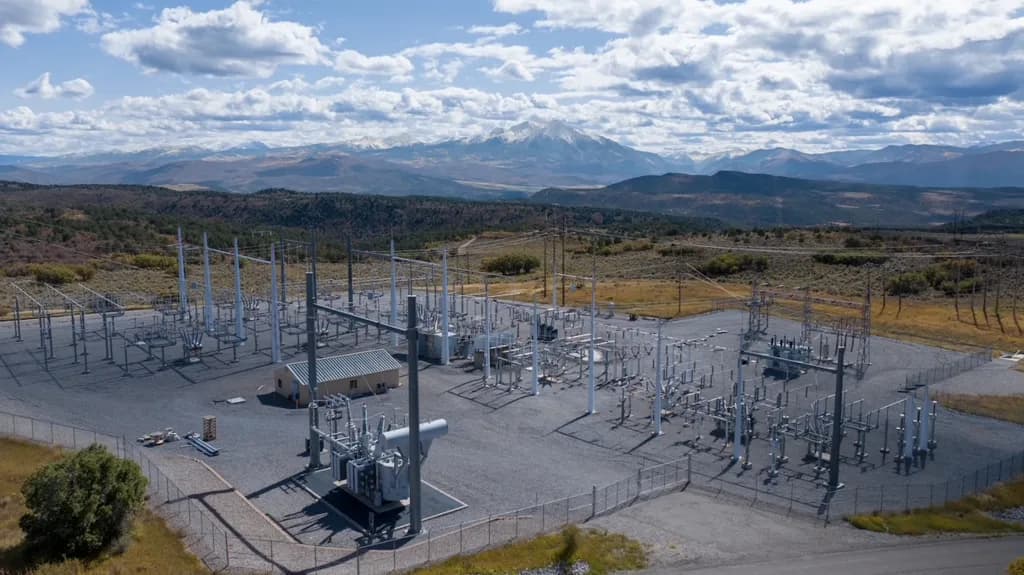
Commissioner Greg Poschman didn’t just nod along. He looked at the poles and asked about fire risk.
“‘These electric poles look like they’re ready to catch fire,’ Poschman said. ‘How is your fire resiliency?’”
The drought is here. The winds are picking up. The utility is asking locals to manage their load, but Poschman was managing his risk.
Holy Cross says it evaluates weather conditions extensively. They didn’t detail the specific protocols during that session, but the implication is clear: the infrastructure is aging, the climate is changing, and the cost of maintaining it is shifting onto the customer.
The demand charge is $1 per kilowatt-hour. For a typical home, that might seem small. But if you’re running high-draw appliances during the evening rush, it adds up. It’s a direct tax on convenience.
Weatherred suggests the solution is behavioral. Change your habits. Shift your load.
Hannegan suggests the solution is technological. Install solar. Buy batteries.
Both are true. Both are expensive.
The short version: Holy Cross is charging you for the privilege of using power when everyone else is using it too. They claim it’s for your own good. They claim it keeps the lights on. They claim it prevents rate hikes later.
But when Poschman asked about fire, he wasn’t asking about kilowatt-hours. He was asking about survival.
The utility has the capacity to serve. The question is whether the customers can afford the price of that capacity.
Keep up with Gunnison
The day's Western Slope news, one email each morning. Free.