Interior Report Blames Communication Failures in Grand Junction Fire
A 102-page Interior report cites communication breakdowns and understaffing in the fatal Grand Junction wildfire. Families demand accountability for four dead firefighters.
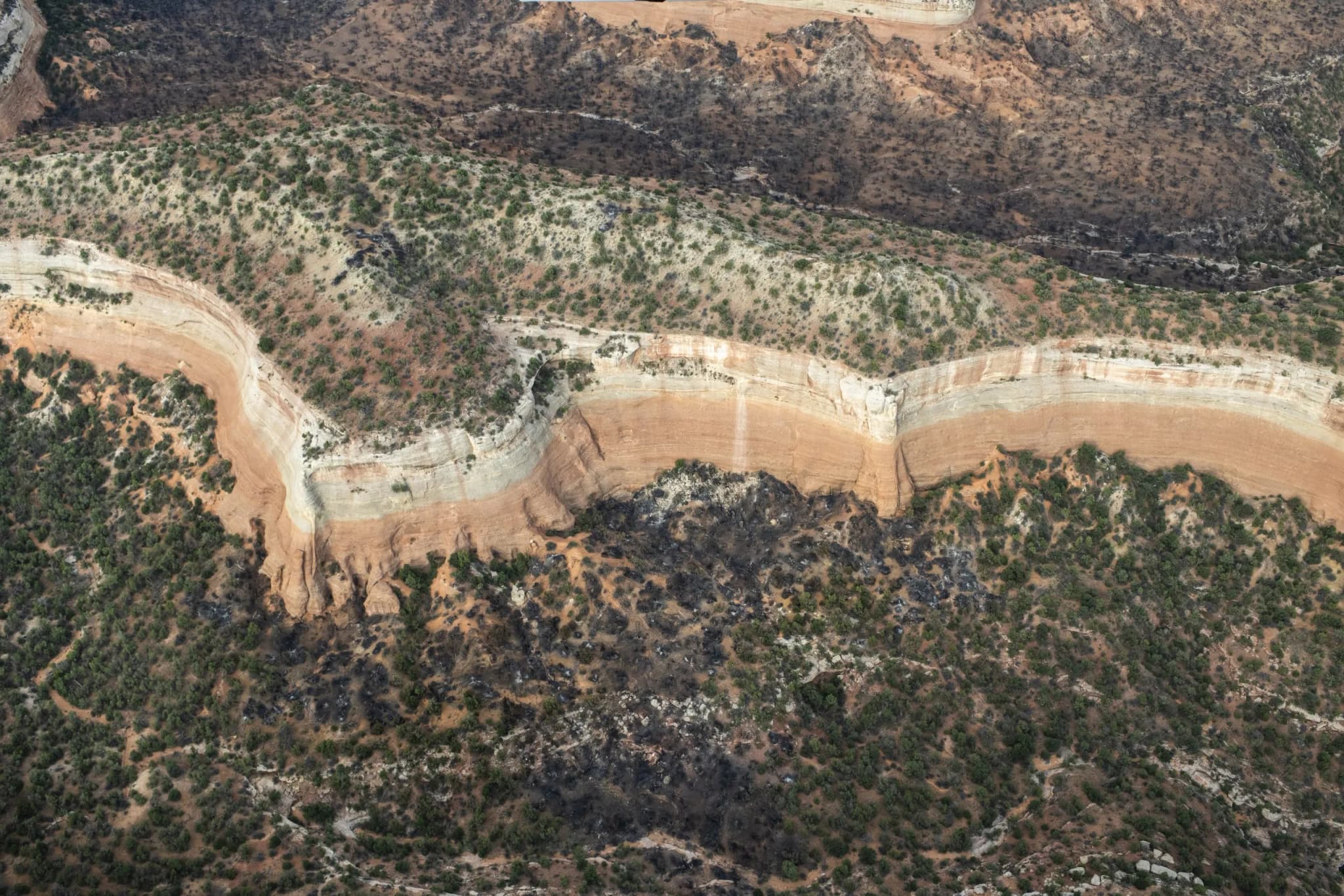
Grand Junction —Lisa Hutcherson stood in the dirt where her son died. She looked at the canyon walls and the mesa terrain surrounding the spot. She saw no viable way out on ground level.
Hutcherson, 38, of Clinton Township, Michigan, spoke after the Department of Interior released a 102-page report on Thursday. The document details what went wrong during the Knowles fire near the Colorado-Utah border west of Grand Junction. Her son, Nick Hutcherson, was 27 and from Glendale, Arizona. He died on June 27 after flames overtained him while battling lightning-caused fires.
The report blames a mix of factors. Strained communications played a role. Extreme fire behavior contributed. Understaffing was a factor. Gaps in aerial supervision hurt the operation.
The short version: four federal firefighters died. A fifth was injured. They were part of the Rifle Helitack team or working alongside it when disaster struck.
Nick Hutcherson was one of the four killed that day. With him died Emily Barker, 38, from Clinton Township, Michigan, and Sydney Watson, 27, from Warrior, Alabama. Nathan Matthews, 43, of Lincoln, Nebraska, later died from injuries suffered in the burnover.
The firefighters were attacking the Knowles fire when they got trapped. The larger Snyder fire jumped across canyon and mesa terrain at a speed investigators described as “shocking” and “unfathomable.”
A helicopter went to rescue them. It couldn’t land because of heavy smoke.
Lisa Hutcherson said she is convinced failures by the duty officer and others overseeing the operation caused her son’s death. “I stood where Nick stood,” she said in a statement. “I saw the terrain. I saw no viable way out on the ground.”
She said her son depended on people responsible for tracking the fire and making decisions to keep him safe. “We want answers, and we want accountability,” she added.
The report lands as the newly created federal agency rolls out its operations. The Department of Interior says the findings show areas where it can improve communications, real-time fire observations, airspace awareness, dispatch coordination, and situation awareness.
U.S. Wildland Fire Service Chief Brian Fennessy previously denied any connection between the rollout of the new agency and the fatalities. He said he was confident in the agency’s ability to provide a “unified response” to wildfire threats.
The investigators wrote that no single decision or system failure fully explains the outcome. Instead, they noted the cumulative effects of known limitations operating under extraordinary tempo and conditions.
The Colorado Sun reported on the release Thursday. The report is a federal document, not a local one, but the fire burned in our backyard. It burned on land west of Grand Junction where locals know every ridge and wash by name.
Fennessy’s confidence is worth watching against the reality of the terrain. The smoke was too thick for a helicopter to land. The fire moved faster than anyone expected. The communications broke down when they mattered most.
The report is 102 pages long. It does not name specific individuals as at fault, but it identifies systemic gaps. Those gaps existed before the new agency was fully staffed and operational.
For families like the Hutchersons, the distinction between old systems and new ones doesn’t matter. Their son is gone. The terrain didn’t care which agency had jurisdiction that day.
The report ends with recommendations for the U.S. Wildland Fire Service. It calls for better real-time observations and improved dispatch coordination. It notes that the fire behavior was extraordinary, but it also points to human decisions made under pressure.
Lisa Hutcherson walked the site herself after hearing the investigators’ admissions. She didn’t need a press release to understand what happened. She saw it with her own eyes.
The smoke cleared eventually. The fire was contained. Four firefighters never came home from that day in June.
The report is public now. Anyone can read the 102 pages. The questions about leadership and oversight remain unanswered in the document itself, even as it details the failures that led to those deaths.
Keep up with Grand Junction
The day's Western Slope news, one email each morning. Free.