Iran Demands China as Referee in U.S. Nuclear Talks
Iran's foreign minister Abbas Araghchi cites contradictory messages from Washington as the main obstacle to ending the war, requesting China to act as a referee in stalled nuclear negotiations with the U.S.
Aspen —The wind off the Grand Junction airport still carries the metallic tang of jet fuel. It’s a smell locals know well — the scent of global commerce, of supply chains, of the Strait of Hormuz. That’s where the trouble started. That’s where the trust went to die.
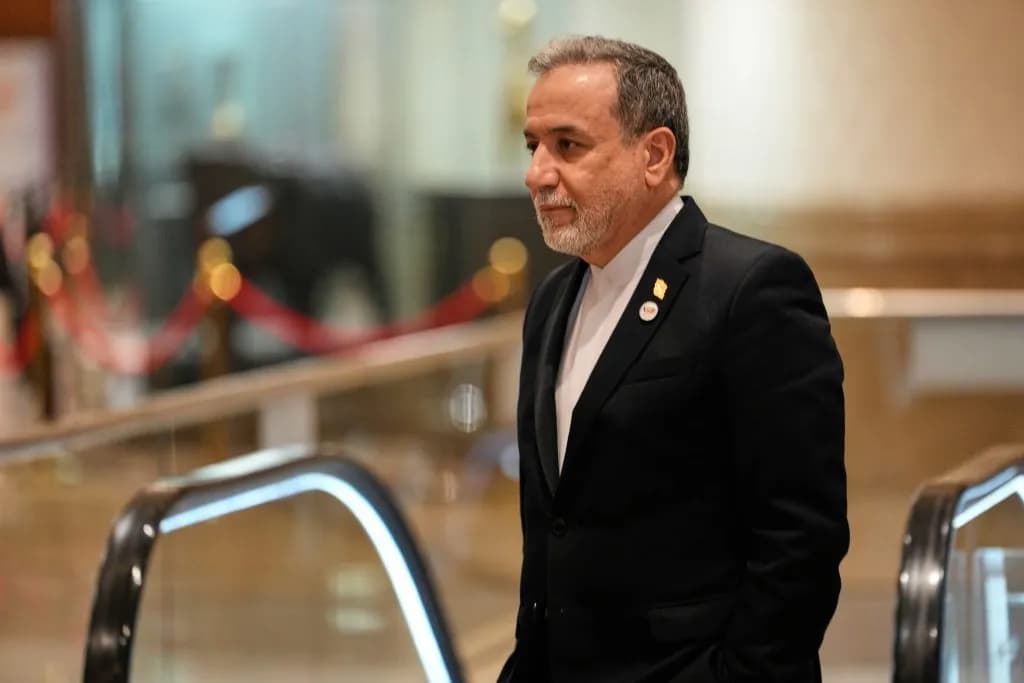
Iran’s foreign minister, Abbas Araghchi, is sitting in New Delhi right now telling reporters that the biggest obstacle to ending the war with the U.S. isn’t weapons or borders. It’s trust.
“Contradictory messages have made us reluctant about the real intentions of Americans,” Araghchi said.
That’s the short version. The U.S. says one thing; Iran hears another. And until that gap closes, negotiations are stuck in neutral.
Trump dismissed Iran’s latest formal proposal as “garbage” earlier this week. He wants the highly enriched uranium gone. He wants to prevent nuclear weapons development. Iran says its program is peaceful. Iran says it has a right to enrich.
Araghchi didn’t mince words. The issue of the enriched uranium stockpile is one of the most difficult subjects in the room. It’s the sticking point. It’s the dealbreaker.
Iran is looking for a referee. Specifically, it wants China to step in. Araghchi cited Beijing’s role in restoring ties between Iran and Saudi Arabia as proof of concept. He said Tehran would welcome diplomatic support from other countries, particularly from China, to ease tensions.
China has shown little public interest in U.S. requests to get more involved, even though Trump told Fox News’ Sean Hannity that Xi Jinping had offered to help during their talks this week. Xi finished those talks Friday. He and Trump agreed the Strait of Hormuz needs to be reopened.
But reopening a chokehold isn’t the same as trusting the people holding the key.
Iran still controls the Strait. A fifth of the world’s oil passed through it before the war started. America is blockading Iranian ports. The standoff is a stalemate with a pulse.
Tensions remain high. They threaten to tip the Middle East back into open warfare. They threaten to prolong the worldwide energy crisis that’s already squeezing gas prices from Delta to Moab.
While the Iran-U.S. talks flounder, there’s movement elsewhere. In Washington, Israel and Lebanon agreed Friday to extend their ceasefire until early June. U.S. officials confirmed the deal. It’s a pause. Not a resolution.
Russia has offered to take Iran’s uranium stockpile if Tehran is willing to give it up. Araghchi said that proposal isn’t under active discussion right now. But it could be revisited.
The clock on diplomacy hasn’t stopped, according to Pakistan. Foreign Ministry spokesperson Tahir Andrabi told reporters in Islamabad that the peace process is working. Pakistan is continuing diplomatic efforts. They just aren’t saying what those efforts look like. They declined to disclose details. They declined to say whether the U.S. had formally responded.
So here we are. Contradictory messages. Garbage proposals. A chokehold on global oil. And a lack of trust that makes every handshake feel like a trap.
Araghchi said negotiations would move forward if Washington was ready for a “fair and balanced deal.”
Keep up with Aspen
The day's Western Slope news, one email each morning. Free.

The digital counter on the side of the bus in Carbondale ticks over, but the seats inside are half-empty

Eagle County Launches Aging Well Roadmap To Keep Seniors Housed